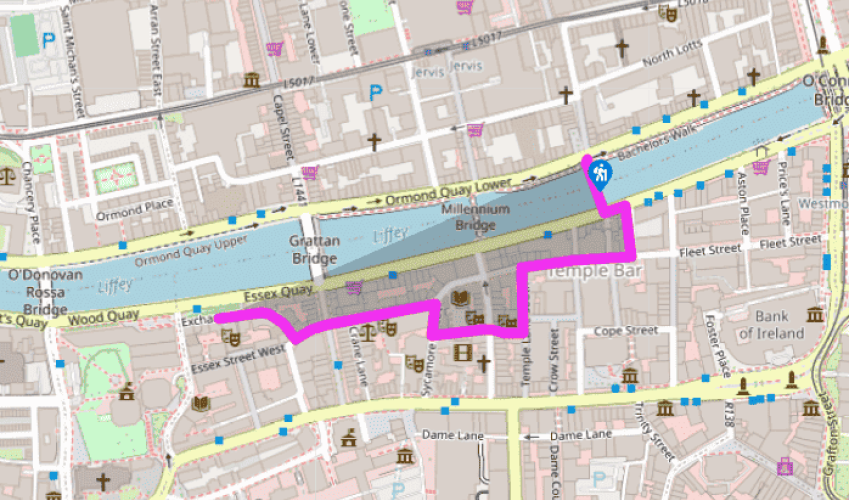
Dublin’s Temple Bar
 Our view
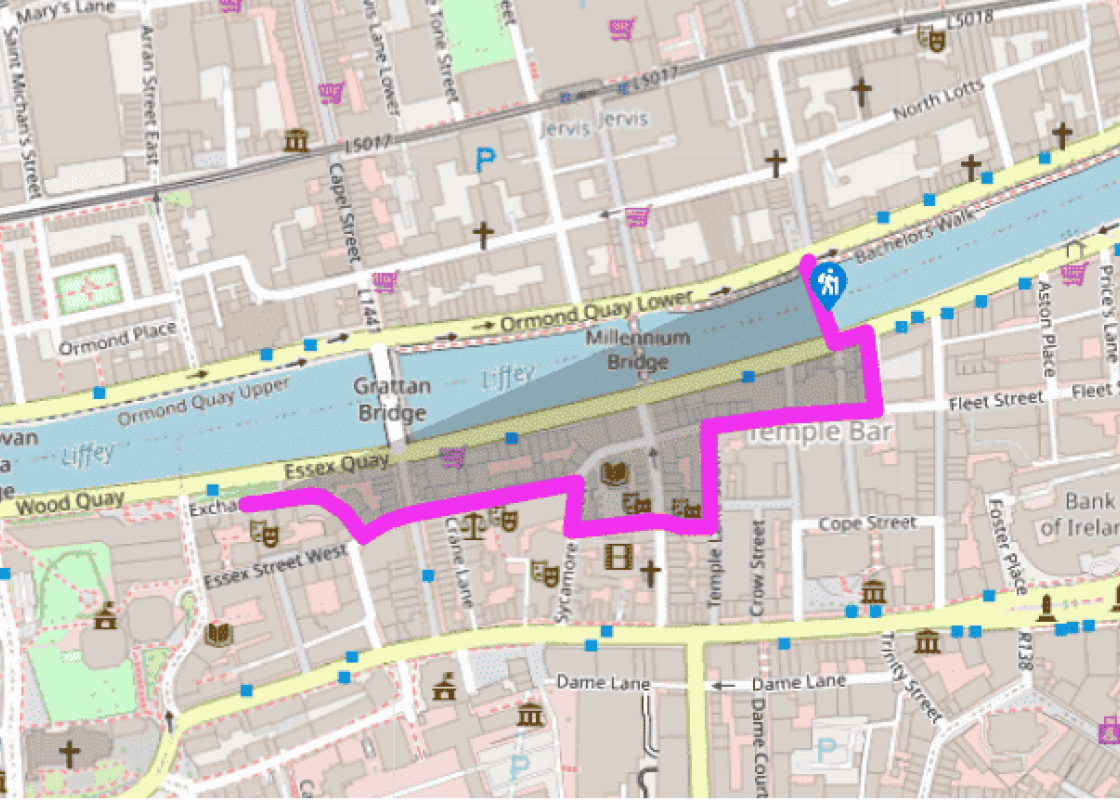
Start on the north side of the River Liffey by the end of Dublin’s famous and much photographed Ha’penny Bridge. Opened in 1816, this steeply arched footbridge has more than one nickname. It was first named after the Duke of Wellington, is officially known as the Liffey Bridge, and is sometimes called the metal bridge. But its best-known soubriquet comes from the halfpenny toll charged to cross it until 1919. At its south end, cross Crampton Quay to enter ‘Dublin’s Cultural Quarter’ by Merchant’s Arch. The arched gateway dates from the 18th century. Until the mid-19th century, merchant ships sailed up the Liffey to load and unload along the quays on either side. Later, larger steamships had to dock further downriver, which had a impact on Temple Bar – it began to decline as it lost trade.
Through the arch, a short cobbled alley lined with rather humdrum souvenir shops leads to Temple Bar, the original main street that has lent its name to the entire district. Follow this to the end and turn right, along the north side of Temple Bar. Across the street, on your left, is Temple Bar Square. Crown Alley, which forms the east side of Temple Bar Square, is lined with trendy cafés, colourful designer stores and small galleries. Carry on along Temple Bar for one short block, cross over Fownes Street, and enter the Temple Bar Gallery at 5–9 Temple Bar, just past the intersection of Temple Bar and Fownes Street. The Temple Bar Gallery and Studios is home to an array of cutting-edge artists and is always worth a visit.

Been on this walk?
Send us photos or a comment about this route. Or recommend a route of your own.

Walking in Safety
Read our tips to look after yourself and the environment when following this walk.
Get an AA guide
Explore our range of ‘50 Walks in’ guides - they’re the ideal companion for a ramble.
Been on this walk?
Send us photos or a comment about this route. Or recommend a route of your own.
Walking in Safety
Read our tips to look after yourself and the environment when following this walk.
Get an AA guide
Explore our range of ‘50 Walks in’ guides - they’re the ideal companion for a ramble.
Nearby places to stay
View all (3)
- Family rooms: 0

- En-suite rooms:
- Family rooms: