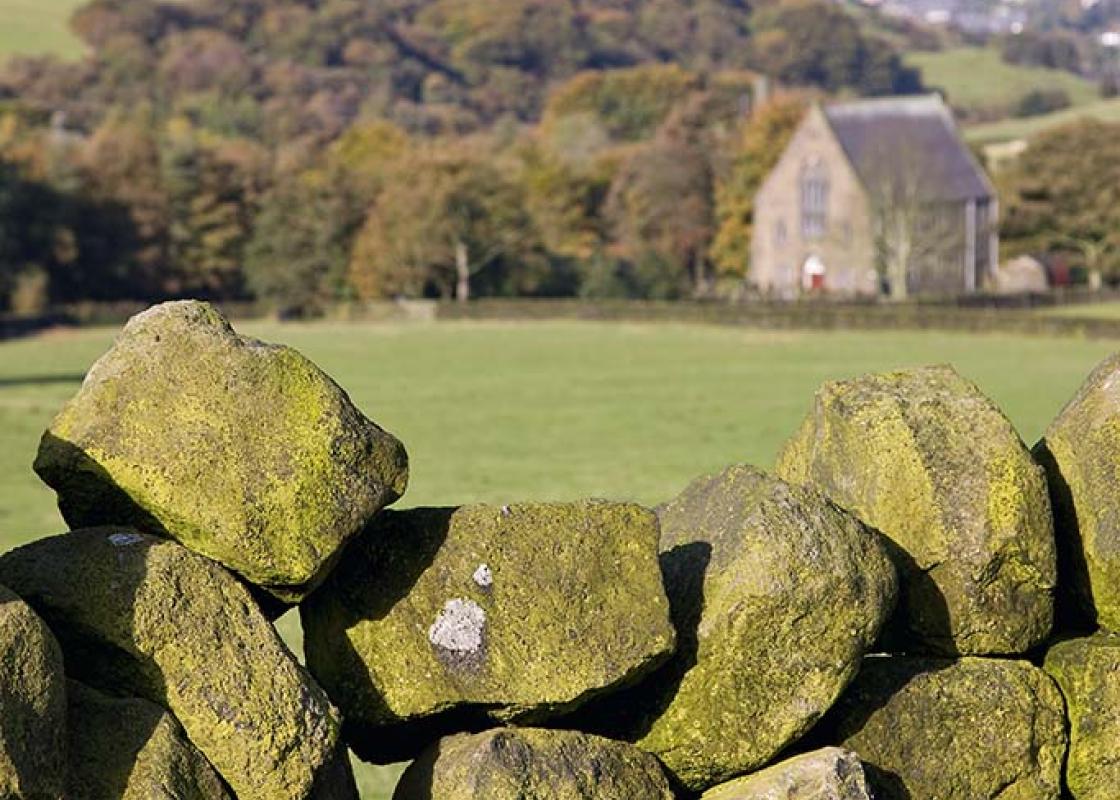
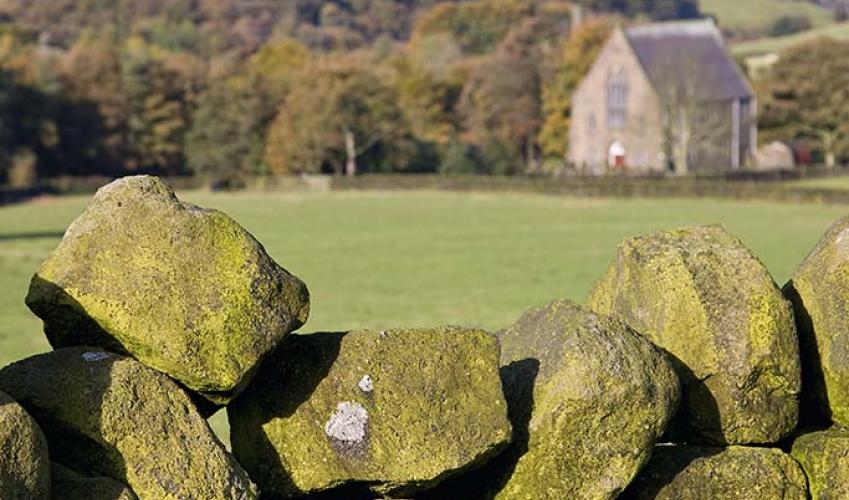
"A short walk of great variety, from the unspoiled hill village of Hepworth."
Walk directions
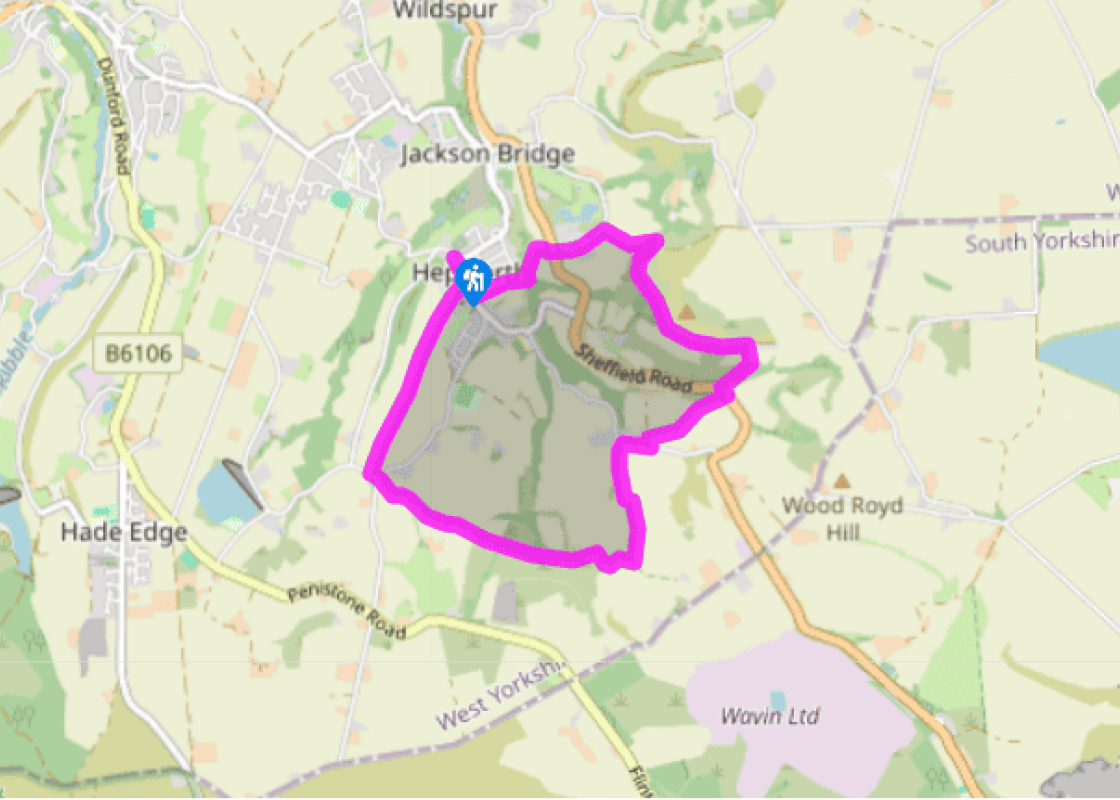
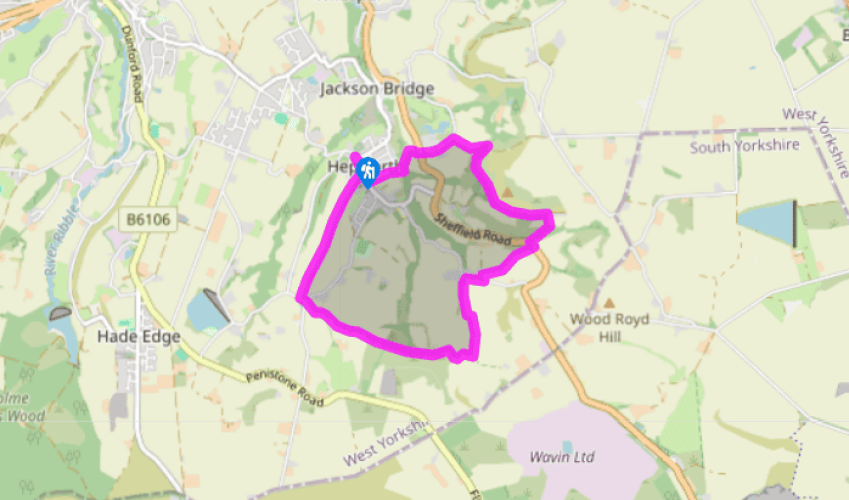
Walk south along Town Gate past The Butchers Arms. Some 100yds (91m) beyond, look for steps dropping left beside the end of a terrace from which a path falls steeply along the edge of a narrow field. Towards the bottom, slip over a stile and continue to a bridge spanning the stream at the base of the valley. Walk forward to a crossing path and go left to a fork. Branch right up a stepped path, eventually emerging onto the main road.
Cross to Meal Hill Lane opposite, following it beyond houses to a T-junction. Turn right up the hill past the entrance of Bank House Farm. The way climbs on as a rough track, shortly swinging right. Where it subsequently bends sharp left, leave over a stile on the right. A path takes the route more easily across the hillside, in time passing through a gate and stile. Keep ahead as a track joins from the right, walking for another 0.25 miles (400m). Approaching a farmstead, half hidden behind trees, watch for a stile on the right. Drop half right across the steep slope to a gate and continue down by the right boundary. Swinging right towards the bottom, it leads out over a final stile onto the road.

Go left 30yds (27m) to a small gate on the right beside a house drive. Cross a paddock to another gate in the far corner and accompany the fence downhill. Through a squeeze gap beyond the base of the dip, follow the ongoing boundary across the fields to cottages above Barnside. Over a final stile go left past them out to a lane.
Turn right through the hamlet. Just beyond cottages at the bottom look for a stile set back from the lane on the left. Walk away, climbing past the indented corner of a wall. Continue beside it to a gate at the top. Cross the next field to a stile and climb the rough hillside beyond to another stile beside a gate in the top boundary. Keep the same line past a redundant stile to meet a crossing track along the top of the hill.
Follow it right, through a gate beneath power cables and down to a second gate. The onward path curves right and left above a gully, dropping to a junction of tracks by the abandoned ruin of Ox Lee Farm. Go forward along a walled track. Although occasionally wet and overgrown in places, a parallel path on the right avoids the worst spots. Carry on as the going improves, eventually emerging at a junction of lanes.
Cross to Cowcliff Hill Road opposite. After 50yds (46m) leave over a stile on the right. Follow the wall away to another stile and continue across successive fields, part of the Holme Valley Circular Walk, back towards Hepworth, ultimately coming out between buildings by The Butchers Arms.
Presiding over two of the tributary folds that come together in the Holme Valley, Hepworth is one of many villages in this corner of the West Yorkshire Pennines that have retained both charm and communal identity. The name is of Saxon origin, perhaps identified with a local chief Heppa or merely... meaning a settlement occupying the high ground. Handloom weaving and farming were the traditional occupations and determined the style of the houses. Weavers’ cottages were usually two or three stories high, with the loom room occupying the whole length of the attic. Rows of narrow, mullioned windows flooded light into the room, which was often reached by an outside staircase and a ‘taking in’ door. That the weavers were also farmers and small holders remains evident in the village layout, with long, narrow fields falling behind the old cottages. While staple crops could be grown, the land and climate were generally unsuited to agriculture and farming centred upon dairy cattle and the production of sheep, primarily for wool. But, the local wool was course, and in time, fine wool was imported to produce quality cloths. Beyond the village, farms were based upon laithe-houses, substantial buildings that combined accommodation, a hay and cattle barn and an upper weaving room under one roof. Examples of these characterful buildings still dot the hillsides around the valley. Despite relative isolation, Hepworth was not immune to the world’s ravages, and has the dubious distinction of being the most northerly place touched by London’s Great Plague in 1666. As at Eyam, 20 miles (32km) to the south, the infection arrived in a bolt of cloth. In an effort to stem the contagion, the community threw up a barricade to isolate the afflicted within one half of the village. When normality returned, the dead were remembered in the planting of thirteen trees, one for each departed soul. They still stand (albeit with two replacements) by the village football pitch. The passing of the plague is celebrated to this day in the Hepworth Feast on the last Monday in June, when a band accompanies villagers on a procession to neighbouring Scholes, followed by a fair.
Everybody knows that Yorkshire has some special landscapes. The Dales and the Moors first spring to mind, but what about West Yorkshire? That’s Leeds and Bradford isn’t it? Back-to-back houses and blackened mills… Certainly if you had stood on any of the hills surrounding Hebden Bridge a hundred years ago, and gazed down into the valley, all you would have seen was the pall of smoke issuing from the chimneys of 33 textile mills.
"A short walk of great variety, from the unspoiled hill village of Hepworth."
Walk details
2hrs
Difficulty:
Easy
Gradient:
Moderate
Distance:
4 miles (6.4kms)
Ascent:
886ft (270m)
Walk directions
Walk south along Town Gate past The Butchers Arms. Some 100yds (91m) beyond, look for steps dropping left beside the end of a terrace from which a path falls steeply along the edge of a narrow field. Towards the bottom, slip over a stile and continue to a bridge spanning the stream at the base of the valley. Walk forward to a crossing path and go left to a fork. Branch right up a stepped path, eventually emerging onto the main road.
1 of 6
Cross to Meal Hill Lane opposite, following it beyond houses to a T-junction. Turn right up the hill past the entrance of Bank House Farm. The way climbs on as a rough track, shortly swinging right. Where it subsequently bends sharp left, leave over a stile on the right. A path takes the route more easily across the hillside, in time passing through a gate and stile. Keep ahead as a track joins from the right, walking for another 0.25 miles (400m). Approaching a farmstead, half hidden behind trees, watch for a stile on the right. Drop half right across the steep slope to a gate and continue down by the right boundary. Swinging right towards the bottom, it leads out over a final stile onto the road.
2 of 6
Go left 30yds (27m) to a small gate on the right beside a house drive. Cross a paddock to another gate in the far corner and accompany the fence downhill. Through a squeeze gap beyond the base of the dip, follow the ongoing boundary across the fields to cottages above Barnside. Over a final stile go left past them out to a lane.
3 of 6
Turn right through the hamlet. Just beyond cottages at the bottom look for a stile set back from the lane on the left. Walk away, climbing past the indented corner of a wall. Continue beside it to a gate at the top. Cross the next field to a stile and climb the rough hillside beyond to another stile beside a gate in the top boundary. Keep the same line past a redundant stile to meet a crossing track along the top of the hill.
4 of 6
Follow it right, through a gate beneath power cables and down to a second gate. The onward path curves right and left above a gully, dropping to a junction of tracks by the abandoned ruin of Ox Lee Farm. Go forward along a walled track. Although occasionally wet and overgrown in places, a parallel path on the right avoids the worst spots. Carry on as the going improves, eventually emerging at a junction of lanes.
5 of 6
Cross to Cowcliff Hill Road opposite. After 50yds (46m) leave over a stile on the right. Follow the wall away to another stile and continue across successive fields, part of the Holme Valley Circular Walk, back towards Hepworth, ultimately coming out between buildings by The Butchers Arms.
Presiding over two of the tributary folds that come together in the Holme Valley, Hepworth is one of many villages in this corner of the West Yorkshire Pennines that have retained both charm and communal identity. The name is of Saxon origin, perhaps identified with a local chief Heppa or merely... meaning a settlement occupying the high ground. Handloom weaving and farming were the traditional occupations and determined the style of the houses. Weavers’ cottages were usually two or three stories high, with the loom room occupying the whole length of the attic. Rows of narrow, mullioned windows flooded light into the room, which was often reached by an outside staircase and a ‘taking in’ door. That the weavers were also farmers and small holders remains evident in the village layout, with long, narrow fields falling behind the old cottages. While staple crops could be grown, the land and climate were generally unsuited to agriculture and farming centred upon dairy cattle and the production of sheep, primarily for wool. But, the local wool was course, and in time, fine wool was imported to produce quality cloths. Beyond the village, farms were based upon laithe-houses, substantial buildings that combined accommodation, a hay and cattle barn and an upper weaving room under one roof. Examples of these characterful buildings still dot the hillsides around the valley. Despite relative isolation, Hepworth was not immune to the world’s ravages, and has the dubious distinction of being the most northerly place touched by London’s Great Plague in 1666. As at Eyam, 20 miles (32km) to the south, the infection arrived in a bolt of cloth. In an effort to stem the contagion, the community threw up a barricade to isolate the afflicted within one half of the village. When normality returned, the dead were remembered in the planting of thirteen trees, one for each departed soul. They still stand (albeit with two replacements) by the village football pitch. The passing of the plague is celebrated to this day in the Hepworth Feast on the last Monday in June, when a band accompanies villagers on a procession to neighbouring Scholes, followed by a fair.
Everybody knows that Yorkshire has some special landscapes. The Dales and the Moors first spring to mind, but what about West Yorkshire? That’s Leeds and Bradford isn’t it? Back-to-back houses and blackened mills… Certainly if you had stood on any of the hills surrounding Hebden Bridge a hundred years ago, and gazed down into the valley, all you would have seen was the pall of smoke issuing from the chimneys of 33 textile mills.