Cotswold Way: Chipping Campden to Broadway

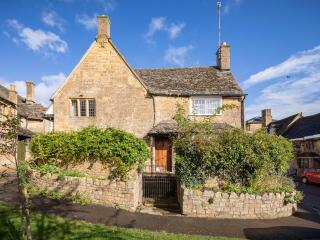
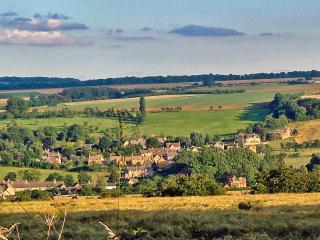
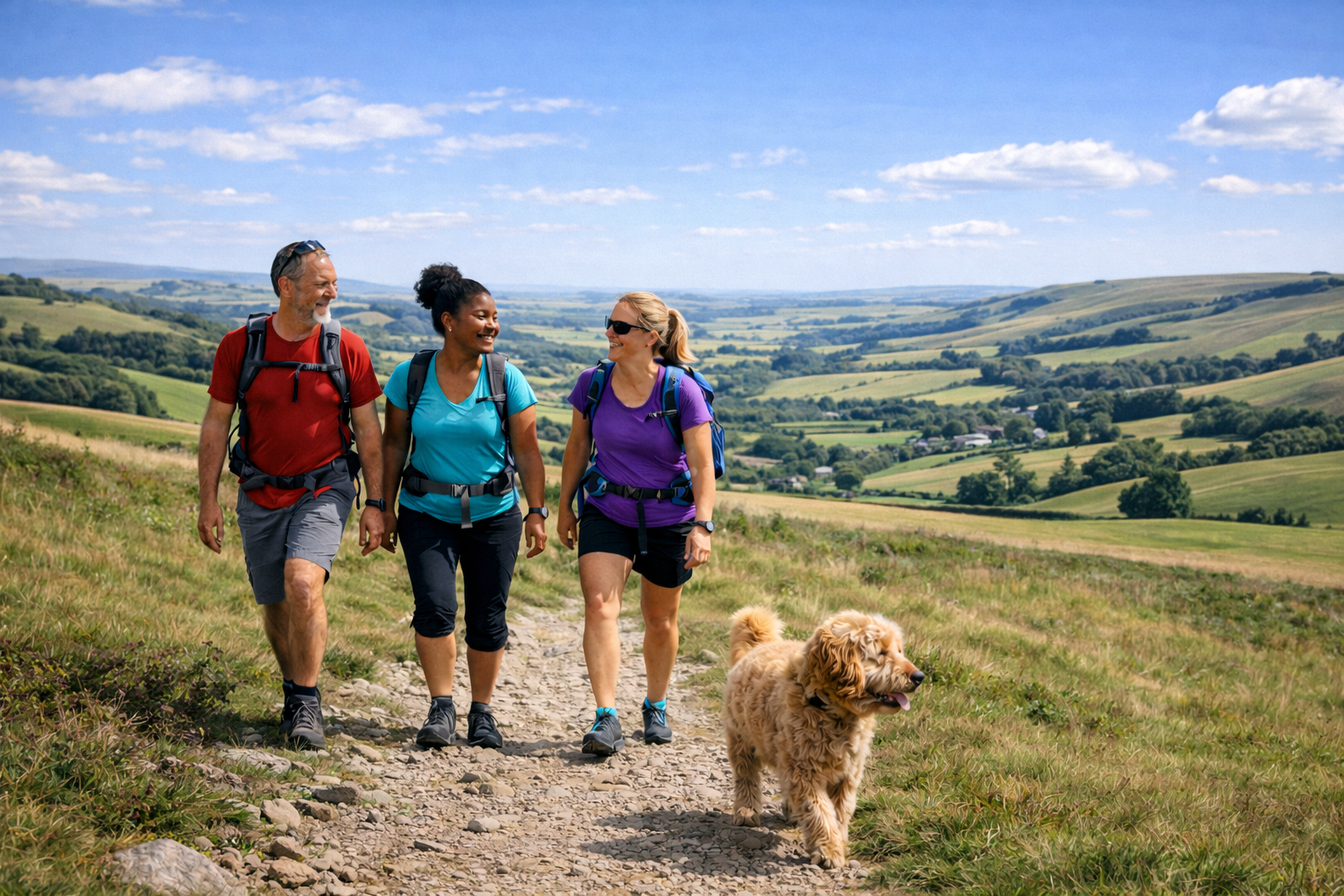
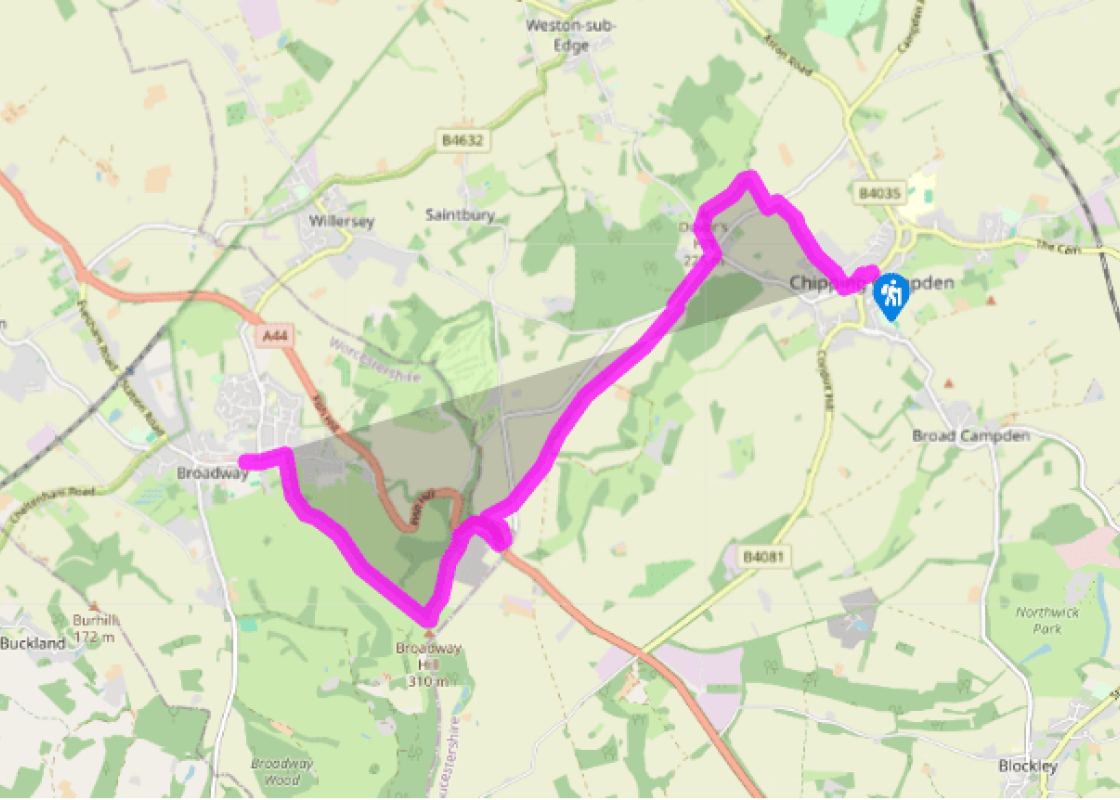
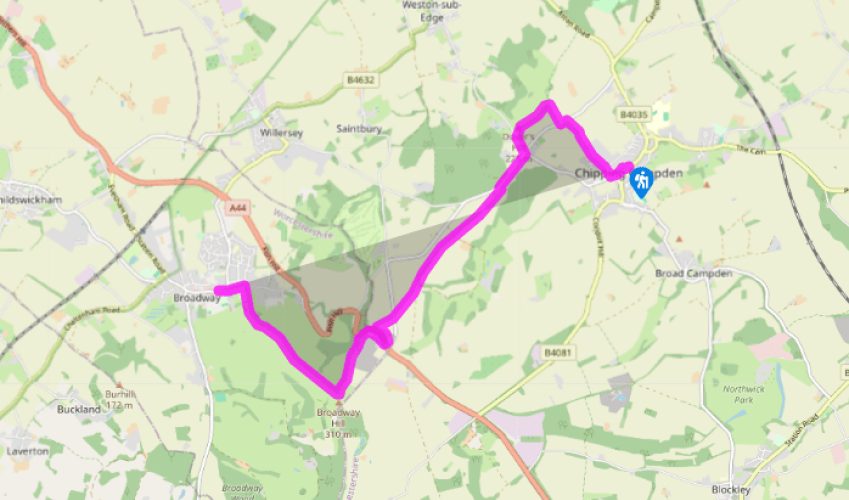
Past Market Hall, the first Cotswold Way signpost points right, up a lane by the side of St Catherine’s Church. The route follows Hoo Lane uphill, past a number of affluent Cotswold stone cottages, joining a track which goes straight ahead uphill. This crosses a level field, and emerges on the top of Dover’s Hill, from where there are fine views, on a clear day, over the Vale of Evesham and the Malvern Hills. The hilltop area is now owned by the National Trust. It was named after Robert Dover, a 17th- century lawyer who organized a series of famous annual games which were held, on and off, until the mid-19th century. In more recent times they have been revived in a modified version every Whitsun Bank Holiday.
Past the car park the route turns left along the road, and then right at the next crossroads, by Weston Park Farm. A short way along on the right, the Kiftsgate Stone is set just inside Weston Wood, marking the meeting point of the Saxon hundred court. The route turns off the road by the side of Campden Woods, following the Mile Drive track in an area that was landscaped in the 19th century by the Earl of Gainsborough. Crossing a road, the route leads past a small hillock surmounted by the Panorama Dial.

Been on this walk?
Send us photos or a comment about this route. Or recommend a route of your own.

Walking in Safety
Read our tips to look after yourself and the environment when following this walk.
Get an AA guide
Explore our range of ‘50 Walks in’ guides - they’re the ideal companion for a ramble.
Been on this walk?
Send us photos or a comment about this route. Or recommend a route of your own.
Walking in Safety
Read our tips to look after yourself and the environment when following this walk.
Get an AA guide
Explore our range of ‘50 Walks in’ guides - they’re the ideal companion for a ramble.
Nearby places to stay
View all (8)