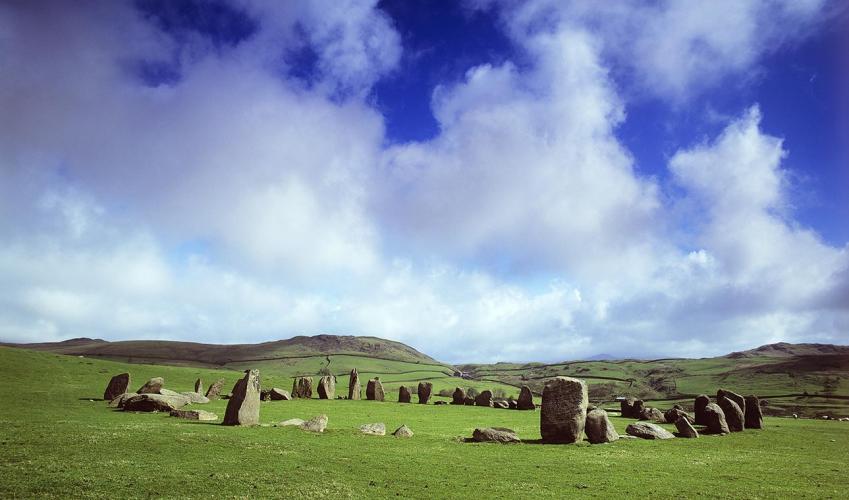
Duddon Bridge and the Swinside Stone Circle
"Discover Swinside Stone Circle hiding in a hollow above the Duddon."
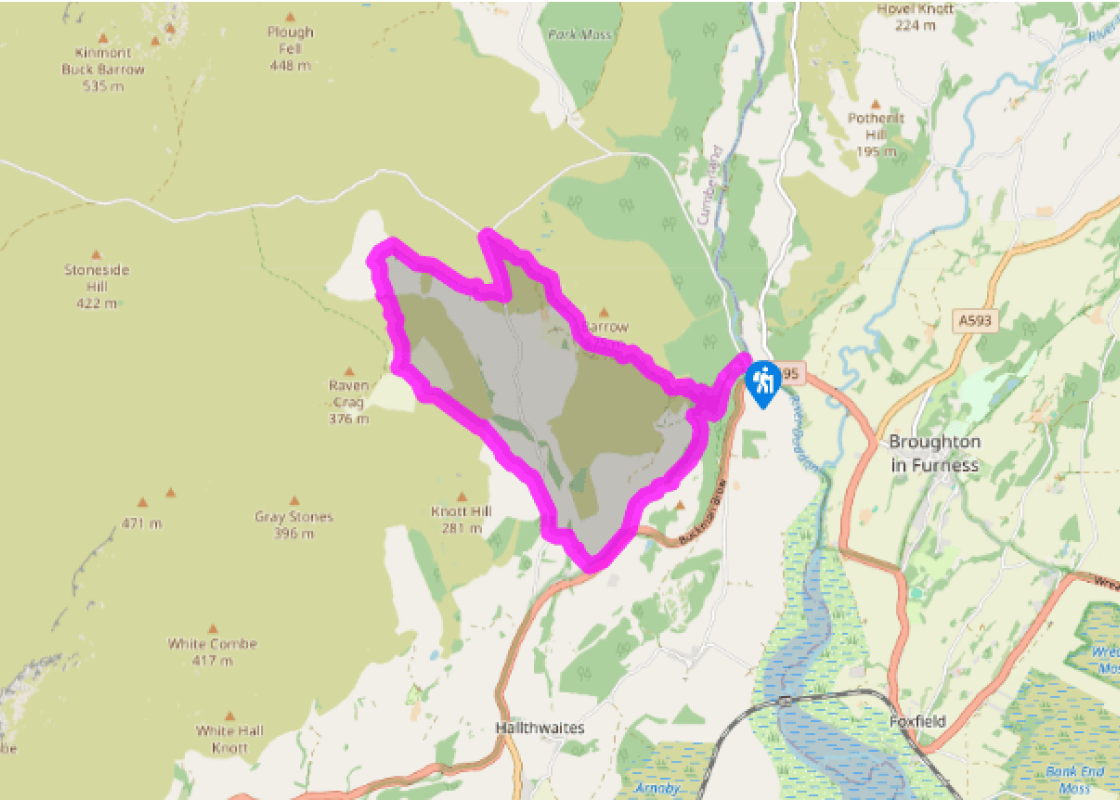
Walk directions
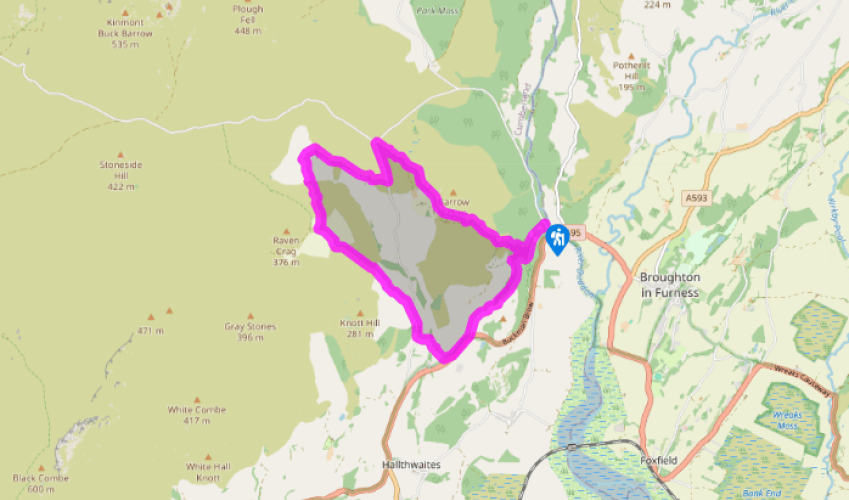
The Duddon Iron Furnace is on the left of the Corney Fell road, soon after the turning from Duddon Bridge. A public bridleway sign points up a track beside the ruins. By the last building, turn left up a woodland path marked by a low bridleway sign.
Cross a narrow access road and continue uphill. Turn right at a waymarked junction. The path is narrow and steep, but clear enough. Watch for a gate in a wall above on the left. Go through and follow a deep, narrow path flanked by bracken, crossing a low gap in the hills.
Meeting another track, bear right, and soon reach a gate. Go through and follow a walled track until it’s crossed by a tall wall; go through the gate and turn left. Follow a path roughly parallel to the wall and pass an old quarry. Traverse above a farm (Thwaite Yeat), keeping on a level course, then bear left, following traces of an old track, and ascend a moorland slope to a signpost at a road junction.
Turn left down a narrow road signposted ‘Millom’, and then turn right along a farm track. Follow this for 0.5 miles (800m) and go through a gate marked ‘Fenwick’. Follow the track almost to the farm, then turn left at a public footpath sign. Cross three stiles as the path descends through fields to Black Beck.
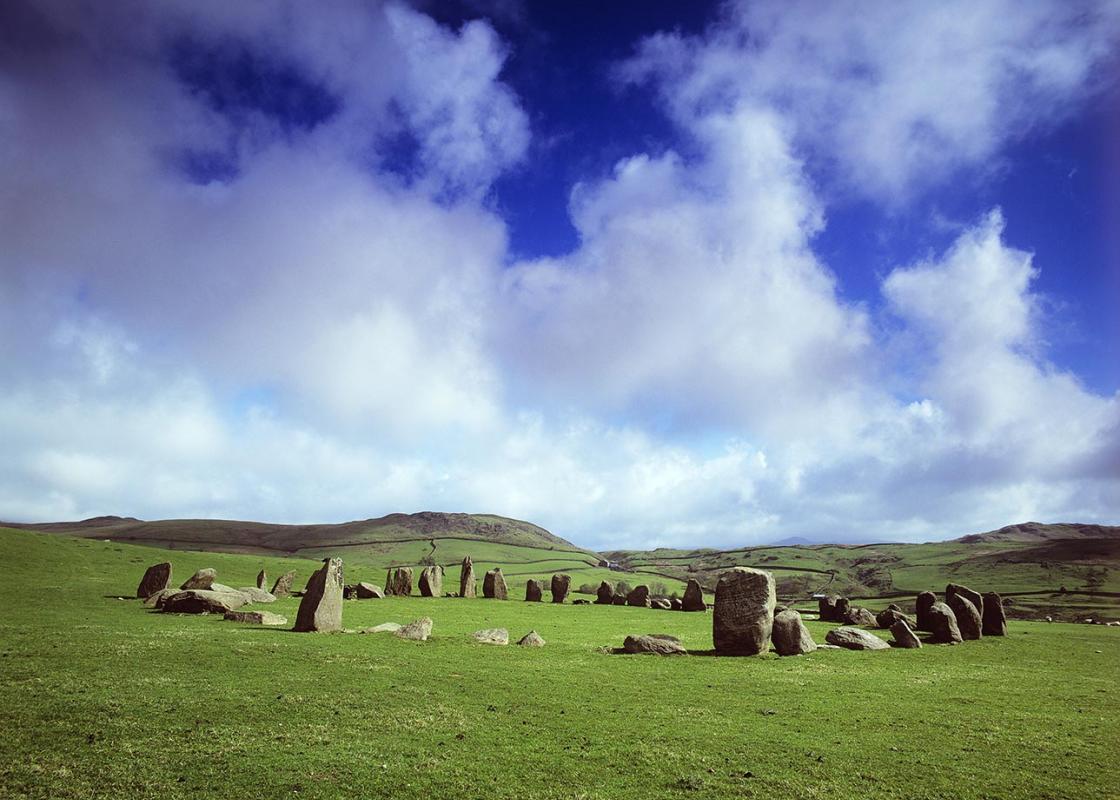
Cross a footbridge and follow a vague path slanting up and left. Join a track near Swinside farm. Pass to the right of the buildings, then turn left to join and follow the access track downhill. Swinside Stone Circle is in a field on the left.
Walk down the access road, then bear right along a tarmac road to some cottages. Just before them is a stile and public footpath signpost; a field path and another stile lead to Black Beck. Go downstream to stepping stones leading to Beck Bank Farm. Follow waymarks through the farmyard and out to a road. (If the stones are uncrossable, retrace your steps to the cottages and turn left down the road, through Broadgate, to a T-junction. Turn left along the road past old mill buildings to rejoin the route at Point 7.)
Turn left along the road and left again along the A595. On a bend are two farm roads close together. Take the second one (by the postbox) to Ash House. Go straight and level through the garden to an iron gate. Go up to a stile, then right along a narrow path by a wall. Join a green track and continue into woods. Walk uphill, then down to reach a marker post at a junction.
Turn right and weave downhill, then keep left on a wider track. Cross a stream to meet the path used earlier. Descend this to retrace your steps to the Duddon Iron Furnace.
Additional information
Terrain
- Good paths (some can be muddy), farm roads, several stiles
Landscape
- Wooded slopes, mostly rough pasture surrounded by hills
Dog friendliness
- On lead where sheep graze and on roads
Parking
- Parking space at Duddon Iron Furnace, near Duddon Bridge, or roadside spaces just to the north
Toilets en route
- None on route
About the walk
TThis is a peaceful walk in one of the quietest corners of the Lake District. It stretches from a tidal estuary to the flanks of the high fells, taking in old coppice woodlands and pastures where sheep and cattle are grazed. Blast furnaces and charcoal burners once belched smoke into the clean... air, and ships laden with pig iron sailed from the narrow estuary, but that was a couple of centuries ago. Tucked away among the hills, and seldom visited, Swinside Stone Circle has stood over the scene for 4,000 years or more. Duddon Iron Furnace Dating from 1736, the Duddon Iron Furnace was one of eight rural blast furnaces in the area. Apart from the addition of an extra charcoal store, the structure has hardly changed since the day it was built. Information boards show the layout of the site, which included charcoal and iron ore stores, a wheelhouse, furnace, blowing house, casting house, office and slag heap. Ore and charcoal were fed into the furnace from the top of the site and pig iron left at the bottom. Ships transported the iron from Duddon Estuary to Bristol and Chepstow for use in the shipbuilding industry. The small rural furnaces simply went out of business when bigger blast furnaces were constructed. The ruins are managed by English Heritage and are always accessible. Swinside Stone Circle The lovely Swinside Stone Circle sits in a quiet hollow in the hills high above the estuary of the River Duddon. It is a late neolithic or early Bronze Age structure, with its stones closely packed together. It appears to be aligned on the midwinter solstice and is about 95ft (29m) in diameter. Locally it is called Sunkenkirk, from a legend relating how a church was once being built on the site, but the Devil kept pulling the stones down into the ground. Like many such circles around the country, it is also said that anyone counting the stones more than once will find that they arrive at a different number each time. With that in mind, it’s probably best to say that there are more than 50, but fewer than 60 stones in the circle. There is also a series of standing stones near Ash House towards the end of the walk, but there is no public access to them.
Read more
Been on this walk?
Send us photos or a comment about this route. Or recommend a route of your own.

Walking in Safety
Read our tips to look after yourself and the environment when following this walk.
Get an AA guide
Explore our range of ‘50 Walks in’ guides - they’re the ideal companion for a ramble.
Been on this walk?
Send us photos or a comment about this route. Or recommend a route of your own.
Walking in Safety
Read our tips to look after yourself and the environment when following this walk.
Get an AA guide
Explore our range of ‘50 Walks in’ guides - they’re the ideal companion for a ramble.
About the area
Cumbria's rugged yet beautiful landscape is best known for the Lake District National Park that sits within its boundaries. It’s famous for Lake Windermere, England’s largest lake, and Derwent Water, ‘Queen of the English Lakes', but other lesser-known areas in the south, such as the Lune Valley and the coastal towns, are secret gems of wide cobbled streets and rolling hills.
Nearby places to stay
View all (8)
Self-Catering
Thornthwaite Farm
★★★★
"Comfortable accommodations including a new cosy log cabin..."
- Total units: 3
Nearby places to stay
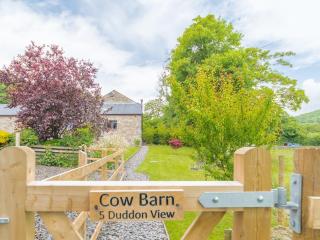
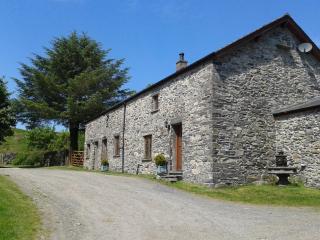
Cow Barn
A bright, airy and stylish interior for up to 5 guests, open views and a lovely dog-friendly garden, make Cow Barn the perfect setting for any family holiday to the Lakes. The cottage ...
Quality Assessed
Cow Barn
A bright, airy and stylish interior for up to 5 guests, open views and a lovely dog-friendly garden, make Cow Barn the perfect setting for any family holiday to the Lakes. The cottage ...
Quality Assessed
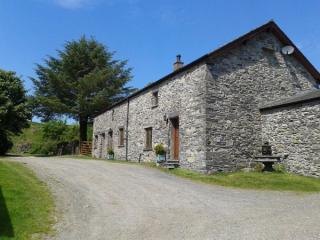
Thornthwaite Farm
Thorthwaite is a traditional Lakeland family-run farm set in the beautiful scenery of the Woodland Valley, known as one of the ‘Three Jewels of Lakeland’ immortalised by William Wordswo...
★★★★ Rating
Stable Cottage
Awaiting description...
★★★★ Rating
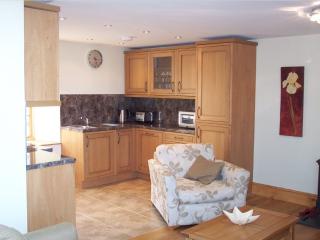
Blacksmiths Cottage
Awaiting description...
★★★★ Rating
Woodmans Cottage
Awaiting description...
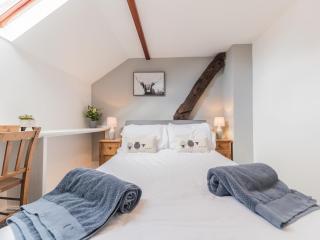
★★★★ Rating
Byre Cottage & Millers Cottage
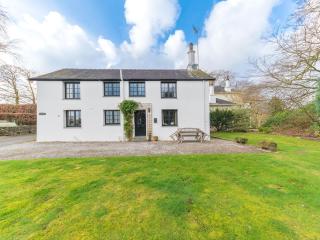
Just 10 minutes' drive from Coniston village, Byre Cottage & Millers Cottage are two recently refurbished neighbouring cottages on a working Lakeland farm. With a combined total of 6 be...
Quality Assessed
Middlefield Cottage
The comfortable two-bedroom Middlefield Cottage sits in a peaceful spot near the tip of Coniston Water in the hamlet of Blawith, and offers lovely views up the Crake Valley towards the ...
Quality Assessed
Places to eat nearby View all