Sedgwick and the Lancaster Canal
"In the 18th century engineers tunnelled through a hill to bring the Lancaster Canal past a gunpowder factory."
Walk directions
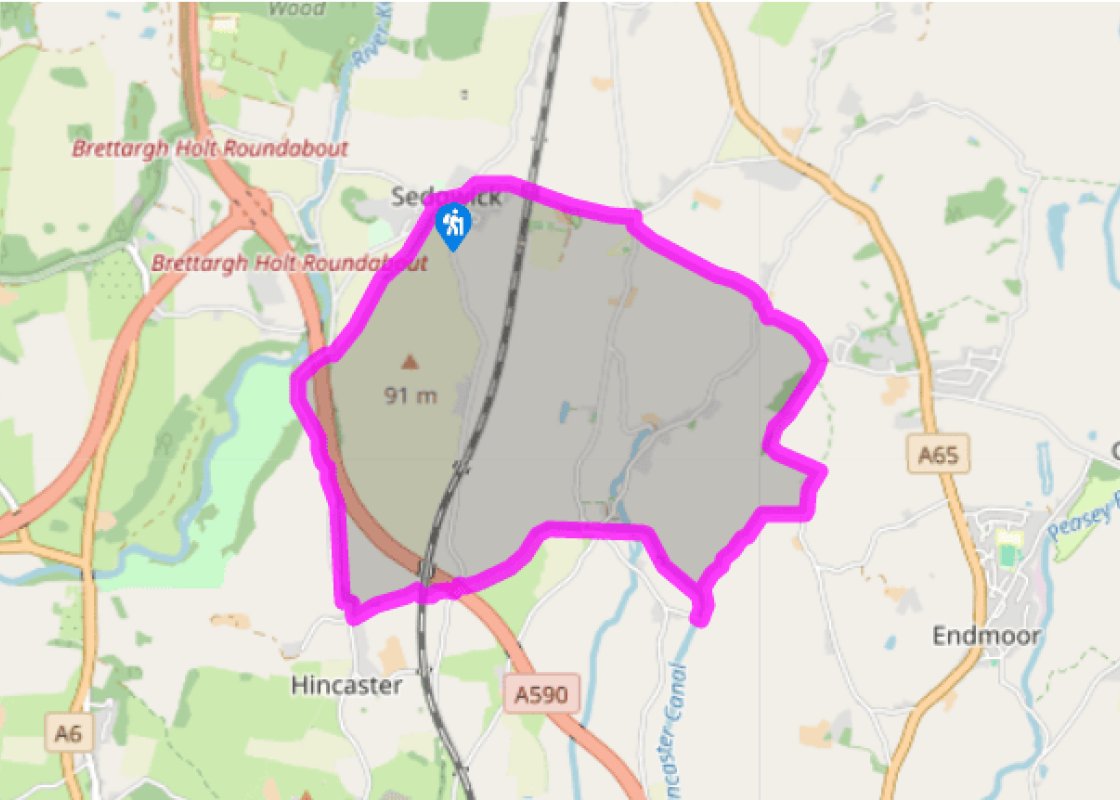
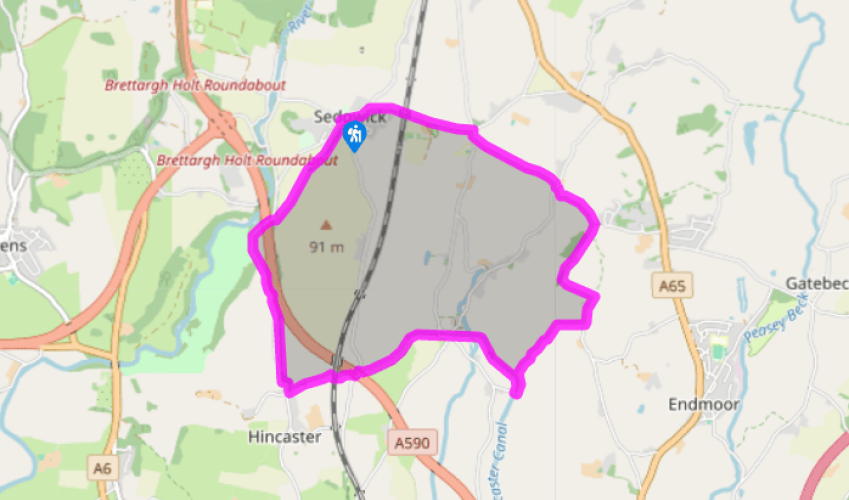
From the canal aqueduct, walk gently uphill as far as the second junction by Carex Farm and turn right. Just before Crosscrake church go right again, signed ‘Stainton Cross’.
Leave through the first gate on the left, and cross to a stile in the far right corner of the field. Follow the left-hand hedge to a second stile. Beyond the crest, drop to cross Stainton Beck by a farm, then exit to a lane.
From the gate opposite go up to another gate. Continue in the same direction across the next field, passing a waymark, to a stile in the corner. Walk to the far wall and turn right along it. Cross a stile to a track and continue in the same direction, slightly downhill.
Walk down the track, passing through a gate by Eskrigg Wood. The way shortly broadens into a meadow, but keep going to the further of two gates at the left corner. A waymark confirms the route along a hedged track into rough woodland. Soon the path bends left to a stile. Walk straight up a field to a gate left of a tree.
Turn right along a track leading through a small, gated farmyard at High Commonmire, and continuing beyond as a tarmac byway. Turn right at a junction and carry on down to the canal and a bridge.
Cross the canal, drop left onto the tow path and walk beneath the bridge. Cross an aqueduct over Stainton Beck. A section beyond this is currently being restored, but the canal’s course is always clear. Follow it, eventually coming to a lane below the A590.
Pass under the bridge and rejoin the canal through a gate on the right. A cutting leads to the mouth of the Hincaster Tunnel, where a path to the left carries walkers, as it once did horses, over Tunnel Hill. At the far side, turn right beside a house to regain the tow path. Remain by the canal until forced onto the lane and continue eventually to cross the A590.
Just beyond the bridge, steps rise to a field on the right. Go up and then left along the wire fence, and on across the field, eventually passing beneath a lone bridge. Beyond, the canal cutting is again evident, accompanying you back to Sedgwick and the start of the walk, where steps beside the aqueduct drop to the road.
Additional information
Terrain
- Field paths, tow paths and some quiet lanes, many stiles
Landscape
- Grazing fields cover rolling landscape, distant hills
Dog friendliness
- On lead along lanes and where livestock are grazing
Parking
- Roadside parking in Sedgwick
Toilets en route
- None on route
About the walk
The 18th century saw the beginnings of industrialisation in Britain, when machines were invented that performed the labour of umpteen people. Nowhere was the transformation more startling than in the textile industries, where large, water-powered mills replaced an age-old tradition of home... working. Mechanisation affected other areas too, but the limiting factor to expansion was transport. Factories located beside navigable water could trade by boat, but the fast-flowing rivers and streams powering the new machinery lay far inland, accessible only by packhorses or lumbering carts. A second revolution came with the development of canals, which effectively took the seaboard into the heart of the countryside. Now serviced by cheap and speedy transport, the areas they reached profited from burgeoning new industries. A new age Kendal had long been a successful town, flourishing from the woollen and other industries, but remoteness from the main population and industrial centres became an increasing threat to prosperity. So, in 1792, a waterway linking Kendal to the industrial heartland of Lancashire via Lancaster and Preston was sanctioned. By 1797 barges were passing between Tewitfield and Preston. The final section was this stretch into Kendal, routed via Sedgwick to take in the gunpowder factories beside the River Kent, which served the many limestone quarries in the area. However, blocking the way was a hill, and the only means of avoiding a lengthy detour was to burrow straight through. Completed in 1817, the Hincaster Tunnel is 378yds (346m) long and, as you will see, remains a magnificent feat of engineering. To minimise expense, the tunnel did not include a tow path; barges were pulled through by hand using a fixed cable, or ‘legged’ by the bargees. Further obstacles lay in river and other crossings, two of which are passed on this ramble. Although the aqueduct across Stainton Beck is hardly apparent from above, it is also a notable achievement. So is the skew aqueduct at Sedgwick, where the walk begins. Have a look at its stonework as you pass beneath. A traditional arch would have had to extend over the full width of the crossing to retain its inherent strength. But, by laying the courses at an angle, the integrity of the structure was retained, allowing the span to be matched to the crossing. Commercial traffic ended in 1947, and the northern stretch was drained in 1955, with more sections disappearing beneath the M6 motorway and Kendal bypass. However, what remains is full of interest and a delight to explore.
Read more
Been on this walk?
Send us photos or a comment about this route. Or recommend a route of your own.

Walking in Safety
Read our tips to look after yourself and the environment when following this walk.
Get an AA guide
Explore our range of ‘50 Walks in’ guides - they’re the ideal companion for a ramble.
Been on this walk?
Send us photos or a comment about this route. Or recommend a route of your own.
Walking in Safety
Read our tips to look after yourself and the environment when following this walk.
Get an AA guide
Explore our range of ‘50 Walks in’ guides - they’re the ideal companion for a ramble.
About the area
Cumbria's rugged yet beautiful landscape is best known for the Lake District National Park that sits within its boundaries. It’s famous for Lake Windermere, England’s largest lake, and Derwent Water, ‘Queen of the English Lakes', but other lesser-known areas in the south, such as the Lune Valley and the coastal towns, are secret gems of wide cobbled streets and rolling hills.
Nearby places to stay
View all (8)
Self-Catering
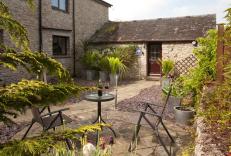
Birslack Cottage
★★★★
"Attractive spot well placed for exploring southern Lake District..."
- Total units: 1
- Private garden
- Washing machine
- Sky or freeview
Self-Catering
Birslack Cottage
★★★★
"Attractive spot well placed for exploring southern Lake District..."
- Private garden
- Washing machine
- Sky or freeview
- Linens provided
Bed & Breakfast
The Glen Guest House
★★★★
"Handsome guest house in quiet location beneath famous ‘Helm’ hill...."
- Rooms 7
- Free TV
- Wifi
- Open parking
Nearby places to stay
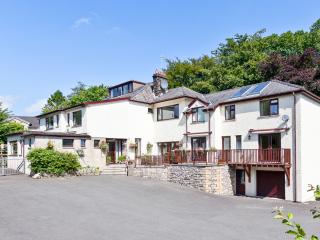
Birslack Cottage
In the sleepy village of Levens, this romantic cottage with private garden set within the grounds of the owner’s home commands panoramic views of beautiful country. Just nine miles from...
★★★★ Rating
Birslack Cottage
In the sleepy village of Levens, this romantic cottage with private garden set within the grounds of the owner’s home commands panoramic views of beautiful country. Just nine miles from...
★★★★ Rating
The Glen Guest House
The Glen is a friendly, family-run bed and breakfast with an outstanding reputation for warm and friendly service, comfortable accommodation and freshly cooked breakfasts using quality ...
★★★★ Rating
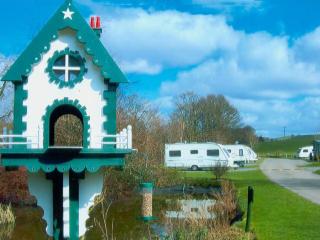
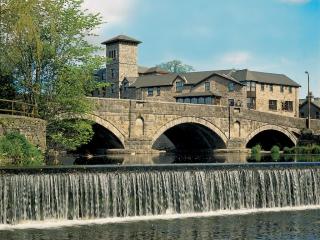
Waters Edge Caravan Park
A truly lovely site bordered by streams and woodland. Despite being an oasis of calm, the site is just a short distance from the M6 and is ideal either as a stopover or for longer stays...
★★★★ Rating
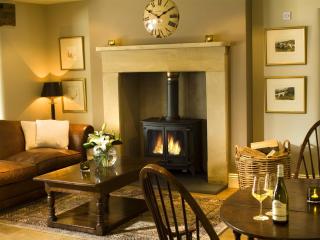
Riverside Hotel
Covering five floors in a converted 18th-century tannery by the River Kent, Riverside Hotel is close to the 12th-century Kendal Castle, and the town centre. Facilities include a fully-e...
★★★ Rating
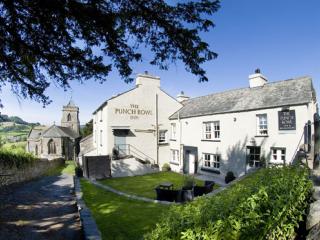
Plough Inn
This delightful inn is well situated, ideal for exploring all parts the Cumbrian and Yorkshire countryside. The public areas are spacious, open plan and comfortable and blend modernity ...
★★★★★ Rating
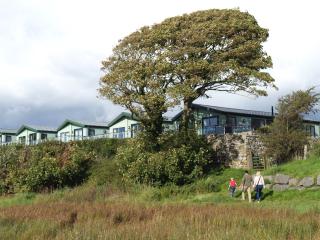
The Punch Bowl Inn & Restaurant
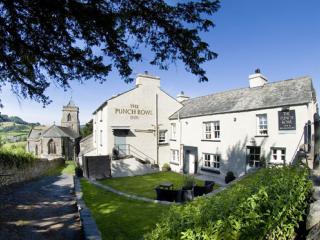
Located in the stunning Lyth Valley alongside the village church and within easy reach of many walks, this historic Inn dates back to 1829, when it was also used as a blacksmith's shop....
★★★★★ Rating
Silver Ridge Caravan Park
Holgates Holiday Parks is a collection of family owned and operated parks spanning across the South Lakes, North Lancashire and Ribble Valley. Silver Ridge is on a limestone ridge, surr...
★★★★★ Rating
Places to eat nearby View all