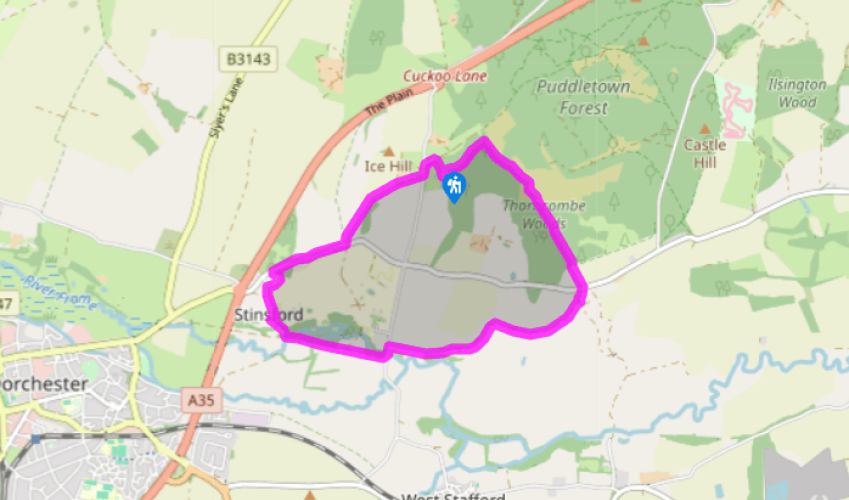
Take the steep woodland path to the right of the display boards, signposted ‘Thorncombe Wood’. Turn left then right at signs for Hardy’s Cottage, and follow the winding route down to a crossroads of tracks, marked by a monument. Turn left to visit Hardy’s Cottage.
Retrace your route up behind the cottage and bear left, signed ‘Rushy Pond’, then immediately turn right on a path that bends right. At a crossroads by the pond take the path ahead signed ‘Duddle Heath’. In 20yds (18m), at another crossroads, go straight across (‘Norris Mill’); the path heads down to cross Hardy’s ‘Egdon Heath’. It crosses a track then goes through a gate to run under pines, with occasional yellow markers on trees. Go left at a fork and cross a stile, then turn sharp right (away from the nearby track) through trees to another stile. Bear left across a field to a stile and gate onto a road.
Cross the road into a farm track which keeps to the right of some barns. Where the track ends, cross a stile and bear right over a field. Cross a pair of stiles in the hedge, then go straight across the field to a stile and head across the driveway of Duddle Farm (left) and over another stile. Go ahead to cross a bridge and stiles down into a field. Follow its left edge to another stile, and bear left, following a faint path round the base of the hill. Pass to the right of a brick house and walk up its drive through Bhompston Farm. Where the main track bends up to the right, take the track ahead through a wide pair of metal gates. After a few paces, bear left over a stile and walk along the field foot (signed ‘Lwr Bock’ton’), with the River Frome nearby on the left. Cross a stile to reach a kissing gate. Cross the next field slightly uphill to a kissing gate to the right of farm buildings. Go through a field gate and the farmyard to its exit driveway to meet a road beside Bridge Cottage.
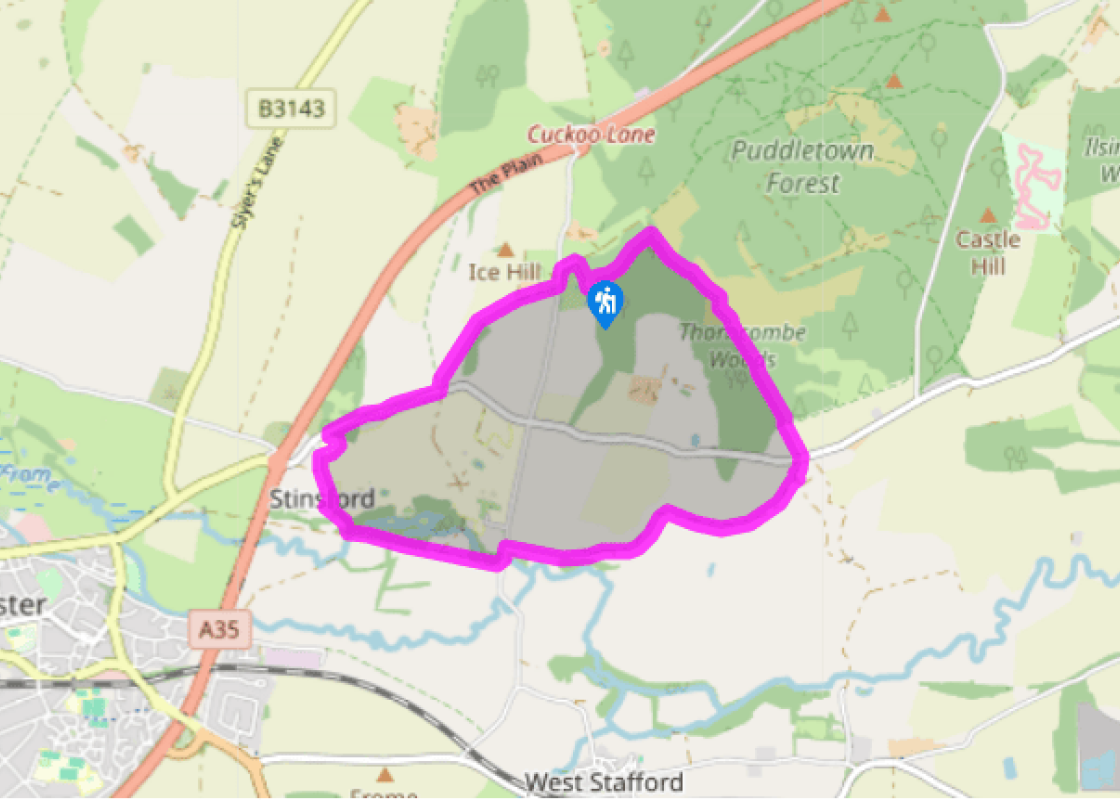
Turn left across the river and immediately turn right, on a riverside path which becomes a causeway. Ignore a first bridleway to the right, but just after the path crosses the river, turn right, signed ‘Stinsford’. Bear left through a wooden gate into the churchyard, passing to the left of the church, with the Hardy graves to your right, as well as that of another great poet, Cecil Day-Lewis (1904–1972). Leave by the top gate and walk up the road past the Kingston Maurward College. Turn right into a lane, signed 20mph, then turn left to a lodge on the public road.
Turn right, up the road. After the entrance to Birkin House, bear left onto a good path and continue through woodland, alongside the road. After two gates, turn away from the road on a farm track, signposted ‘Higher Bockhampton’. From here you can follow signs for Hardy’s Birthplace
Visitor Centre. Inside the field turn half right, slanting up a field, with woodland over on your right. At the field’s top corner keep going straight on with the fence on your left until you come to a big shed. Here a green lane runs ahead to the road. Turn left, then right by the postbox, and right again to return to the car park.
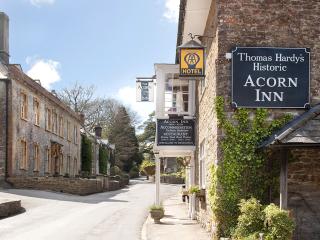
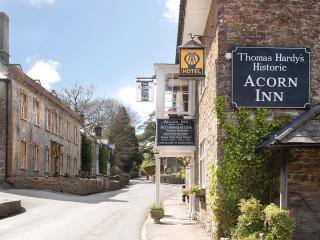
You can’t go far in Dorset without coming across novelist and poet Thomas Hardy (1840–1928). He did more than anybody to establish an identity for the county, thinly disguised as a fictional Wessex. His complicated tales of thwarted desire and human failing, littered with memorable, realistic... characters and evocative descriptions of recognisable places, and mostly with miserable endings, have become literary classics. Hardy was born at Higher Bockhampton in the cottage built by his great-grandfather, set in a lovely garden. The cottage is now owned by the National Trust. In 1867 Hardy retired to Dorset for health reasons and began writing seriously. His first real success, Far From the Madding Crowd (1874), remains popular, helped by the classic 1967 film starring Julie Christie. After the success of this book he married Emma Gifford; they lived for a time at Sturminster Newton. It’s The Return of the Native (1878) that memorably features ‘Egdon Heath’, the Dorset wildlands and almost a character in their own right. Already fragmented in Hardy’s day, ‘Egdon’ now survives as the tiny patch southeast of his cottage crossed on this walk. Studland Heath also conveys the atmosphere described by Hardy: ‘the mummied heathbells of the past summer, originally tender and purple, now washed colourless by Michaelmas rains, and dried to dead skins by October suns’. In 1885 Hardy and his wife moved to the home he had designed at Max Gate, on the outskirts of Dorchester (his Casterbridge), and he remained there for the rest of his life. He was buried in Westminster Abbey. His heart, however, lies in Stinsford (his Mellstock) churchyard, between the tombs of his first and second wives, Emma Gifford and Florence Dugdale. The Hardy influence is still strong in Dorset. Fact and fiction become blurred in ‘Tess’s Cottage’ and ‘Casterbridge Agricultural College’, and pubs proudly identify themselves as their fictional counterpart. A long-distance footpath, the Hardy Way, links many of the author’s favourite sites.
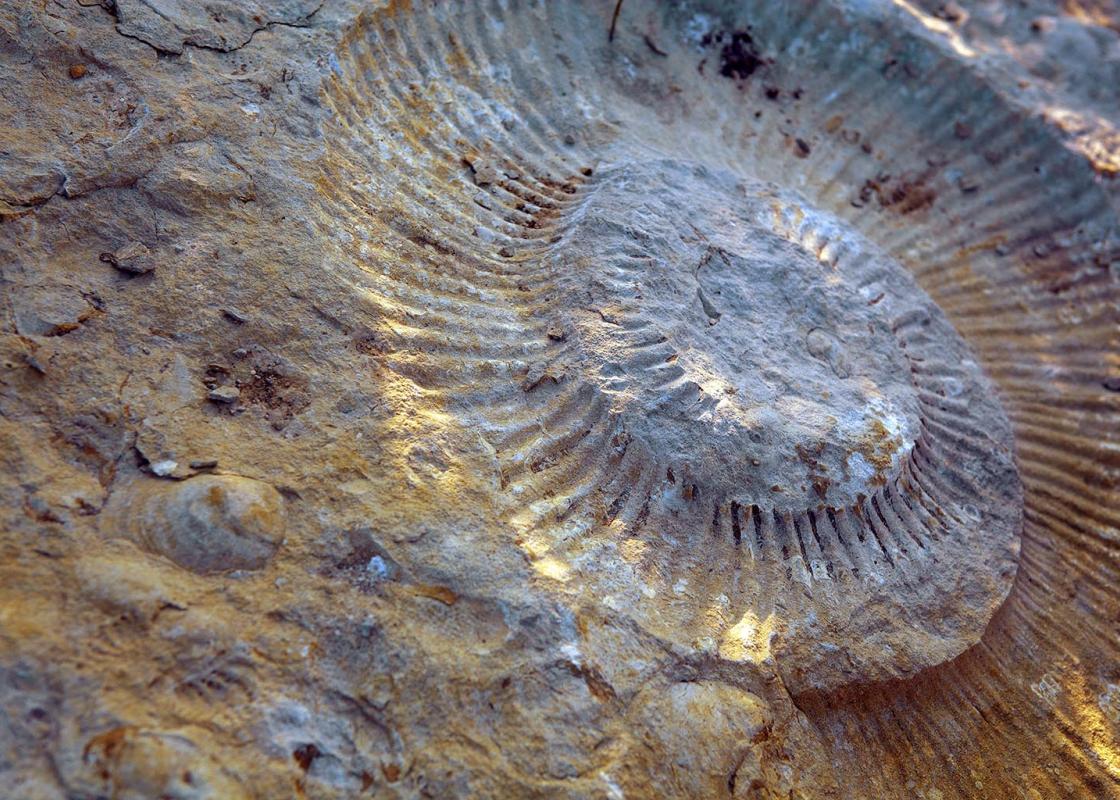
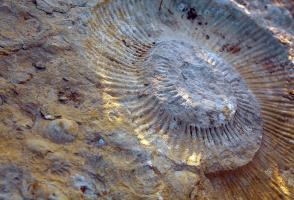
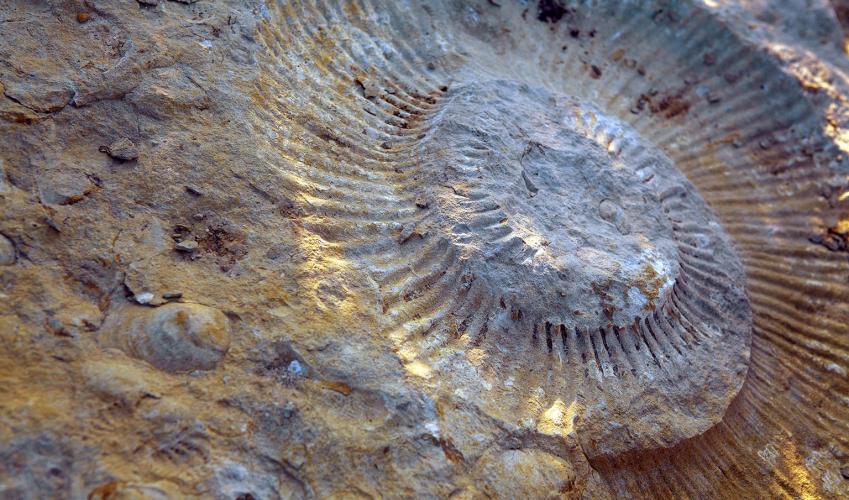
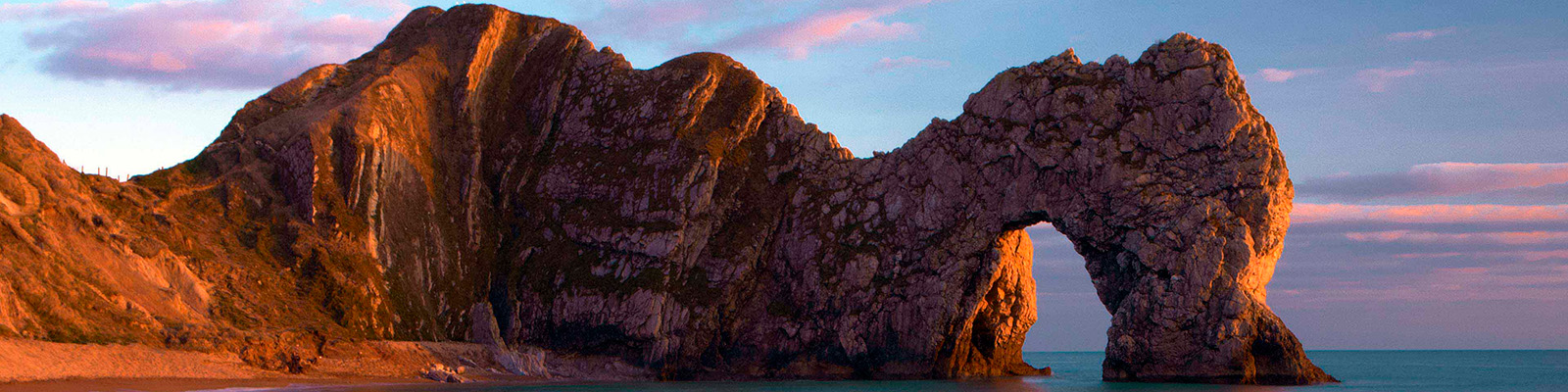
Dorset is made up of rugged coastlines, high chalk downlands and a chain of picturesque villages and seaside towns that make up Britain’s Jurassic Coast, a UNESCO World Heritage Site and Area of Outstanding Natural Beauty, noted for its layers of shale and numerous fossils embedded in the rock. Hidden gems of Dorset can be found down winding, country lanes that lead to snug villages hidden from view.
Take the steep woodland path to the right of the display boards, signposted ‘Thorncombe Wood’. Turn left then right at signs for Hardy’s Cottage, and follow the winding route down to a crossroads of tracks, marked by a monument. Turn left to visit Hardy’s Cottage.
1 of 5
Retrace your route up behind the cottage and bear left, signed ‘Rushy Pond’, then immediately turn right on a path that bends right. At a crossroads by the pond take the path ahead signed ‘Duddle Heath’. In 20yds (18m), at another crossroads, go straight across (‘Norris Mill’); the path heads down to cross Hardy’s ‘Egdon Heath’. It crosses a track then goes through a gate to run under pines, with occasional yellow markers on trees. Go left at a fork and cross a stile, then turn sharp right (away from the nearby track) through trees to another stile. Bear left across a field to a stile and gate onto a road.
2 of 5
Cross the road into a farm track which keeps to the right of some barns. Where the track ends, cross a stile and bear right over a field. Cross a pair of stiles in the hedge, then go straight across the field to a stile and head across the driveway of Duddle Farm (left) and over another stile. Go ahead to cross a bridge and stiles down into a field. Follow its left edge to another stile, and bear left, following a faint path round the base of the hill. Pass to the right of a brick house and walk up its drive through Bhompston Farm. Where the main track bends up to the right, take the track ahead through a wide pair of metal gates. After a few paces, bear left over a stile and walk along the field foot (signed ‘Lwr Bock’ton’), with the River Frome nearby on the left. Cross a stile to reach a kissing gate. Cross the next field slightly uphill to a kissing gate to the right of farm buildings. Go through a field gate and the farmyard to its exit driveway to meet a road beside Bridge Cottage.
3 of 5
Turn left across the river and immediately turn right, on a riverside path which becomes a causeway. Ignore a first bridleway to the right, but just after the path crosses the river, turn right, signed ‘Stinsford’. Bear left through a wooden gate into the churchyard, passing to the left of the church, with the Hardy graves to your right, as well as that of another great poet, Cecil Day-Lewis (1904–1972). Leave by the top gate and walk up the road past the Kingston Maurward College. Turn right into a lane, signed 20mph, then turn left to a lodge on the public road.
4 of 5
Turn right, up the road. After the entrance to Birkin House, bear left onto a good path and continue through woodland, alongside the road. After two gates, turn away from the road on a farm track, signposted ‘Higher Bockhampton’. From here you can follow signs for Hardy’s Birthplace
Visitor Centre. Inside the field turn half right, slanting up a field, with woodland over on your right. At the field’s top corner keep going straight on with the fence on your left until you come to a big shed. Here a green lane runs ahead to the road. Turn left, then right by the postbox, and right again to return to the car park.
You can’t go far in Dorset without coming across novelist and poet Thomas Hardy (1840–1928). He did more than anybody to establish an identity for the county, thinly disguised as a fictional Wessex. His complicated tales of thwarted desire and human failing, littered with memorable, realistic... characters and evocative descriptions of recognisable places, and mostly with miserable endings, have become literary classics. Hardy was born at Higher Bockhampton in the cottage built by his great-grandfather, set in a lovely garden. The cottage is now owned by the National Trust. In 1867 Hardy retired to Dorset for health reasons and began writing seriously. His first real success, Far From the Madding Crowd (1874), remains popular, helped by the classic 1967 film starring Julie Christie. After the success of this book he married Emma Gifford; they lived for a time at Sturminster Newton. It’s The Return of the Native (1878) that memorably features ‘Egdon Heath’, the Dorset wildlands and almost a character in their own right. Already fragmented in Hardy’s day, ‘Egdon’ now survives as the tiny patch southeast of his cottage crossed on this walk. Studland Heath also conveys the atmosphere described by Hardy: ‘the mummied heathbells of the past summer, originally tender and purple, now washed colourless by Michaelmas rains, and dried to dead skins by October suns’. In 1885 Hardy and his wife moved to the home he had designed at Max Gate, on the outskirts of Dorchester (his Casterbridge), and he remained there for the rest of his life. He was buried in Westminster Abbey. His heart, however, lies in Stinsford (his Mellstock) churchyard, between the tombs of his first and second wives, Emma Gifford and Florence Dugdale. The Hardy influence is still strong in Dorset. Fact and fiction become blurred in ‘Tess’s Cottage’ and ‘Casterbridge Agricultural College’, and pubs proudly identify themselves as their fictional counterpart. A long-distance footpath, the Hardy Way, links many of the author’s favourite sites.
Dorset is made up of rugged coastlines, high chalk downlands and a chain of picturesque villages and seaside towns that make up Britain’s Jurassic Coast, a UNESCO World Heritage Site and Area of Outstanding Natural Beauty, noted for its layers of shale and numerous fossils embedded in the rock. Hidden gems of Dorset can be found down winding, country lanes that lead to snug villages hidden from view.