Dublin’s great writers
 Our view
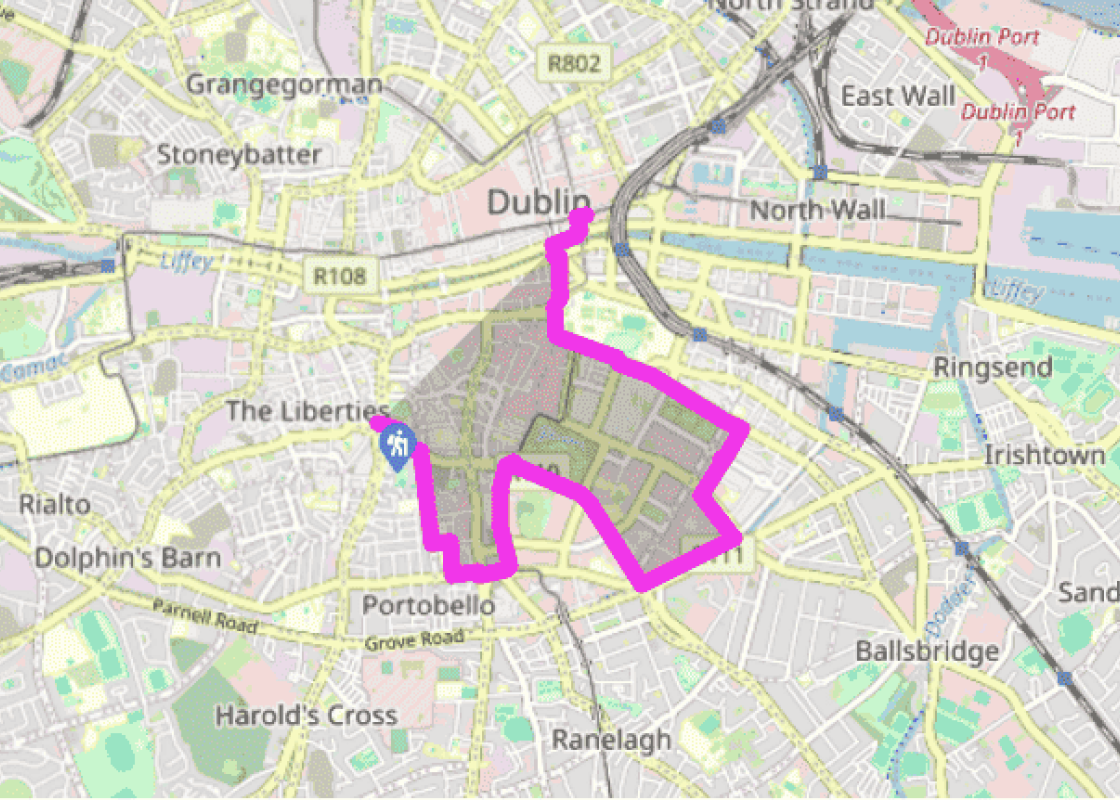
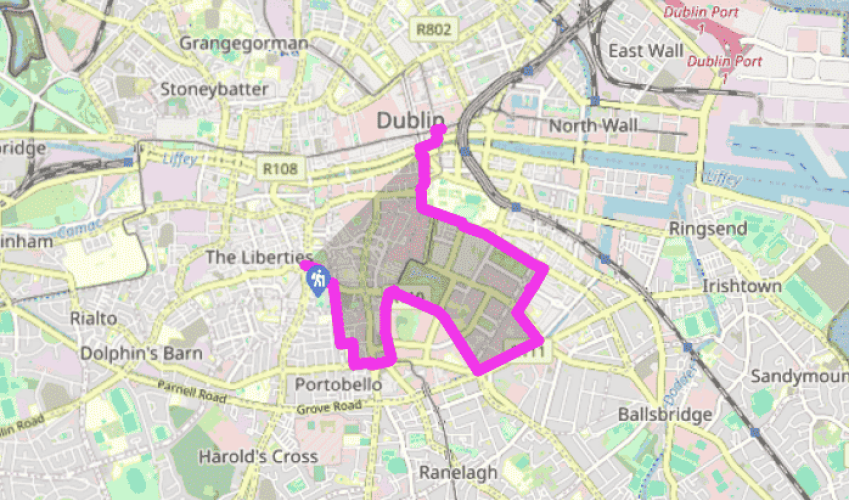
At St Patrick’s Close, walk through the main entrance to the cathedral. Given the lively celebrations that take place around the world on St Patrick’s Day each year wherever there is a contingency of Irish descendants, it’s fair to say that Ireland’s patron saint is still a much revered figure in the country’s history. Dublin’s cathedral in his honour dates from 1191 and although it plays something of a second fiddle to the larger Christ Church Cathedral, its literary heritage is linked to Jonathan Swift (1667–1745) who was dean of the cathedral from 1713 to 1745. Having studied at Trinity College, followed by a spell in England, he ordained to the priesthood in the Church of Ireland in 1694. His religious convictions, however, did not prevent him from expressing his strong political views, notably about the Tory government of the time, and he already had a reputation as both a satirist and a political campaigner before he penned his best-known work, Gulliver’s Travels, in 1726. Telling the tale of the giant Gulliver who finds himself shipwrecked on Lilliput, a country of tiny people only 6in (15cm) tall, it is also a subtle allegory on politics and religion, as well as an examination of human nature. In front of the cathedral are the gravestones of both Swift and Esther Johnson, the woman he immortalized in his poetry as Stella. With your back to the cathedral follow St Patrick’s Close round and turn left on to Kevin Street Upper. Take the first right on to Bride Street, and follow this road straight down until it turns into Heytesbury Street. Turn left on to Grantham Street. Cross over Harrington Street and continue down Synge Street where No. 33 is on the left. This is the birthplace of one of the most prolific playwrights of 19th- and 20th-century literature, George Bernard Shaw (1856–1950). Although he spent the majority of his adult life in England, his Irish roots gave him much of the humour that is apparent in his plays as well as a strong conviction about social standards. Among his best-known plays are Pygmalion (probably better known today as the musical My Fair Lady), Arms and the Man and Mrs Warren’s Profession, but in all his works he explored matters of social convention or injustice, from the class system, to education, to women’s rights, to religion, yet managing to add comedic elements that prevent the works from being pure diatribes. A plaque outside his birthplace is rather less eloquent than the man, saying simply ‘author of many plays’, but inside, his first home has been turned into a museum in honour of the Nobel Prize winner. There are the inevitable displays detailing the life and works of Shaw but of rather more interest is the meticulous reconstruction of a house exactly as it would have been in Victorian times.
Retrace your steps along Synge Street and turn right on to Harrington Street, crossing over the junction with Camden Street. Turn left into Harcourt Street. Number 16 Harcourt Street was once home to possibly the most famous horror writer in history, Bram Stoker (1847–1912). Although born in the Dublin suburb of Clontarf (where there is now a rather tacky museum entitled The Stoker Dracula Museum), he attended Trinity College and lived at this address for a time before moving to and settling in London. Fascinated by folklore, which he drew upon in a number of horror novels, the work that has earned him a place in literary history and spawned a whole cinematic genre is Dracula, the tale of the infamous Transylvanian vampire count. A plaque at No. 30 Kildare Street, north of the river, where he also lived, commemorates the famous author. With a chill in your step, move on to an altogether gentler man of letters.

Been on this walk?
Send us photos or a comment about this route. Or recommend a route of your own.

Walking in Safety
Read our tips to look after yourself and the environment when following this walk.
Get an AA guide
Explore our range of ‘50 Walks in’ guides - they’re the ideal companion for a ramble.
Been on this walk?
Send us photos or a comment about this route. Or recommend a route of your own.
Walking in Safety
Read our tips to look after yourself and the environment when following this walk.
Get an AA guide
Explore our range of ‘50 Walks in’ guides - they’re the ideal companion for a ramble.
Nearby places to stay
View all (3)
- Family rooms: 0

- En-suite rooms:
- Family rooms: