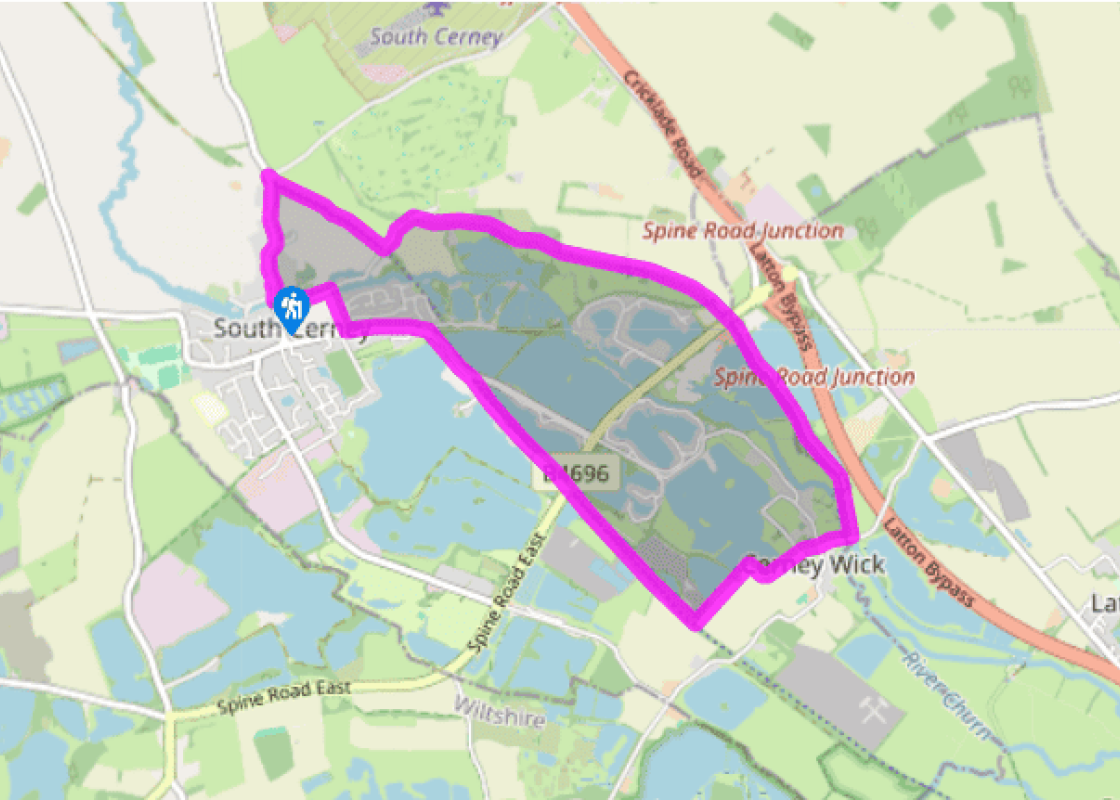

"Through an evolving landscape in the southern Cotswolds."
Walk directions
From Silver Street walk north out of the village. Just before the turning to Driffield and Cricklade, turn right onto National Cycle Route 45. Stay on this obvious path for 800yds (732m) to reach a brick bridge across the path. Turn right here up a flight of steps to reach a narrow road.
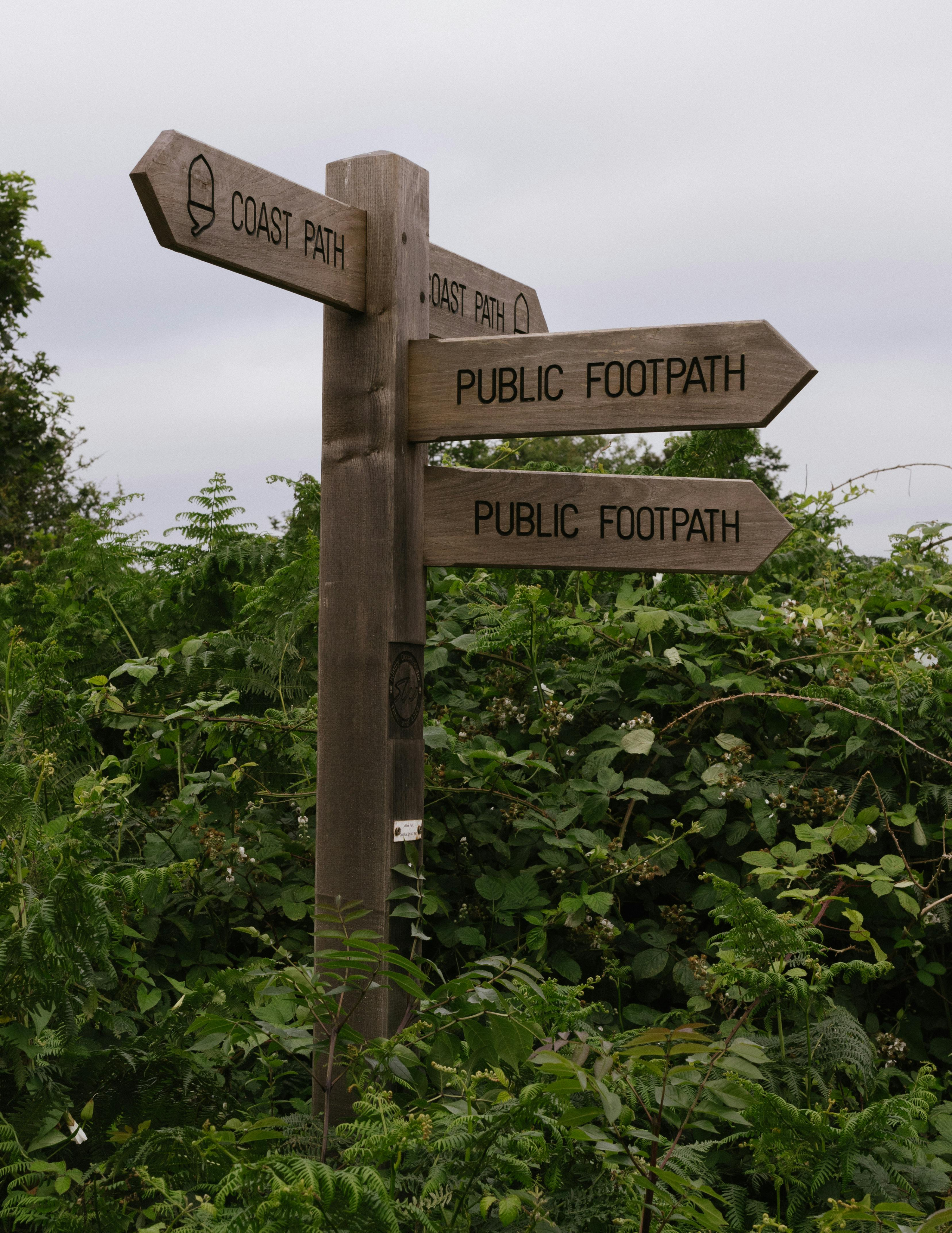
Turn left and walk along this for 200yds (183m) until you come to footpaths to the right and left. Turn right along a farm track, following a signpost for Cerney Wick. Almost immediately the shallow, overgrown remains of the Thames and Severn Canal appear to your left. When the track veers right into a farm, walk straight ahead over a stile to follow a path beneath the trees – this is the old canal towpath. Keep going straight ahead through kissing gates as you pass the partly restored Wildmoorway Lower Lock, just before the Spine Road bridge.
Turn right here and walk to the junction at the end of the road, beside The Crown pub. Cross to a stile and enter a field. Walk straight ahead, come to another stile and cross it, aiming to the left of a cottage. Cross the lane, go through a kissing gate and enter a field. Walk ahead and follow the path as it guides you through a kissing gate and across a stile onto the grass by a lake. Walk around the lake, going right and then left. In the corner in front of you, go down steps and cross a footbridge into a field, then walk ahead past a quarry towards trees and go through a kissing gate to a track.
Turn right, rejoining the old railway line, and follow it all the way to Spine Road. Cross with care, and continue along National Cycle Route 45. Stay on this all the way to another road and follow a path that runs to its left.
Where the path ends at the beginning of South Cerney, continue along Station Road for 400yds (366m). A few paces past The Lennards on your right, turn right up the signposted footpath that takes you across a bridge and brings you to a lane called Bow Wow. Turn left here between streams and return to Silver Street and the start of the route.
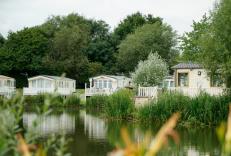
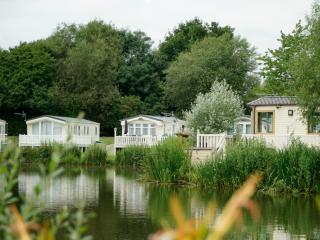
By their very nature, ancient landscapes and historic architecture evolve very slowly, changing little from one century to the next. In the Cotswolds, this is especially true. Here, building restrictions are strict – even sometimes draconian. The result is a significant area of largely unspoilt... English countryside. Sometimes, however, thoughtful development has enhanced the skyline. The Cotswold Water Park, located in and around old gravel pits, is an example of this. Gravel has been worked in the upper Thames Valley, where the water table is close to the surface, since the 1920s. The removal of gravel leads to the creation of lakes; in the areas around South Cerney and between Fairford and Lechlade there are now some 4,000 acres (1,620ha) of water, in 133 lakes. They provide an important wetland habitat for a variety of wildlife. Most of these lakes have been turned over to recreational use of one sort or another, and are a perfect place for game and coarse fishing, board sailing, walking, boating of various kinds, riding and sundry other leisure activities. The landscaping has not just been a case of letting nature take over where the gravel excavators left off. The crane-grabs that were used for excavation in the 1960s, for example, left the gravel pits with vertical sides and therefore with deep water right up to the shoreline. Some forms of aquatic life flourish under these conditions, but in other lakes the shoreline has been graded to create a gentler slope, to harmonise better with the flat landscape in this part of the Cotswolds and to suit the needs of swimmers and children. In the same way, trees have been planted and hills have been constructed to offer shelter and visual relief. Old brick railway bridges have been preserved. Finally, a style of waterside architecture has been developed to attract people to live here. The walk begins in South Cerney, by the River Churn, only 4 miles (6.4km) from the source of the Thames. Look inside the Norman church for the carving on the 12th-century rood. Later, the walk takes you through Cerney Wick, a small village on the other side of the gravel workings. The highlight here is an 18th-century roundhouse, used once by canal workers.
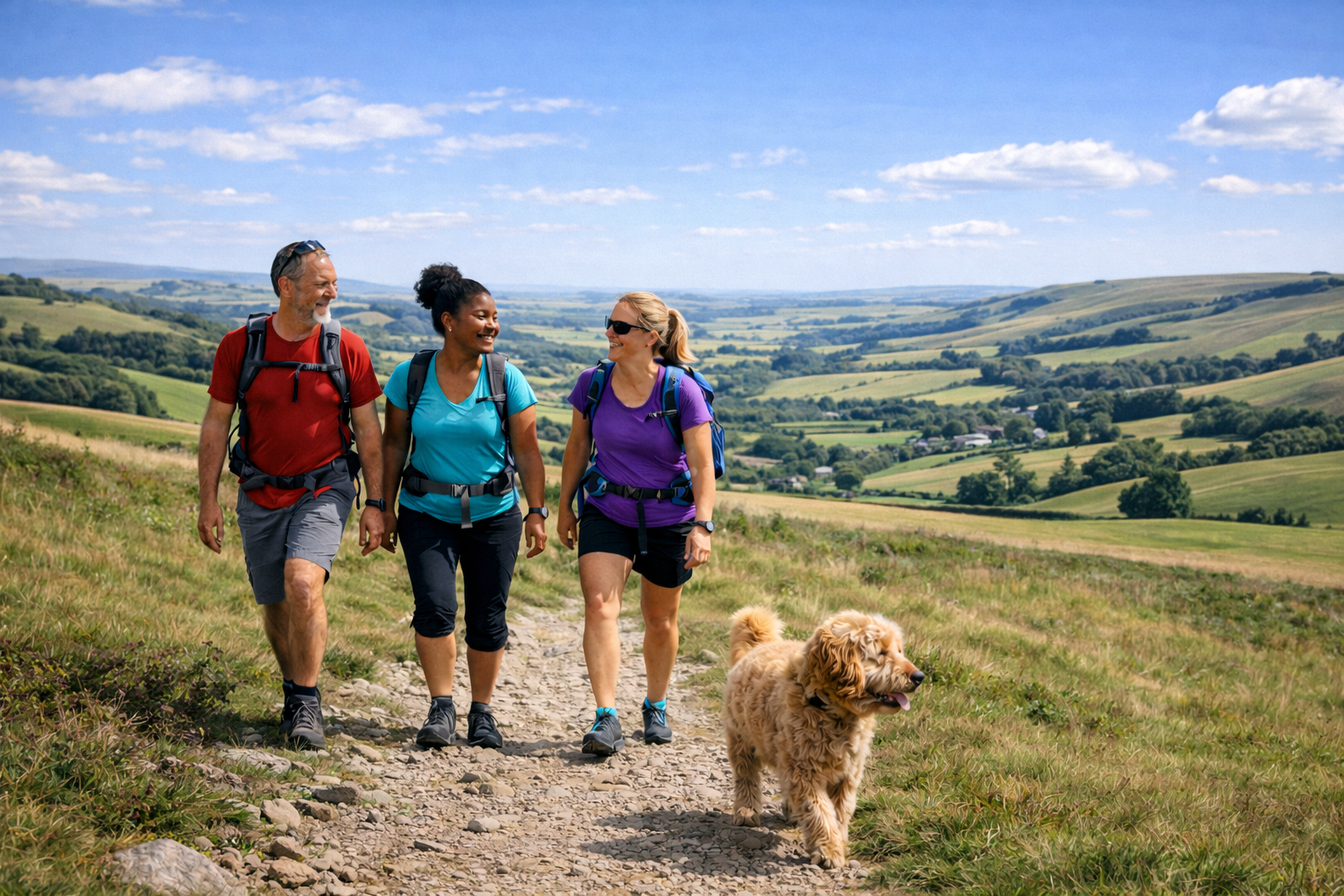
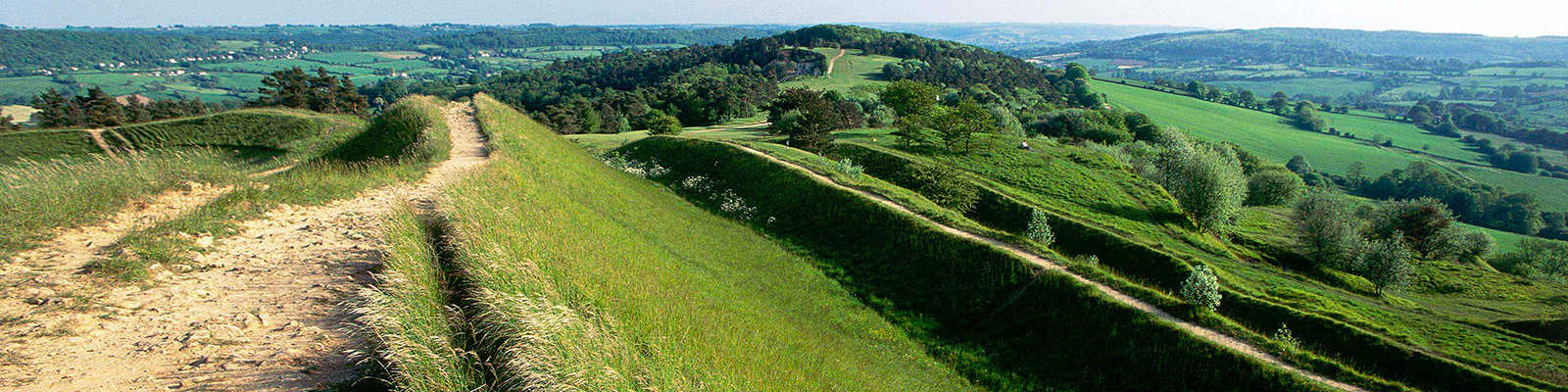
Gloucestershire is home to a variety of landscapes, including the Cotswolds, a region of gentle hills, valleys and gem-like villages that roll through the county. To their west is the Severn Plain, watered by Britain’s longest river and characterised by orchards and farms marked out by hedgerows that blaze with mayflower in the spring; beyond the Severn are the Forest of Dean and the Wye Valley.
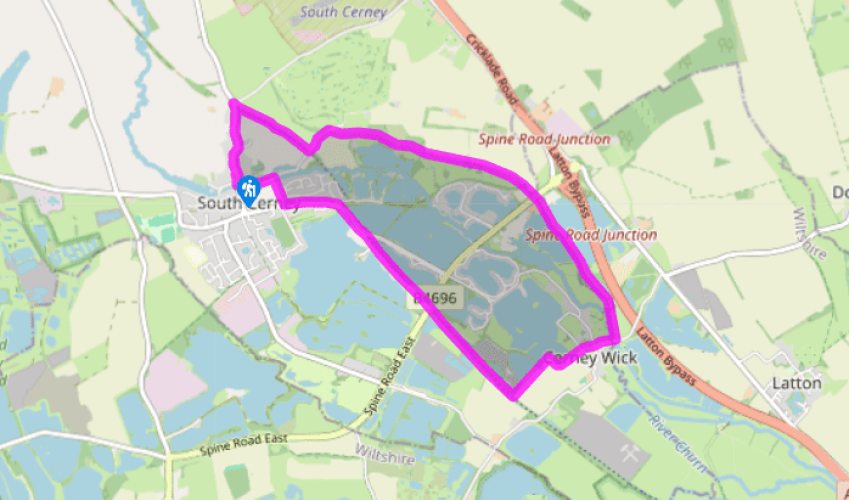
"Through an evolving landscape in the southern Cotswolds."
Walk details
2hrs 30min
Difficulty:
Easy
Gradient:
Flat
Distance:
5 miles (8kms)
Ascent:
145ft (44m)
Walk directions
From Silver Street walk north out of the village. Just before the turning to Driffield and Cricklade, turn right onto National Cycle Route 45. Stay on this obvious path for 800yds (732m) to reach a brick bridge across the path. Turn right here up a flight of steps to reach a narrow road.
1 of 6
Turn left and walk along this for 200yds (183m) until you come to footpaths to the right and left. Turn right along a farm track, following a signpost for Cerney Wick. Almost immediately the shallow, overgrown remains of the Thames and Severn Canal appear to your left. When the track veers right into a farm, walk straight ahead over a stile to follow a path beneath the trees – this is the old canal towpath. Keep going straight ahead through kissing gates as you pass the partly restored Wildmoorway Lower Lock, just before the Spine Road bridge.
Turn right here and walk to the junction at the end of the road, beside The Crown pub. Cross to a stile and enter a field. Walk straight ahead, come to another stile and cross it, aiming to the left of a cottage. Cross the lane, go through a kissing gate and enter a field. Walk ahead and follow the path as it guides you through a kissing gate and across a stile onto the grass by a lake. Walk around the lake, going right and then left. In the corner in front of you, go down steps and cross a footbridge into a field, then walk ahead past a quarry towards trees and go through a kissing gate to a track.
4 of 6
Turn right, rejoining the old railway line, and follow it all the way to Spine Road. Cross with care, and continue along National Cycle Route 45. Stay on this all the way to another road and follow a path that runs to its left.
5 of 6
Where the path ends at the beginning of South Cerney, continue along Station Road for 400yds (366m). A few paces past The Lennards on your right, turn right up the signposted footpath that takes you across a bridge and brings you to a lane called Bow Wow. Turn left here between streams and return to Silver Street and the start of the route.
By their very nature, ancient landscapes and historic architecture evolve very slowly, changing little from one century to the next. In the Cotswolds, this is especially true. Here, building restrictions are strict – even sometimes draconian. The result is a significant area of largely unspoilt... English countryside. Sometimes, however, thoughtful development has enhanced the skyline. The Cotswold Water Park, located in and around old gravel pits, is an example of this. Gravel has been worked in the upper Thames Valley, where the water table is close to the surface, since the 1920s. The removal of gravel leads to the creation of lakes; in the areas around South Cerney and between Fairford and Lechlade there are now some 4,000 acres (1,620ha) of water, in 133 lakes. They provide an important wetland habitat for a variety of wildlife. Most of these lakes have been turned over to recreational use of one sort or another, and are a perfect place for game and coarse fishing, board sailing, walking, boating of various kinds, riding and sundry other leisure activities. The landscaping has not just been a case of letting nature take over where the gravel excavators left off. The crane-grabs that were used for excavation in the 1960s, for example, left the gravel pits with vertical sides and therefore with deep water right up to the shoreline. Some forms of aquatic life flourish under these conditions, but in other lakes the shoreline has been graded to create a gentler slope, to harmonise better with the flat landscape in this part of the Cotswolds and to suit the needs of swimmers and children. In the same way, trees have been planted and hills have been constructed to offer shelter and visual relief. Old brick railway bridges have been preserved. Finally, a style of waterside architecture has been developed to attract people to live here. The walk begins in South Cerney, by the River Churn, only 4 miles (6.4km) from the source of the Thames. Look inside the Norman church for the carving on the 12th-century rood. Later, the walk takes you through Cerney Wick, a small village on the other side of the gravel workings. The highlight here is an 18th-century roundhouse, used once by canal workers.
Gloucestershire is home to a variety of landscapes, including the Cotswolds, a region of gentle hills, valleys and gem-like villages that roll through the county. To their west is the Severn Plain, watered by Britain’s longest river and characterised by orchards and farms marked out by hedgerows that blaze with mayflower in the spring; beyond the Severn are the Forest of Dean and the Wye Valley.