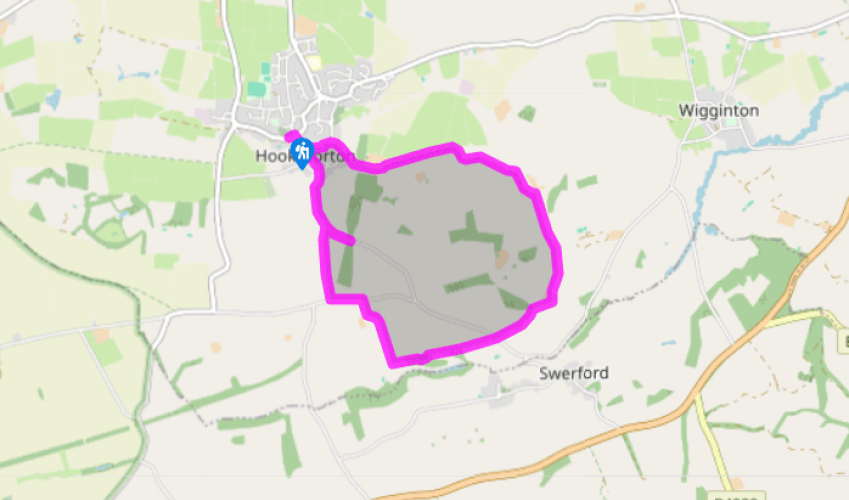
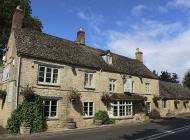
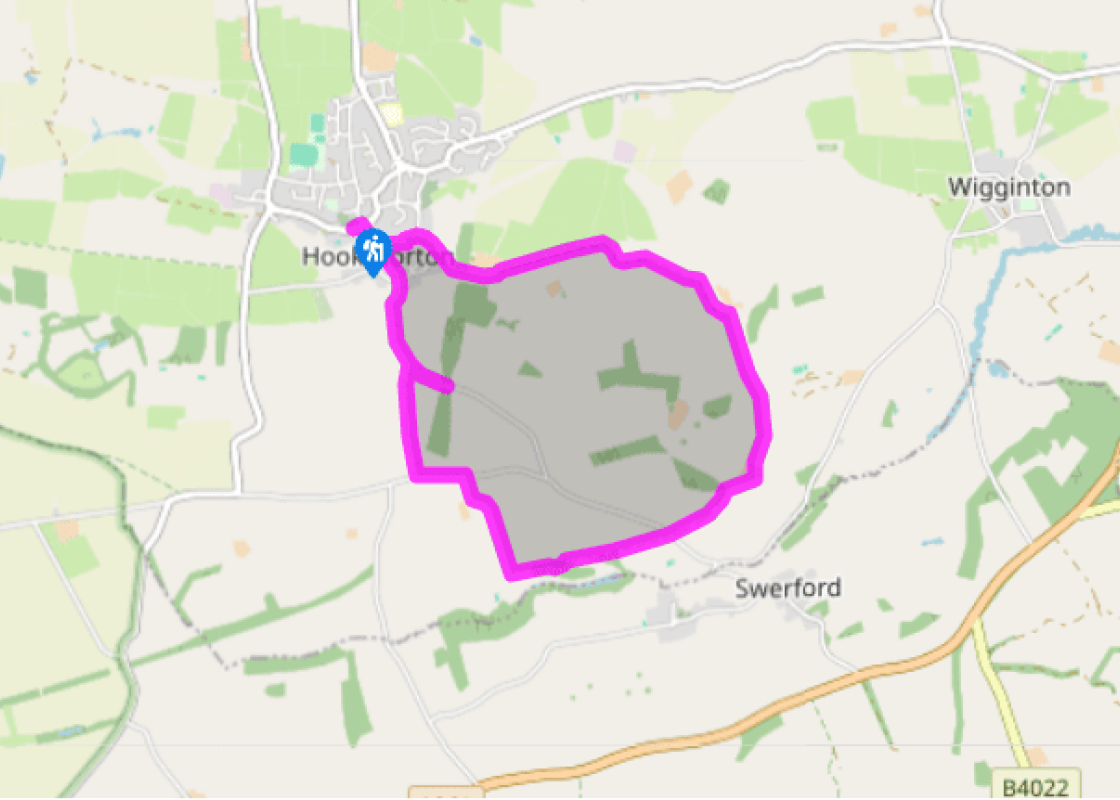
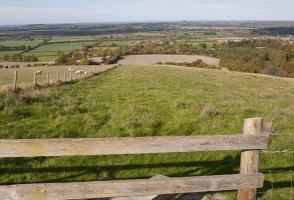
From the High Street, with the church on your left, pass the Sun Inn and turn right into Middle Hill. Keeping left follow it down through barriers to the next road and keep ahead down Brick Hill over the bridge. Turn left into Park Road and follow it to the next junction. Bear left, keeping a row of bungalows on the left. When the road bends sharp left, join a waymarked bridleway and follow the track out of Hook Norton. Pass the remains of the railway viaduct (tree foliage may cover the viaduct remains in summer) and walk to Park Farm.
Just before a cattle grid, go through a gate on the left and follow the grassy path to a further gate. Continue along the field edge to the next gate and follow the obvious track, which soon curves to the right, through another gate. Cross a footbridge by a ford and make for the next gate. Follow the field boundary and go through a gate into the next field, keeping trees and a hedgerow on the left. Head for a galvanised gate and, after it, swing right at the bridleway sign. Walk diagonally across the field and look for a gate in the trees in the top boundary. Follow the grassy path beside the fence to reach a drive.
Turn right here, away from Cradle Farm, and walk for about half a mile (800m) along to some outbuildings at the point where the drive bends sharp left. Turn right here and follow the track alongside a pair of semi-detached houses on the right. Emerge from the trees and follow the track straight on, up the hill, and back down to meet the road. Cross over to a galvanised gate and follow the bridleway between fences, trees and paddocks. On reaching a gate, turn right through a second gate into a field. Keep left and make for a further gate into the next field. Pass to the right-hand side of some fencing and make for a gate in the field boundary.
Turn right along an avenue of lime trees. At length the drive reaches the road. Turn left, then take the first right for Hook Norton. At the first junction, turn right at the sign for Swerford and walk along to the nature reserve at the Hook Norton Cutting. Retrace your steps to the junction and continue ahead towards Hook Norton. Pass the speed restriction sign and keep ahead into the village. Pass Park Road on the right, cross the bridge and take Middle Hill back up to the church and the village centre.
Hook Norton is one of those places that you are most likely to stumble upon by accident. Hidden away down winding lanes a few miles from the Cotswold town of Chipping Norton, this sizeable village, one of the largest parishes in Oxfordshire, is typical of many other settlements in the county – with... one possible exception. Tucked away in Brewery Lane, on the edge of the village, is the Hook Norton Brewery, displaying one of the most distinctive and unusual Victorian façades in the country. The tower brewing building, erected towards the end of the 19th century, has been described as ‘an essay in brick, ironstone, slate, weatherboarding, half timber and cast iron.’ During the 19th century it was traditional for most towns, cities and even large villages to have their own brewery. During the 1880s Oxfordshire alone had almost 50. Today, the scarcity of independent breweries reflects the changing fortunes of the licensed trade. However, the Hook Norton Brewery has managed to fight off the big corporate companies and it remains successful. It was during the Victorian era, in 1849, that John Harris set up in business as a maltster by brewing beer in a nearby farmhouse. A year later, Harris built his own brewhouse, where he used pure Cotswold spring water. He soon found there was a great demand for his beer and so he established a small brewery with its own maltings. When Harris died, his nephew Alban Clark assumed responsibility for the running of the business and by 1899 work on the present tower brewery was complete. The new building, comprising six floors, housed the latest brewing equipment and allowed the entire brewing sequence to be undertaken as a continuous process. It was at this time that John Harris and Company became the Hook Norton Brewery Company Limited. It remains a family business in the 21st century and is now run by James Clarke, Alban Clarke’s great, great grandson. There is nothing brash or hi-tech about Hook Norton. Much of the brewery’s intricate machinery is original – the process of brewing has been the same for over 100 years and, apart from a new laboratory, stainless steel copper and cooling system, little has changed. One of the brewery’s greatest assets is the mighty steam-driven, 25-horse-power piston engine, dating back to 1899. Today, the Hook Norton Brewery has 36 tied houses and still keeps shire horses to deliver the beer locally on rays. In September 1999, 100 years after brewing began here, HRH The Princess Royal opened a new visitor centre and museum, housed in the original maltings.
Located at the heart of England, Oxfordshire enjoys a rich heritage and varied scenery, with Oxford’s elegant streets a highlight for visitors. The landscape encompasses open chalk downland, picturesque rivers and attractive villages, while northwest of Oxfordshire is home to the sleepy backwaters of Abingdon, Wallingford, Wantage, Watlington and Witney that reveal how Oxfordshire’s old towns evolved over the centuries.
From the High Street, with the church on your left, pass the Sun Inn and turn right into Middle Hill. Keeping left follow it down through barriers to the next road and keep ahead down Brick Hill over the bridge. Turn left into Park Road and follow it to the next junction. Bear left, keeping a row of bungalows on the left. When the road bends sharp left, join a waymarked bridleway and follow the track out of Hook Norton. Pass the remains of the railway viaduct (tree foliage may cover the viaduct remains in summer) and walk to Park Farm.
1 of 4
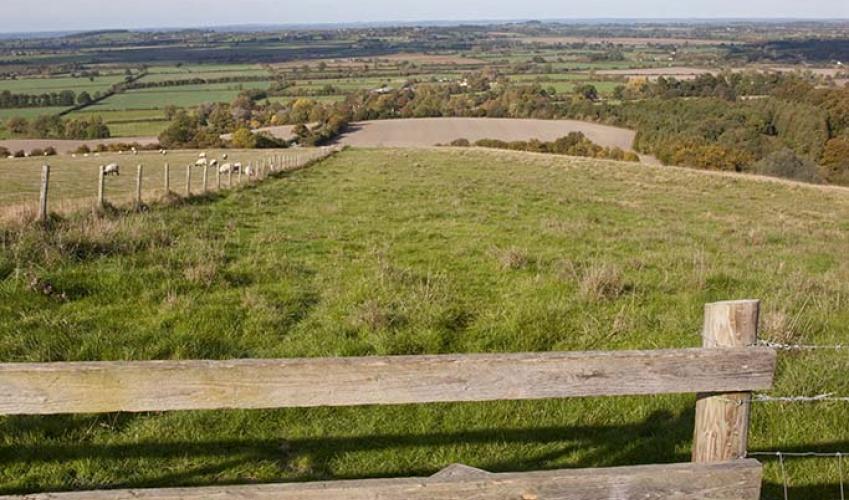
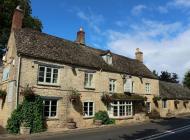
Just before a cattle grid, go through a gate on the left and follow the grassy path to a further gate. Continue along the field edge to the next gate and follow the obvious track, which soon curves to the right, through another gate. Cross a footbridge by a ford and make for the next gate. Follow the field boundary and go through a gate into the next field, keeping trees and a hedgerow on the left. Head for a galvanised gate and, after it, swing right at the bridleway sign. Walk diagonally across the field and look for a gate in the trees in the top boundary. Follow the grassy path beside the fence to reach a drive.
2 of 4
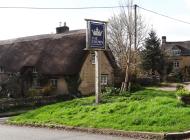
Turn right here, away from Cradle Farm, and walk for about half a mile (800m) along to some outbuildings at the point where the drive bends sharp left. Turn right here and follow the track alongside a pair of semi-detached houses on the right. Emerge from the trees and follow the track straight on, up the hill, and back down to meet the road. Cross over to a galvanised gate and follow the bridleway between fences, trees and paddocks. On reaching a gate, turn right through a second gate into a field. Keep left and make for a further gate into the next field. Pass to the right-hand side of some fencing and make for a gate in the field boundary.
3 of 4
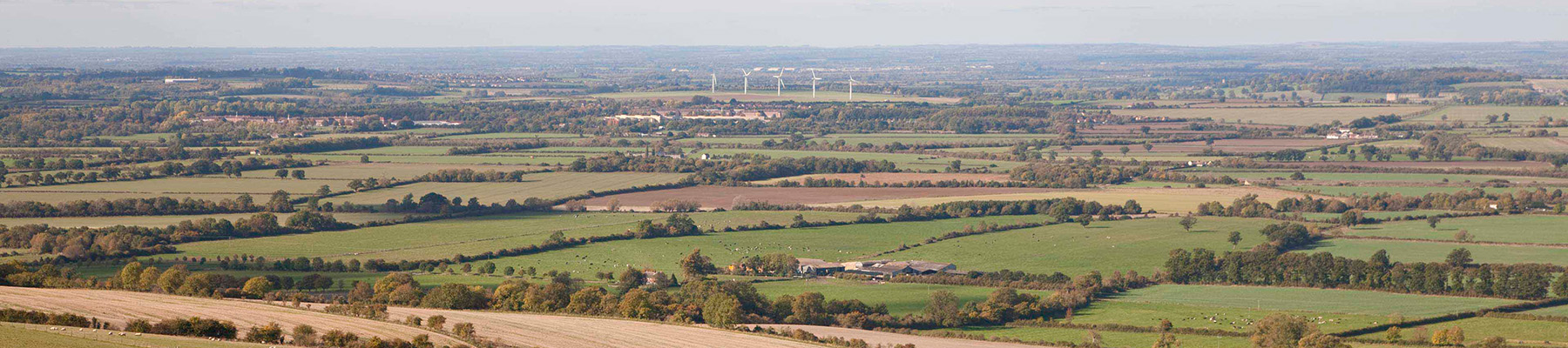
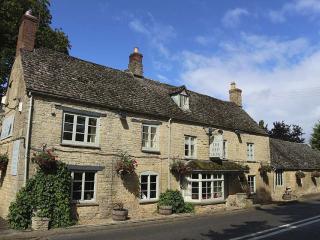
Turn right along an avenue of lime trees. At length the drive reaches the road. Turn left, then take the first right for Hook Norton. At the first junction, turn right at the sign for Swerford and walk along to the nature reserve at the Hook Norton Cutting. Retrace your steps to the junction and continue ahead towards Hook Norton. Pass the speed restriction sign and keep ahead into the village. Pass Park Road on the right, cross the bridge and take Middle Hill back up to the church and the village centre.
Hook Norton is one of those places that you are most likely to stumble upon by accident. Hidden away down winding lanes a few miles from the Cotswold town of Chipping Norton, this sizeable village, one of the largest parishes in Oxfordshire, is typical of many other settlements in the county – with... one possible exception. Tucked away in Brewery Lane, on the edge of the village, is the Hook Norton Brewery, displaying one of the most distinctive and unusual Victorian façades in the country. The tower brewing building, erected towards the end of the 19th century, has been described as ‘an essay in brick, ironstone, slate, weatherboarding, half timber and cast iron.’ During the 19th century it was traditional for most towns, cities and even large villages to have their own brewery. During the 1880s Oxfordshire alone had almost 50. Today, the scarcity of independent breweries reflects the changing fortunes of the licensed trade. However, the Hook Norton Brewery has managed to fight off the big corporate companies and it remains successful. It was during the Victorian era, in 1849, that John Harris set up in business as a maltster by brewing beer in a nearby farmhouse. A year later, Harris built his own brewhouse, where he used pure Cotswold spring water. He soon found there was a great demand for his beer and so he established a small brewery with its own maltings. When Harris died, his nephew Alban Clark assumed responsibility for the running of the business and by 1899 work on the present tower brewery was complete. The new building, comprising six floors, housed the latest brewing equipment and allowed the entire brewing sequence to be undertaken as a continuous process. It was at this time that John Harris and Company became the Hook Norton Brewery Company Limited. It remains a family business in the 21st century and is now run by James Clarke, Alban Clarke’s great, great grandson. There is nothing brash or hi-tech about Hook Norton. Much of the brewery’s intricate machinery is original – the process of brewing has been the same for over 100 years and, apart from a new laboratory, stainless steel copper and cooling system, little has changed. One of the brewery’s greatest assets is the mighty steam-driven, 25-horse-power piston engine, dating back to 1899. Today, the Hook Norton Brewery has 36 tied houses and still keeps shire horses to deliver the beer locally on rays. In September 1999, 100 years after brewing began here, HRH The Princess Royal opened a new visitor centre and museum, housed in the original maltings.
Located at the heart of England, Oxfordshire enjoys a rich heritage and varied scenery, with Oxford’s elegant streets a highlight for visitors. The landscape encompasses open chalk downland, picturesque rivers and attractive villages, while northwest of Oxfordshire is home to the sleepy backwaters of Abingdon, Wallingford, Wantage, Watlington and Witney that reveal how Oxfordshire’s old towns evolved over the centuries.