Newcastle and Gateshead

Recommended by
Our view
"Take a tour of this vibrant and exciting area in northeast England"
Walk directions

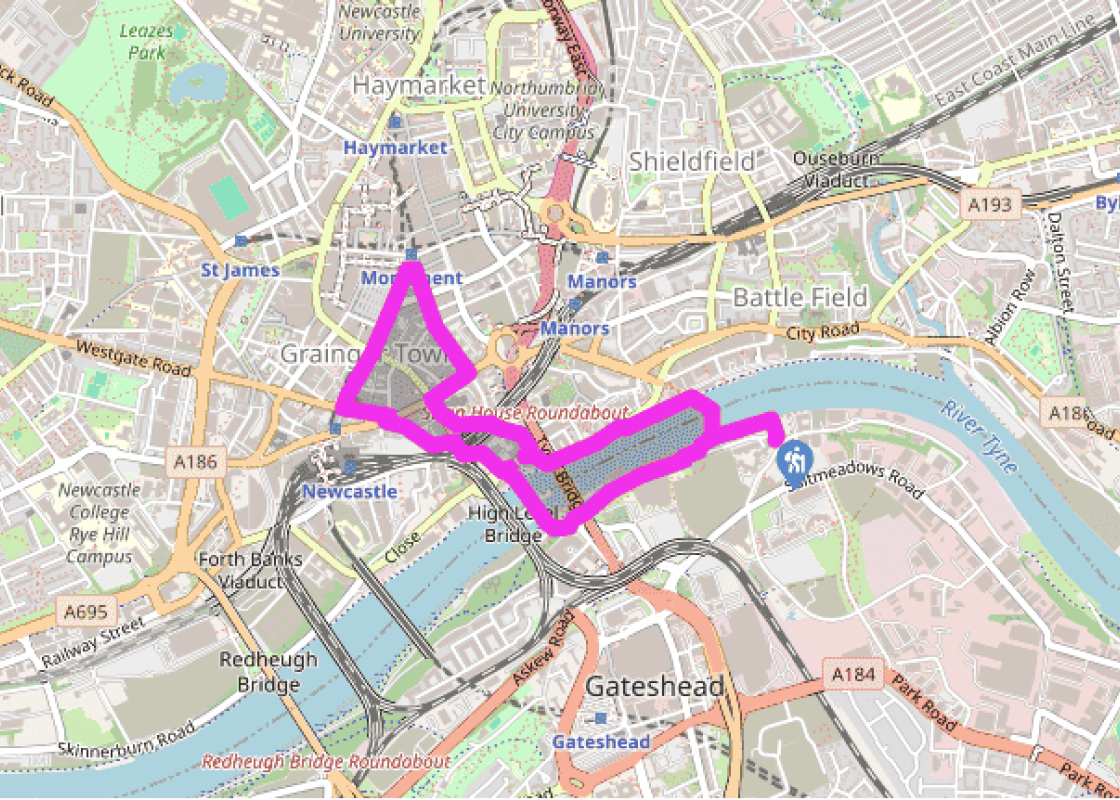
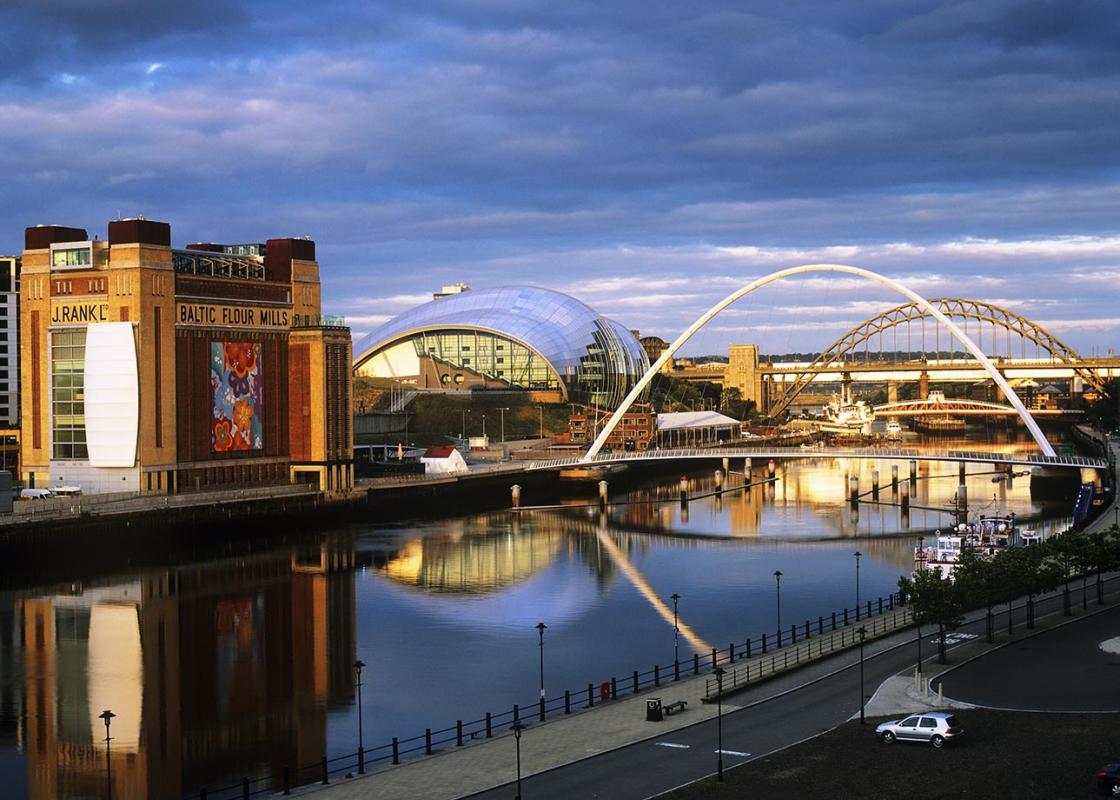
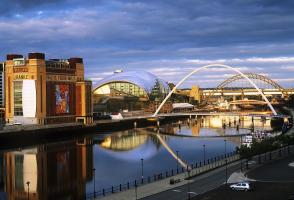
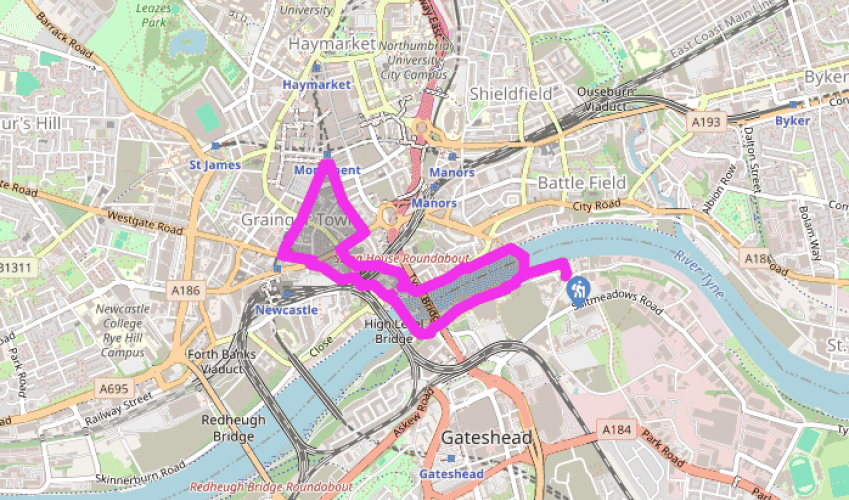
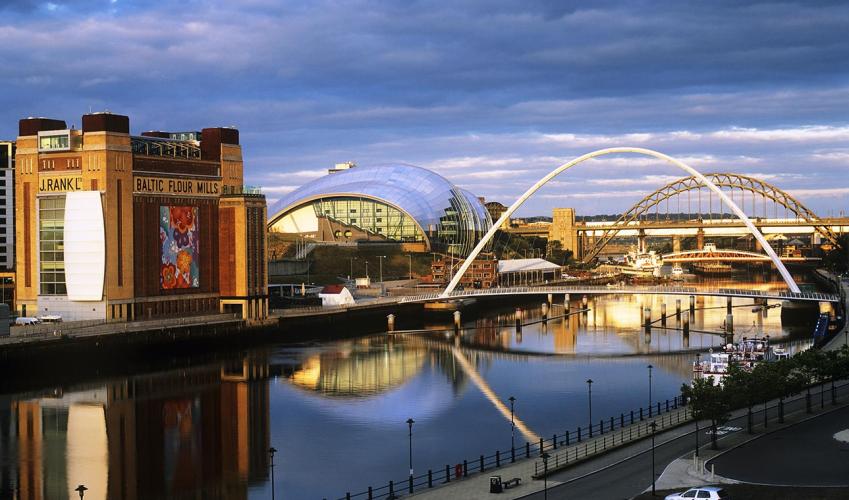
Leave the back of the car park and follow the waterfront left past Baltic, built as a flour mill in 1950 and subsequently rejuvenated as a centre for contemporary art, which opened in 2002. Entering Baltic Square beside the Millennium Bridge, walk up steps out to the road and follow it right past the Sage, three separate music performance and conference spaces enclosed within a single glass-and-steel cocoon. Walk beneath the iconic Tyne Bridge, opened in 1928 and high enough to allow shipping to pass up- and downriver. At the traffic lights, go right, crossing the swing bridge built 52 years earlier which still uses the original hydraulic mechanism invented by William Armstrong. Over to the left is Robert Stephenson's High Level Bridge, opened in 1849 and incorporating separate decks for rail and road.

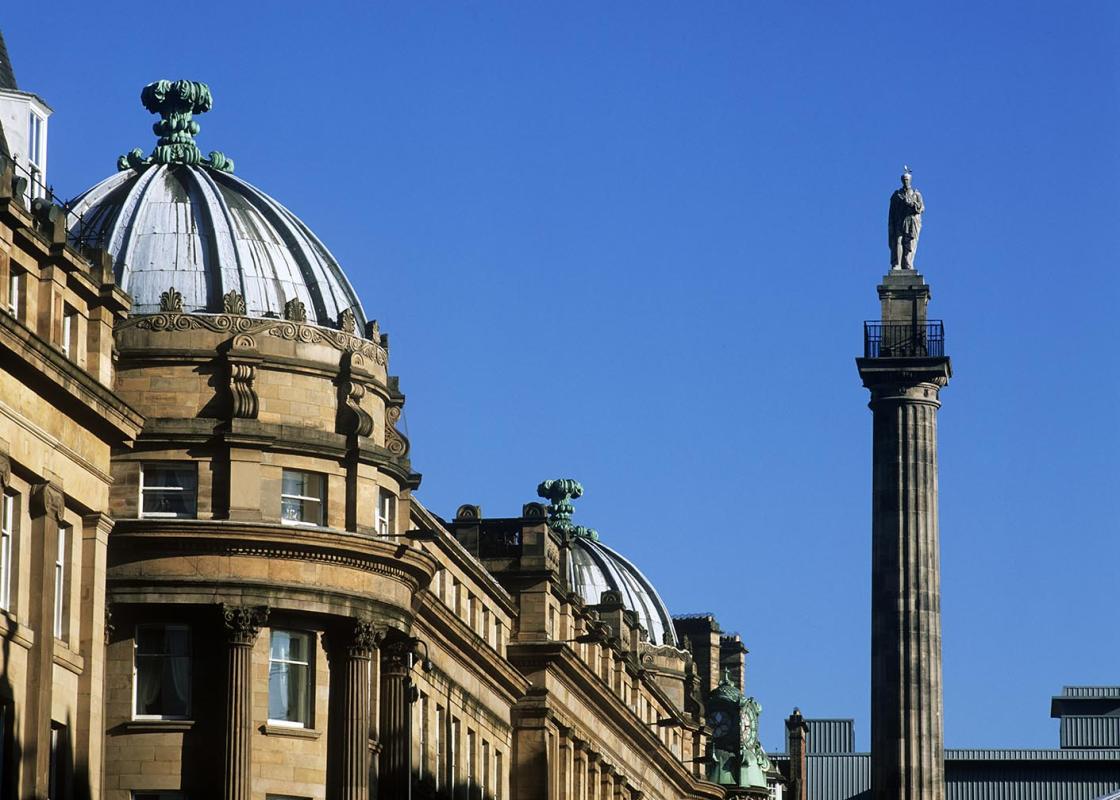
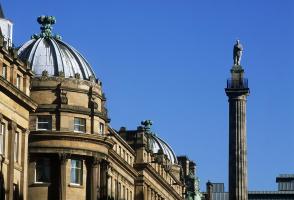
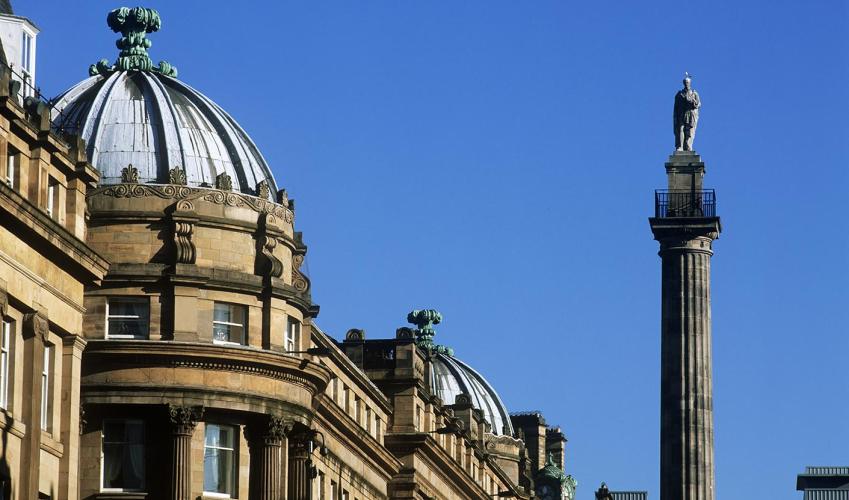
At the junction beyond, cross left to climb Castle Stairs, emerging through the old town walls. Bear left past Castle Keep and then right beneath a railway arch. Turn left opposite Black Gate into Westgate Road, which leads to a square presided over by a statue of George Stephenson. The fine railway station, ahead to the left along Neville Street, was designed by John Dobson, who, with Richard Grainger, was responsible for much of Newcastle's 19th-century architecture.

View all directions
Location
Additional information
  Terrain  - Pavements and steps, no stile
  Landscape  - City centre, on banks of River Tyne
  Dog friendliness  - On lead; probably not a dog's idea of fun
  Parking  - Pay-and-display car park east of BALTIC Centre for Contemporary Art
  Toilets en route  - BALTIC Centre and several in middle of Newcastle
About the walk
Today the vibrant heart of the Northeast, Newcastle sprouted from the seed of a Roman bridge crossing the Tyne near the eastern end of Hadrian's Wall. Constructed around AD 120 of wood resting on stone piers, this is thought to have stood close to the present Swing Bridge. A fort and civilian...
Read more
Been on this walk placeholder

Been on this walk?

Send us photos or a comment about this route. Or recommend a route of your own.

Walking in Safety placeholder

Walking in Safety

Read our tips to look after yourself and the environment when following this walk.

Get an AA guide placeholder

Get an AA guide

Explore our range of ‘50 Walks in’ guides - they’re the ideal companion for a ramble.

About the area
The metropolitan county of Tyne and Wear encompasses Newcastle-upon-Tyne, Gateshead, South Shields and Sunderland, as well as part of Hadrian’s Wall. The county is cut through by the two rivers after which it is named.
Area image

Newcastle and Gateshead

Recommended by
Our view
"Take a tour of this vibrant and exciting area in northeast England"
Location
Nearest postcode:
Additional information
  Terrain - Pavements and steps, no stile
  Landscape - City centre, on banks of River Tyne
  Dog friendliness - On lead; probably not a dog's idea of fun
  Parking - Pay-and-display car park east of BALTIC Centre for Contemporary Art
  Toilets en route - BALTIC Centre and several in middle of Newcastle
About the walk
Today the vibrant heart of the Northeast, Newcastle sprouted from the seed of a Roman bridge crossing the Tyne near the eastern end of Hadrian's Wall. Constructed around AD 120 of wood resting on stone piers, this is thought to have stood close to the present Swing Bridge. A fort and civilian...
Read more
Been on this walk placeholder

Been on this walk?

Send us photos or a comment about this route. Or recommend a route of your own.

Walking in Safety placeholder

Walking in Safety

Read our tips to look after yourself and the environment when following this walk.
Get an AA guide placeholder

Get an AA guide

Explore our range of ‘50 Walks in’ guides - they’re the ideal companion for a ramble.

About the area
Area image
Tyne & Wear
The metropolitan county of Tyne and Wear encompasses Newcastle-upon-Tyne, Gateshead, South Shields and Sunderland, as well as part of Hadrian’s Wall. The county is cut through by the two rivers after which it is named.