From New Lanark to the Falls of Clyde
Walk directions
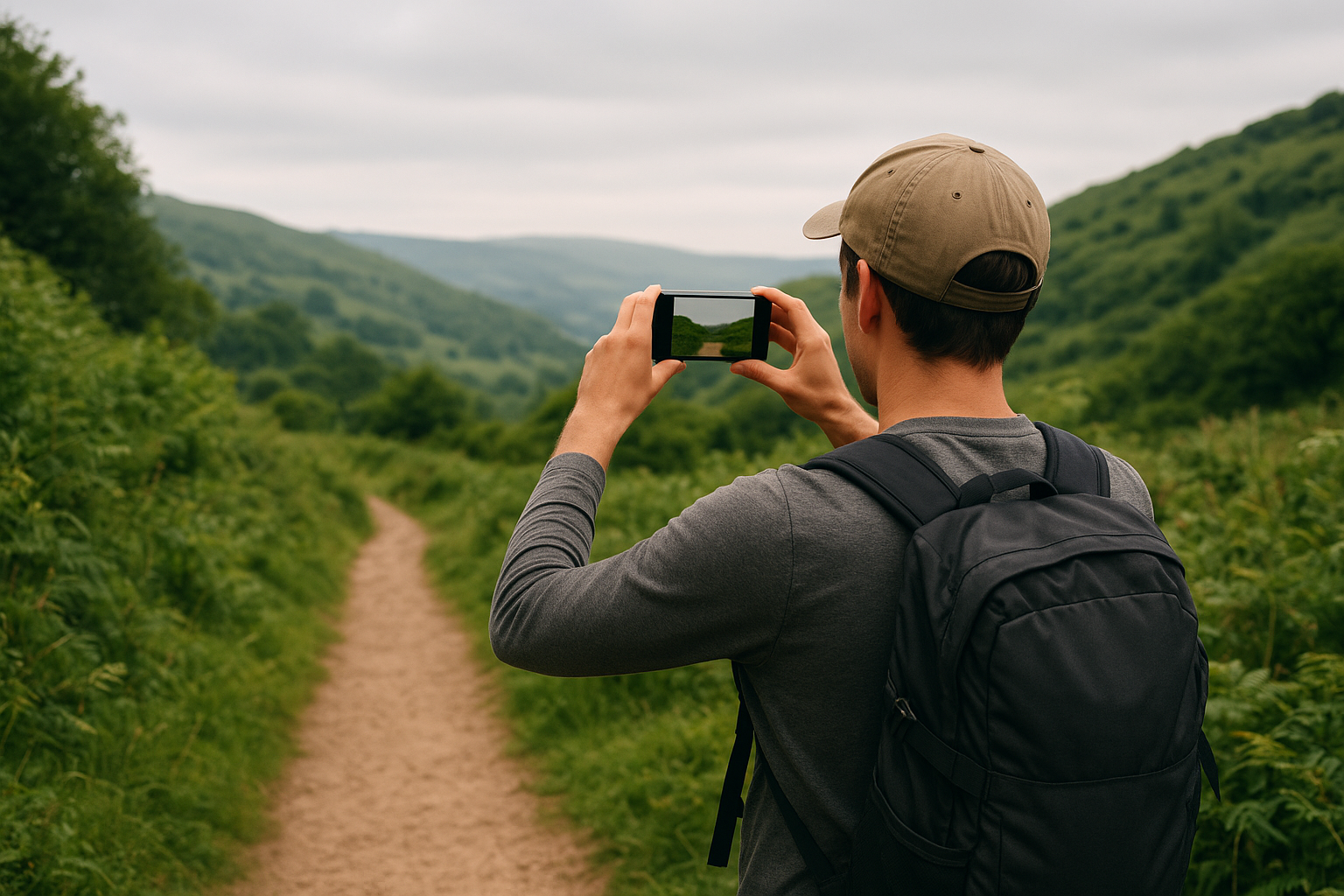
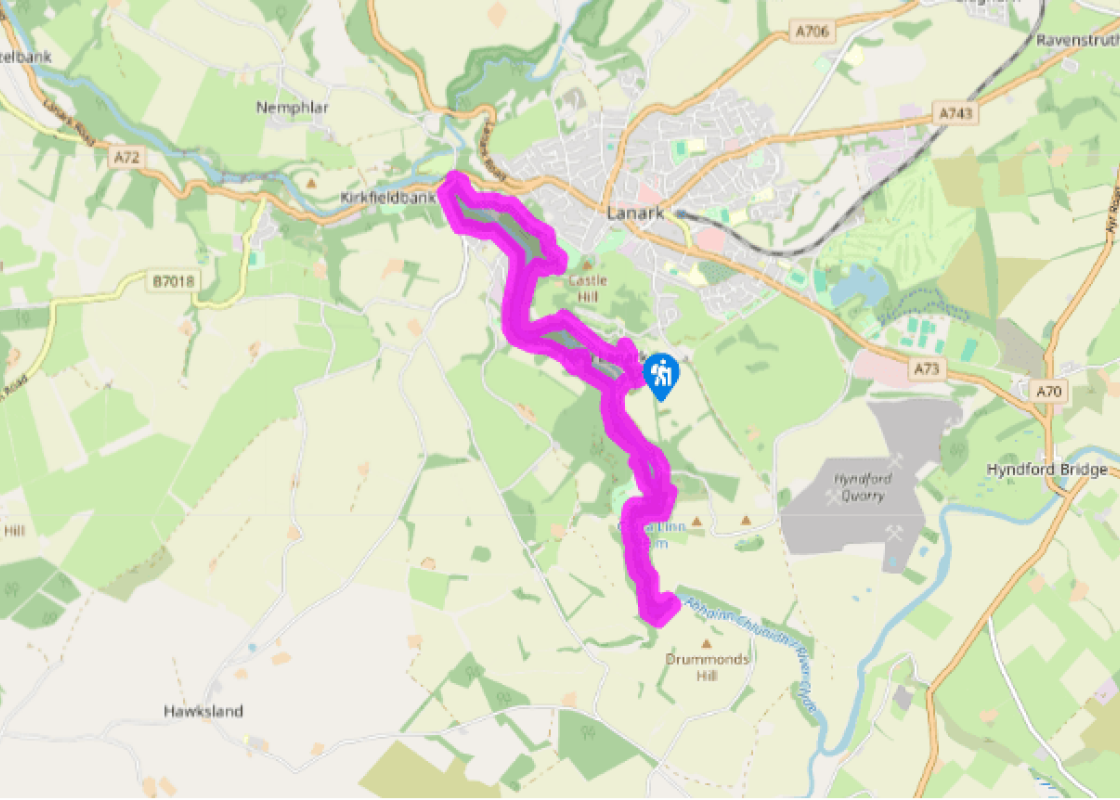
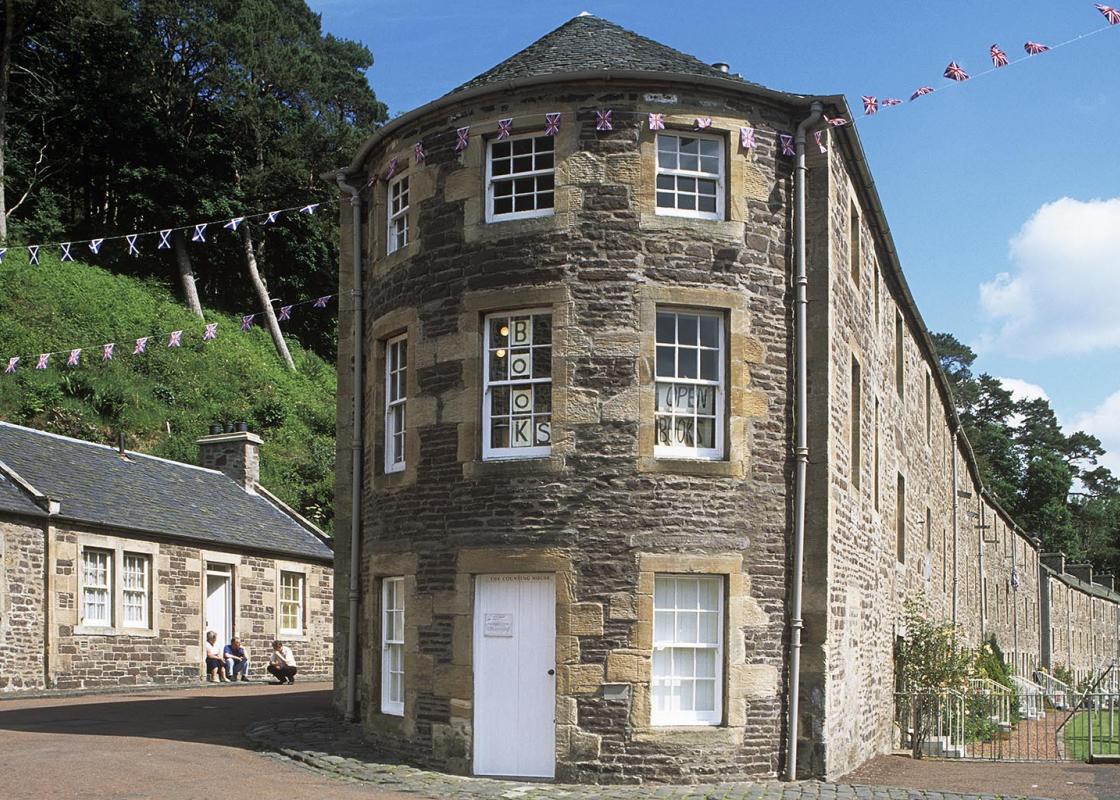
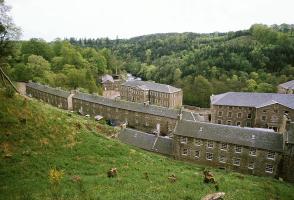
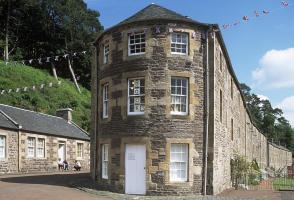
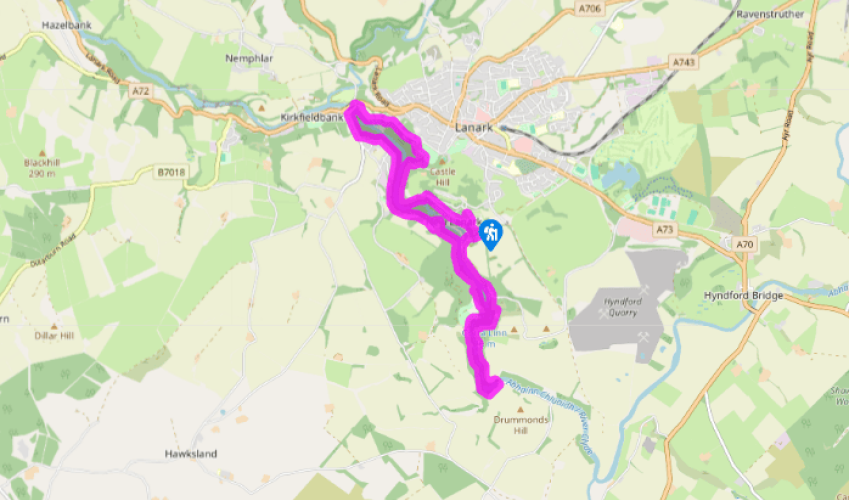
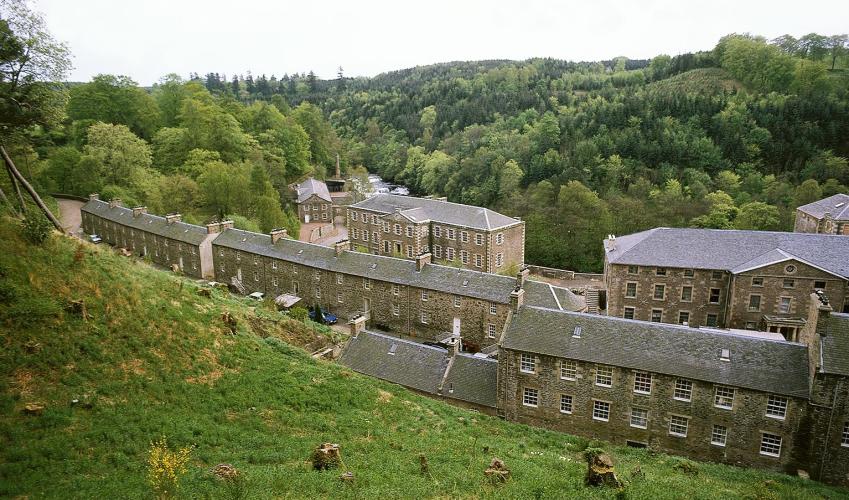
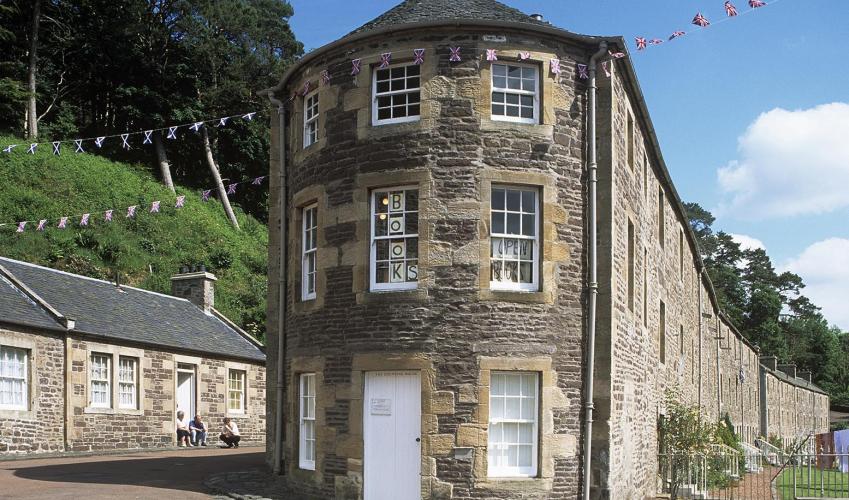
From the car park, walk downhill into the planned industrial village of New Lanark, now a World Heritage Site. Bear left and walk to the Falls of Clyde Visitor Centre (Scottish Wildlife Trust). Turn up the stone steps on the left, following the signs to the Falls of Clyde. The path soon goes down some steps to reach the weir, where there's a lookout point.
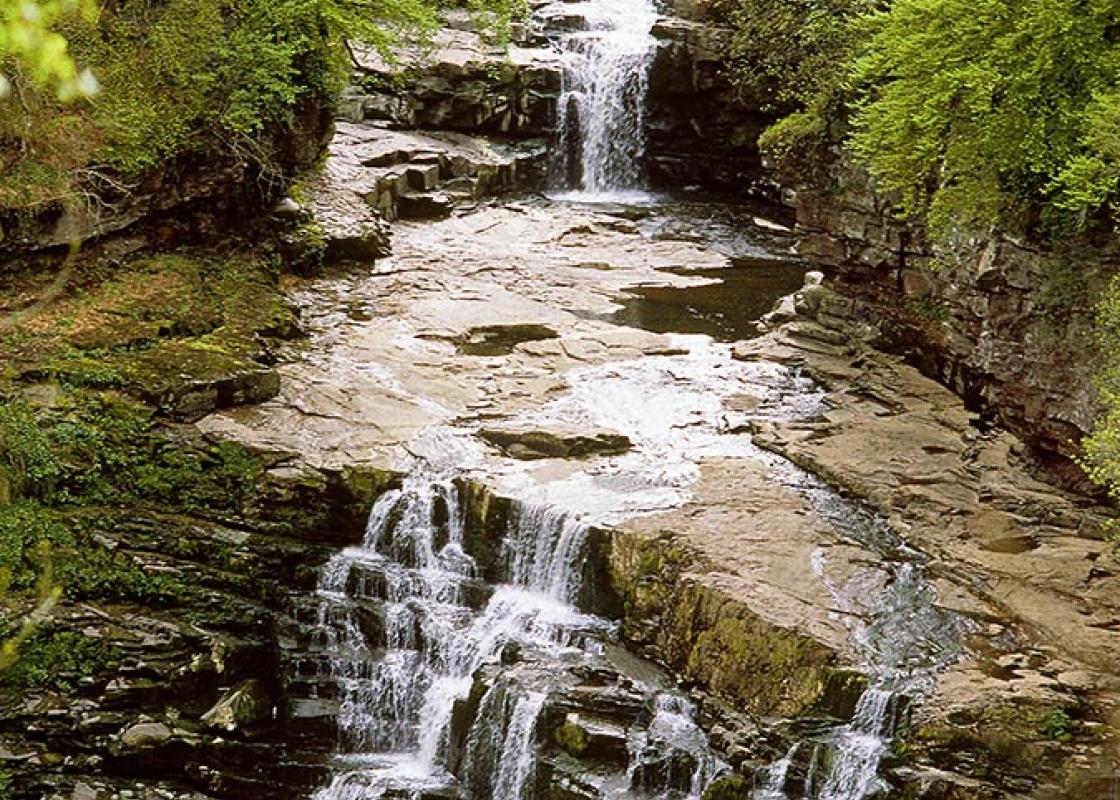
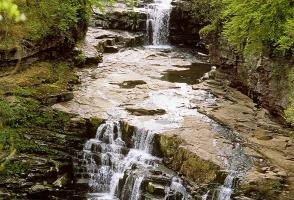
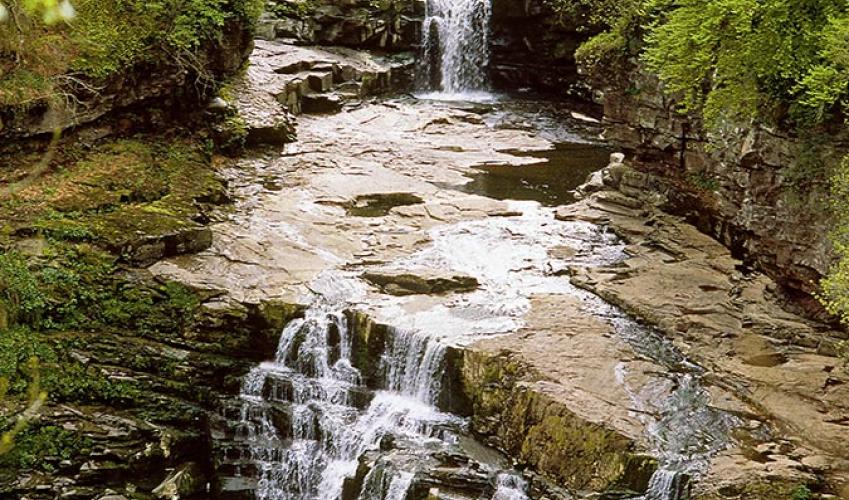
Continue along the path. Pass Bonnington Power Station on your right, where it divides. Take the right-hand path, which takes you into woodland and up some steps. You'll soon come to Corra Linn waterfall, where there is another lookout point. The falls were immortalised in verse by William Wordsworth in 1802 and have provided inspiration to many artists, including J M W Turner.
The route continues to the right, signposted 'Bonnington Linn, 0.75 miles'. Go up some more steps and follow the track to go under a double line of pylons. Follow the path to reach the weir, cross it, then turn right into the Falls of Clyde Wildlife Reserve.
After 100 yds (91m), turn right off the track down a narrow path, which crosses a footbridge and then follows the river, rejoining the main path downstream. Bear right here to reach Corra Castle (ruins). Continue walking along by the river, cross a small footbridge, then follow the wide path through the woods. When you meet another path, turn off to the right.
Follow the path to pass houses on your left. At the road turn right, then right again to cross the old Clydesholm Bridge, which brings you into a cul de sac. Go through the gate on the right – it looks like someone's drive but it is, in fact, part of the Clyde Walkway.
Walk past the stables, then turn left through a gate to follow the path along the river. Beyond another gate, continue up some steps beside a water treatment plant and bear right along a tarmac lane. Follow the lane past some houses, then turn right down a driveway, then turn right again at a sign indicating the Clyde Walkway.
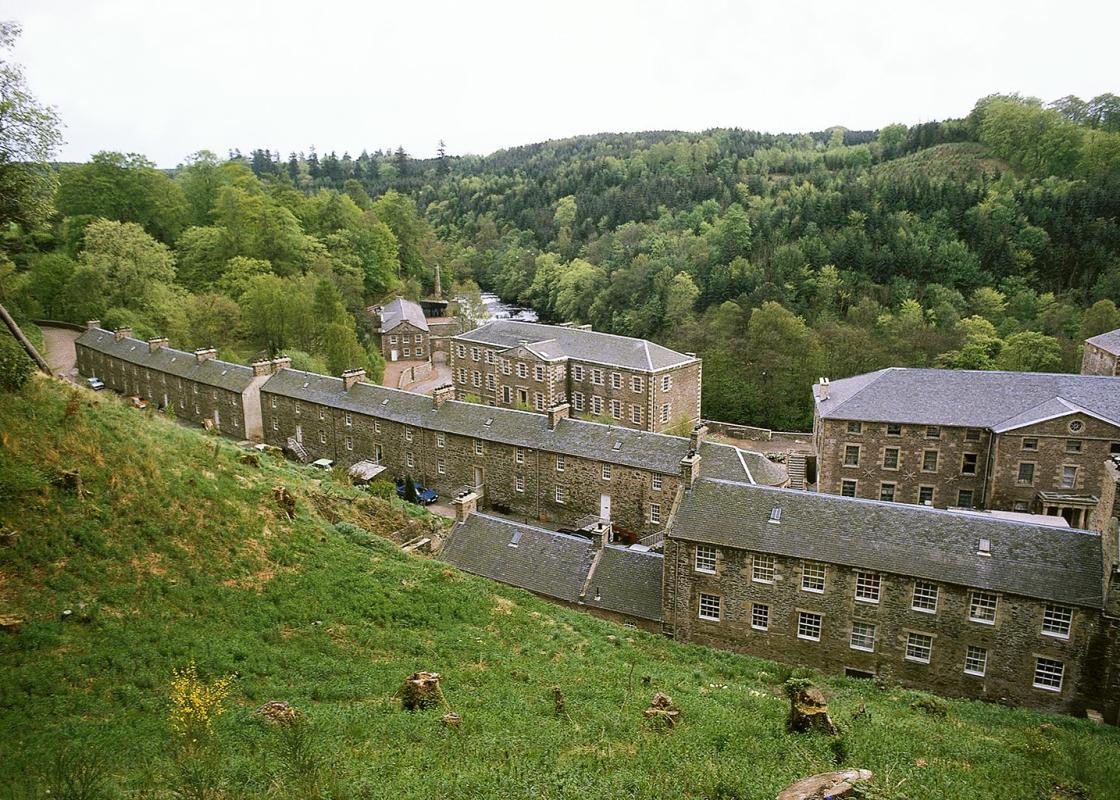
Your path zigzags down to the river. At the water's edge turn left, and follow the forest track back to New Lanark. You get some great views of the mills on the way. When the path meets the road turn right, then left at the church for the car park.
Additional information
Terrain
- Clear riverside tracks and forest paths, a few steep steps
Landscape
- Planned industrial village and some stunning waterfalls
Dog friendliness
- Mostly off lead
Parking
- Main car park above New Lanark
Toilets en route
- Visitor centre, when open
About the walk
...I know that society may be formed so as to exist without crime, without poverty, with health greatly improved, with little, if any misery, and with intelligence and happiness increased a hundredfold... Robert Owen, from a speech made in 1816 If you do this walk you'll get a glimpse of Utopia,... for the planned industrial village of New Lanark was the embodiment of one man's vision of an ideal world. New Lanark was built as a cotton spinning centre in 1785 by David Dale and Richard Arkwright, and is so well preserved that it is now a UNESCO World Heritage Site. It owes its fame to Dale's son-in-law, Robert Owen, who took over its management in 1798 and made it the focus of a revolutionary social experiment. A forward-thinking pioneer Owen was a very efficient businessman and ran a strict regime, monitoring wages, insisting on good timekeeping and dismissing employees for persistent drunkenness and theft. His methods made New Lanark extremely profitable. He was also a scrupulously fair employer, and New Lanark was no 'dark satanic mill'. Owen believed in humane capitalism and felt that businesses were more successful if the workers were well treated. Unlike most industrialists of his day, he did not allow children under 10 to work in his mills, and indeed he established the world's first nursery school. He also ensured that all children received a rounded education: by the age of seven they were attending lessons on everything from history and geography to nature study and dancing. Education didn't end when children began working in the mills, for all his employees were encouraged to attend evening classes, lectures and dancing classes in the wonderfully named Institute for the Formation of Character. Owen also disapproved of the cruel treatment of his workers and refused to allow corporal punishment to be used as a form of discipline. His staff were provided with good housing, free medical care and a co-operative store. Owen tried hard to persuade other industrialists to adopt his caring regime, but failed. Disillusioned, he sold New Lanark in 1825 and travelled to America. There he bought a settlement in Indiana which he named New Harmony. He intended to turn it into a Utopian community, freed from the strictures of 19th-century Britain. The experiment did not work as well as he had hoped and he returned to Britain in 1828, where he continued to campaign for workers' welfare, even leading a march protesting against the plight of the Tolpuddle Martyrs, six men who were transported for seven years for forming a trade union. Owen died in 1858. He never managed to create Utopia, but inspired several other model villages such as Saltaire, Port Sunlight and Bourneville, and influenced attitudes for years to come.  Â
Read more
Been on this walk?
Send us photos or a comment about this route. Or recommend a route of your own.

Walking in Safety
Read our tips to look after yourself and the environment when following this walk.
Get an AA guide
Explore our range of ‘50 Walks in’ guides - they’re the ideal companion for a ramble.
Been on this walk?
Send us photos or a comment about this route. Or recommend a route of your own.
Walking in Safety
Read our tips to look after yourself and the environment when following this walk.
Get an AA guide
Explore our range of ‘50 Walks in’ guides - they’re the ideal companion for a ramble.
About the area
South Lanarkshire offers some of Scotland’s best days out, with country parks, museums, activity centres, historic sites and walking trails to choose from.
Many of the area’s museums are a window into the county’s industrial heritage, the biggest claim to fame being New Lanark.
Nearby places to stay
View all (8)
Caravan & Camping
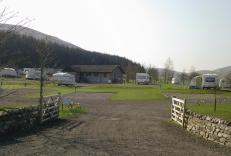
Mount View Caravan Park
★★★
"Ideal stopover between Carlisle and Glasgow...."
- Launderette
- Picnic Area
- Calor Gas
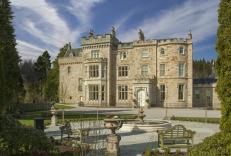
Hotel
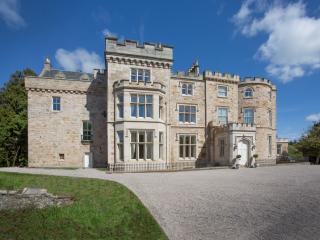
Crossbasket Castle
★★★★★
"Dine like royalty and enjoy flawless service...."
- Family rooms: 0
- Free TV
- WiFi available
- Lift available
Guest Accommodation
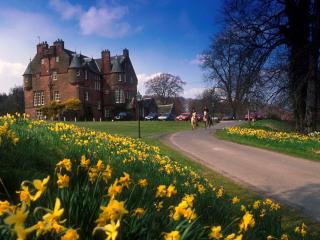
Arden Country House
★★★★★
"Discover a stylish, modern country house, ideal for a rural getaway...."
- Rooms 3
- Free TV
- Wifi
- Open parking
Nearby places to stay
Mount View Caravan Park
A delightfully maturing family park, surrounded by the Southern Uplands and handily located between Carlisle and Glasgow. It is an excellent stopover site for those travelling between S...
★★★ Rating
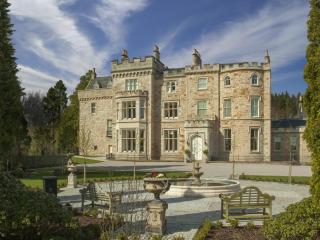
Crossbasket Castle
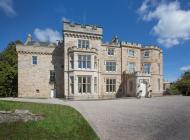
Crossbasket Castle can trace its roots back to the 16th century and has a rich history. The current castle was rescued from ruin in 2011 and retains many original features and a multimi...
★★★★★ Rating
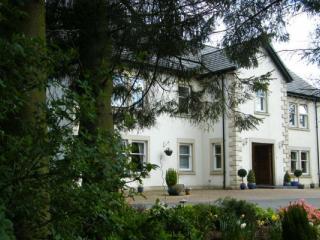
Arden Country House
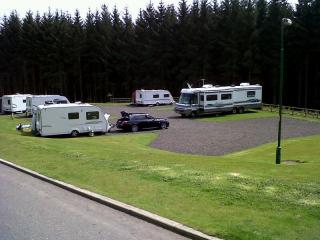
Situated in the picturesque grounds of the Belsyde country estate and close to the Royal Burgh of Linlithgow, Arden Country House offers immaculate, stylishly furnished and spacious bed...
★★★★★ Rating
Beecraigs Caravan & Camping Site
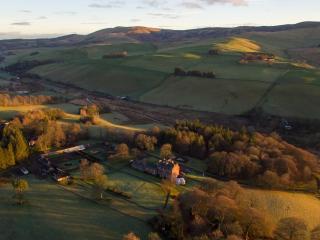
Located on the hills above the town of Linlithgow with unrivalled views towards the Forth Bridges, Beecraigs Country Park has an excellent caravan and camping site, with two modern wash...
★★★★ Rating
Cringletie
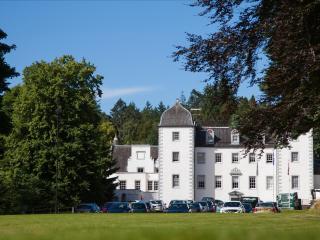
Cringletie House was designed by famous Scottish architect David Bryce, and completed in 1861. Something like a real-life fairytale castle, it has distinctive, small towers at the corne...
★★★★ Rating
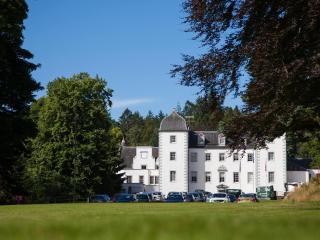
Barony Castle Hotel
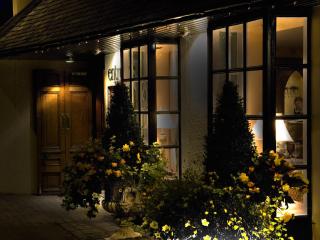
Parts of Barony Castle date back to the 15th and 16th centuries. This stunning Tower House has transformed into a well-appointed modern hotel. Located just to the west of the village of...
★★★★ Rating
The Horseshoe Inn
The Horseshoe Inn is just five miles north of Peebles and only 18 miles south of Edinburgh. Originally a blacksmith's shop, it has a very good reputation for its delightful atmosphere a...
★★★★ Rating
The Social Hub
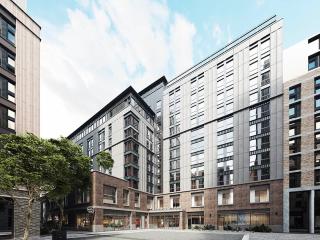
Located in the thriving Merchant City area of Glasgow, The Social Hub is a unique operation that caters for differing needs. Whether you are looking for a 1-night stay or a 3-month exte...
★★★★ Rating
Places to eat nearby View all