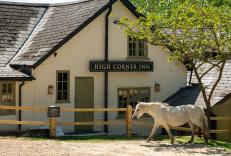
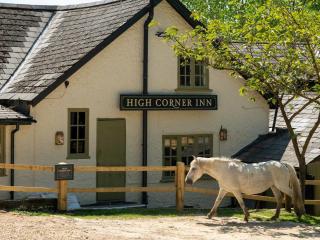
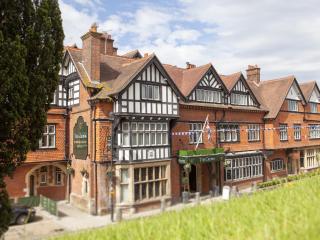
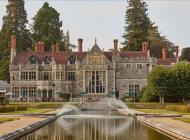
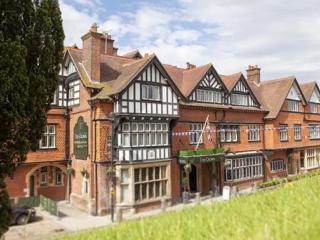
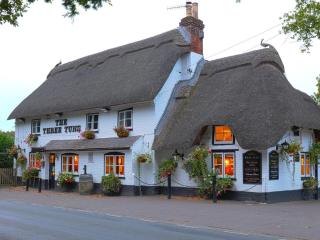
"A classic New Forest pub is the highlight of this walk, exploring a wartime airfield."
Walk directions
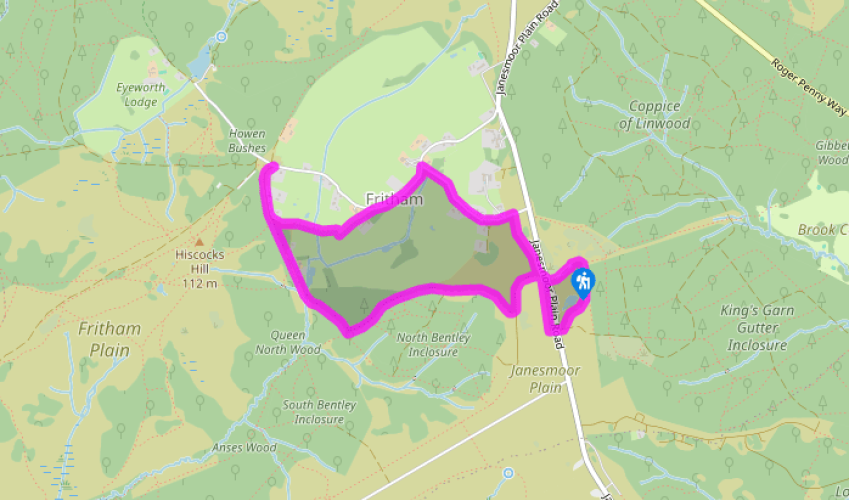
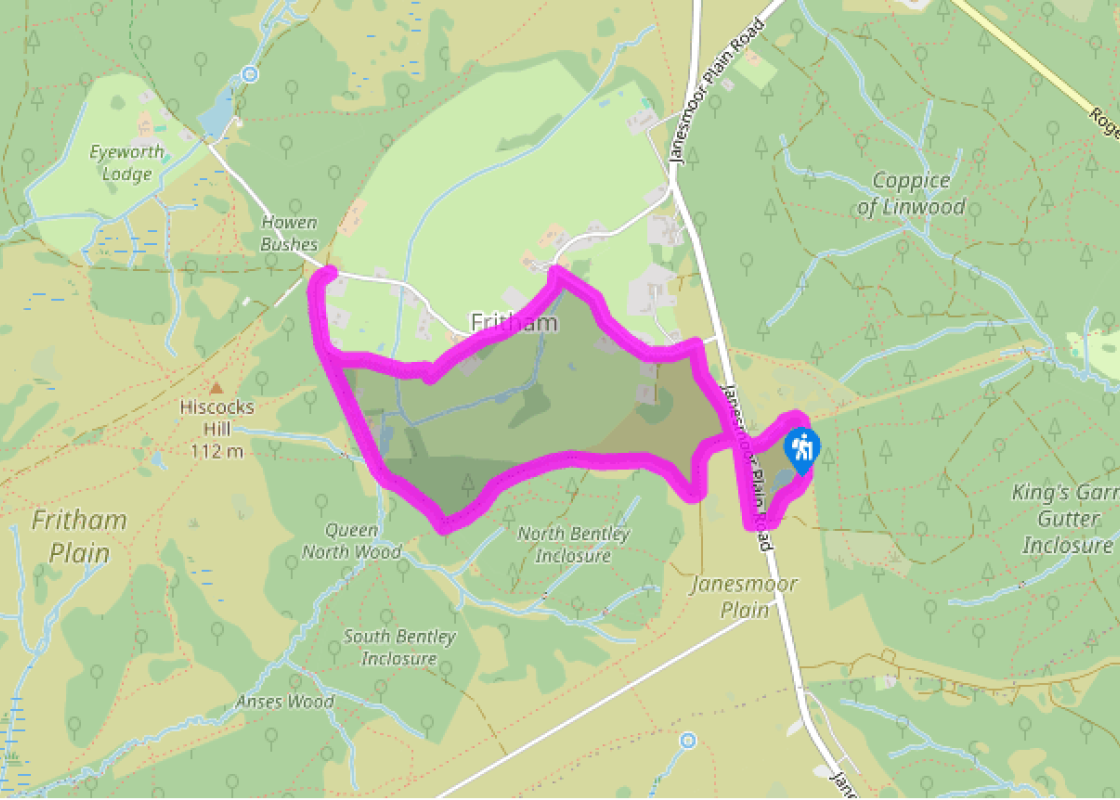
From the car park's southern entrance, cross the road and turn right along the wide grass verge. Cross a concrete track and veer left away from the road until you reach the lane crossing your path.
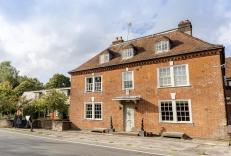
Turn left, follow the lane to a T-junction and turn left along the ‘no through road’. Follow this quiet lane as it descends to the bottom of the valley and rises again, levelling out to a road junction by The Royal Oak pub.
Bear left here and follow the track past cottages. Keep ahead as the surface gives way to gravel and the road descends. Follow the gravelled track down past the wooden barrier at Vale Cottage to a footbridge over the stream.
Cross over and keep ahead up the muddy slope into the trees. Soon there are wire fences on both sides and the path slowly matures into a track. Pass a corral on the left, and continue head on the concrete road. Follow the road to a T-junction, turn sharp left onto the former perimeter taxiway, then follow it around to the right to return to the car park's northern entrance.
No less than 12 specially constructed New Forest airfields played a key role in World War II, with sites that included Beaulieu Heath, Holmsley and Lymington as well as Hurn, which later became the civilian Bournemouth International Airport. Although the Forestry Commission has removed most of the... buildings and concrete runways from these sites, new uses have been found for some of the hard standings, while sections of the perimeter taxiways survive as public roads and local farm tracks. Wartime exploits When the airfield opened in November 1942, Stoney Cross was one of the Forest’s larger wartime airfields. In the early months of operation Stoney Cross was home to RAF Fighter Command and construction work continued until RAF Bomber Command arrived in August 1943. The RAF handed over to the US Ninth Air Force in March 1944 and the US 367th Fighter Group attacked railways, bridges and other infrastructure targets in western France. Later they deployed on ground attack missions in support of the First Army. The Group flew a total of 55 missions from Stoney Cross, losing 21 aircraft before transferring to nearby RAF Ibsley in early July. Meanwhile, the US 387th Bombardment Group were moving in. They began operations in late June 1944, with raids along the Normandy coast and attacks on infrastructure targets in support of ground forces. The Group left at the beginning of September and handed back to RAF Transport Command, which was busy recovering and repairing gliders used in the Normandy invasion. Stoney Cross was on active service until the end of the war, after which the airfield played a leading role in RAF transport links with the Far East. Following closure in 1948 the airfield stood empty until the 1960s, when the runways were broken up for hardcore and most of the buildings removed. The main runway now forms the road towards Linwood and the eastern perimeter taxiway was incorporated into the road from Stoney Cross to Fritham. The steel water tower was finally demolished in 2004.
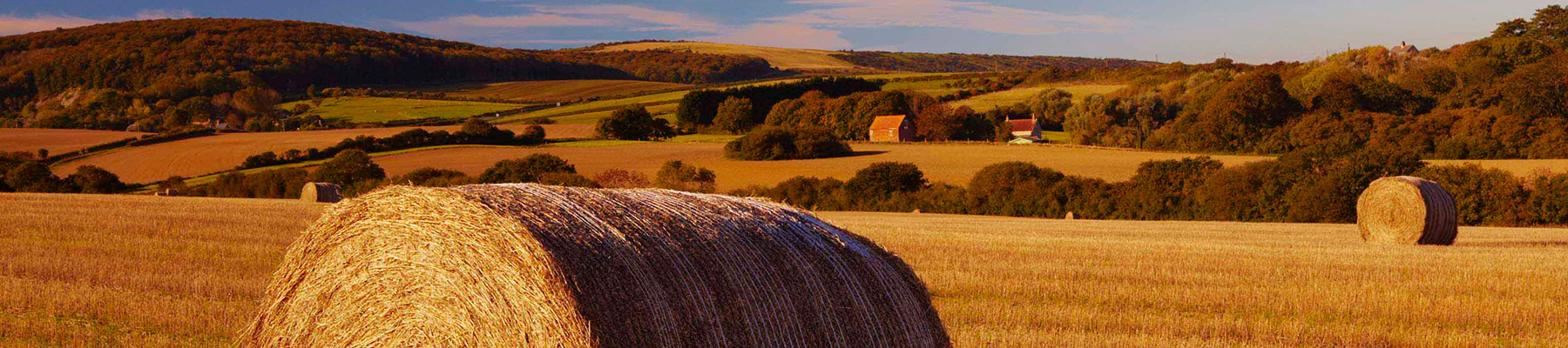
Hampshire’s varied landscape of hills and heaths, downlands and forests, valleys and coast are without rival in southern England. Hike across the chalk downland of the north Hampshire ‘highlands’, meander along peaceful paths through unspoilt river valleys of the Test, Itchen, Avon and Meon, or explore the lonely salt marshes and the beautiful medieval forest and heathland of the New Forest.
"A classic New Forest pub is the highlight of this walk, exploring a wartime airfield."
Walk details
1hr
Difficulty:
Medium
Gradient:
Moderate
Distance:
3 miles (4.8kms)
Ascent:
197ft (60m)
Walk directions
From the car park's southern entrance, cross the road and turn right along the wide grass verge. Cross a concrete track and veer left away from the road until you reach the lane crossing your path.
1 of 4
Turn left, follow the lane to a T-junction and turn left along the ‘no through road’. Follow this quiet lane as it descends to the bottom of the valley and rises again, levelling out to a road junction by The Royal Oak pub.
2 of 4
Bear left here and follow the track past cottages. Keep ahead as the surface gives way to gravel and the road descends. Follow the gravelled track down past the wooden barrier at Vale Cottage to a footbridge over the stream.
3 of 4
Cross over and keep ahead up the muddy slope into the trees. Soon there are wire fences on both sides and the path slowly matures into a track. Pass a corral on the left, and continue head on the concrete road. Follow the road to a T-junction, turn sharp left onto the former perimeter taxiway, then follow it around to the right to return to the car park's northern entrance.
No less than 12 specially constructed New Forest airfields played a key role in World War II, with sites that included Beaulieu Heath, Holmsley and Lymington as well as Hurn, which later became the civilian Bournemouth International Airport. Although the Forestry Commission has removed most of the... buildings and concrete runways from these sites, new uses have been found for some of the hard standings, while sections of the perimeter taxiways survive as public roads and local farm tracks. Wartime exploits When the airfield opened in November 1942, Stoney Cross was one of the Forest’s larger wartime airfields. In the early months of operation Stoney Cross was home to RAF Fighter Command and construction work continued until RAF Bomber Command arrived in August 1943. The RAF handed over to the US Ninth Air Force in March 1944 and the US 367th Fighter Group attacked railways, bridges and other infrastructure targets in western France. Later they deployed on ground attack missions in support of the First Army. The Group flew a total of 55 missions from Stoney Cross, losing 21 aircraft before transferring to nearby RAF Ibsley in early July. Meanwhile, the US 387th Bombardment Group were moving in. They began operations in late June 1944, with raids along the Normandy coast and attacks on infrastructure targets in support of ground forces. The Group left at the beginning of September and handed back to RAF Transport Command, which was busy recovering and repairing gliders used in the Normandy invasion. Stoney Cross was on active service until the end of the war, after which the airfield played a leading role in RAF transport links with the Far East. Following closure in 1948 the airfield stood empty until the 1960s, when the runways were broken up for hardcore and most of the buildings removed. The main runway now forms the road towards Linwood and the eastern perimeter taxiway was incorporated into the road from Stoney Cross to Fritham. The steel water tower was finally demolished in 2004.
Hampshire’s varied landscape of hills and heaths, downlands and forests, valleys and coast are without rival in southern England. Hike across the chalk downland of the north Hampshire ‘highlands’, meander along peaceful paths through unspoilt river valleys of the Test, Itchen, Avon and Meon, or explore the lonely salt marshes and the beautiful medieval forest and heathland of the New Forest.