Around Wimpole Hall
Recommended by

Our view
"An easy ramble around the landscaped grounds of a country mansion"
Walk directions
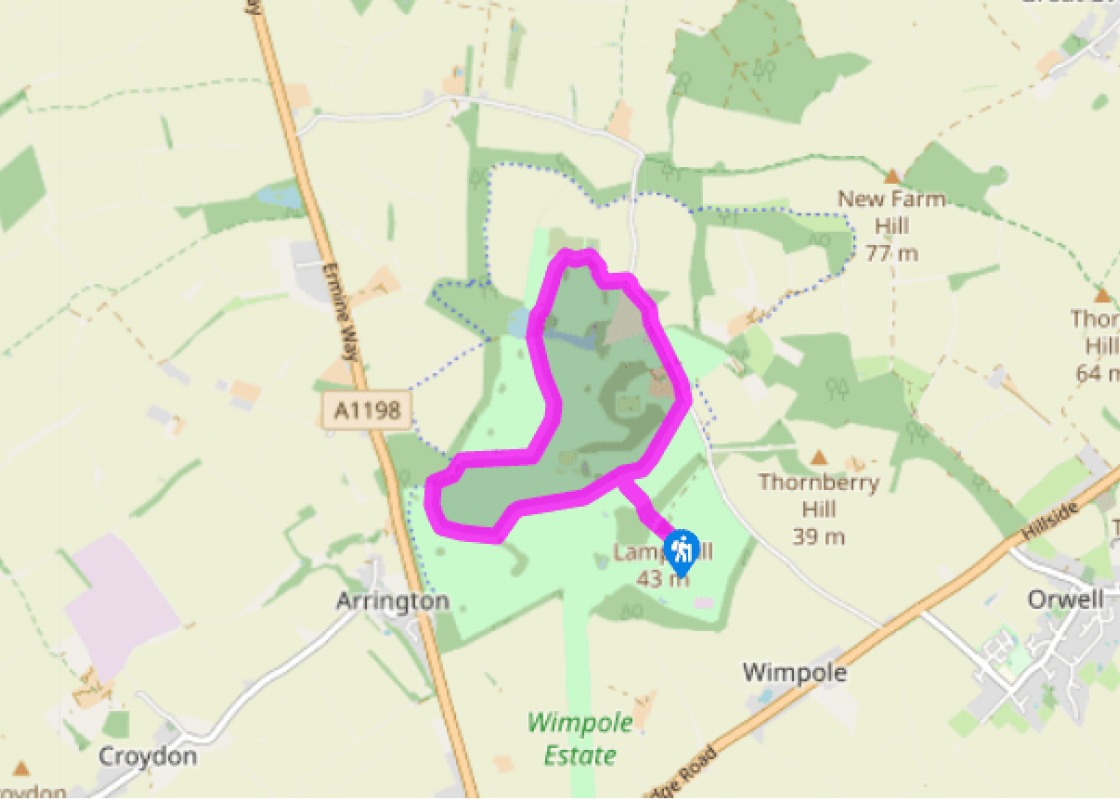
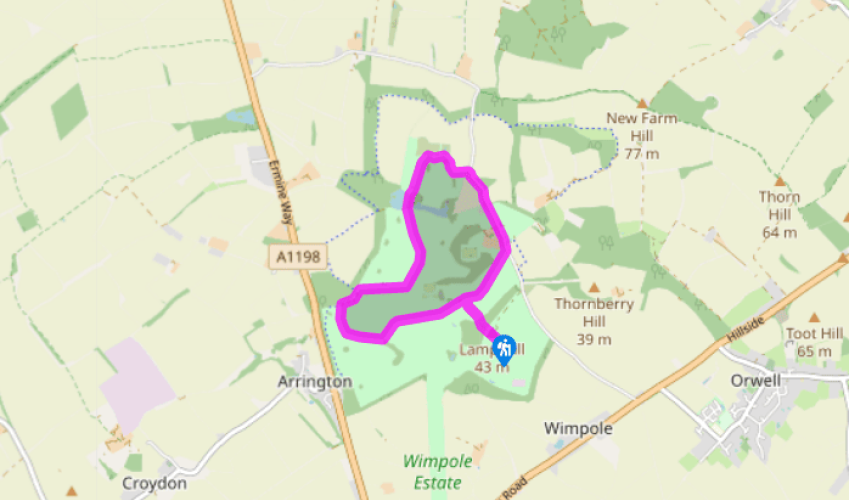
From the Wimpole Hall Visitor Centre, follow footpath signs for Wimpole Hall. When reached the tarmac road, with the Stable Block Café ahead, turn right for 175yds (160m) to take the gate in the black railings for a path that runs diagonally across two open fields towards Home Farm. Aim just to the left of the red telephone box on the lane on the far side. Turn left into the lane and walk past the farm and on past Thornberry Hill Cottages at Brick End. About 359yds (320m) beyond a small road bridge, and just after passing Nursery Plantation on your right, turn left on a wide track through two gates into Wimpole Estate.
Walk out into the open park and follow the fence around the top of the slope and up towards the folly, ‘built’ to look deliberately like a ruined castle. Just beyond the folly turn left and, enjoying the fine views across to the hall ahead/left, walk down across the open hillside to the lakes at the bottom of the slope. There is a wide, if faint path, across the open pasture, but if you aim for the middle of the lakes you won’t go wrong.
View all directions
Additional information
Terrain
- Easy tracks and open park, lane
Landscape
- Elegant landscaped parkland
Dog friendliness
- Grazing sheep and cattle in park, so on short lead at all times
Parking
- Wimpole Hall National Trust pay-and-display car park
Toilets en route
- Wimpole Hall entrance
About the walk
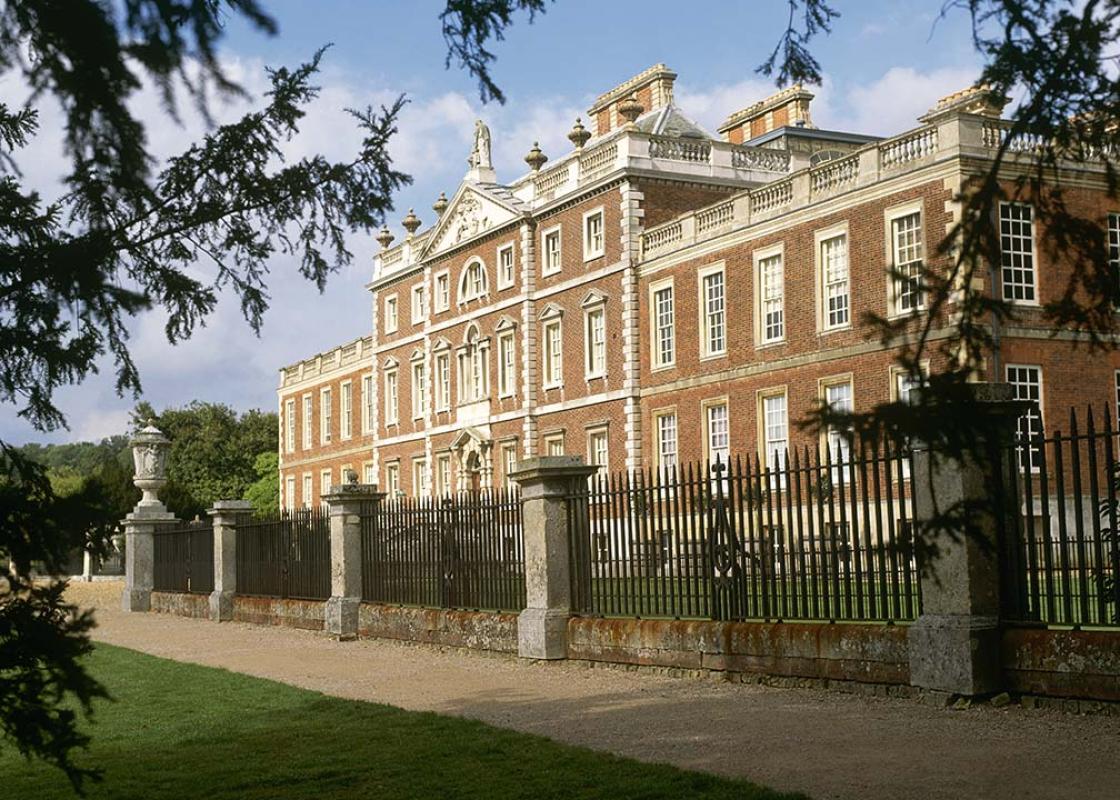
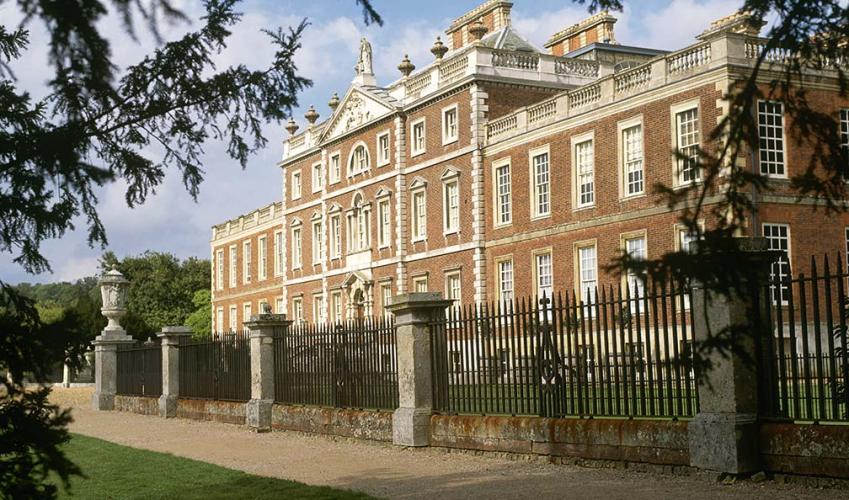
Wimpole Hall is among the National Trust’s most impressive properties, an 18th-century mansion surrounded by 350 acres (142ha) of landscaped lakes, follies and woodland. Despite its original splendour, the house passed through several different owners and by the early 20th century was in a poor...
Read more

Been on this walk?
Send us photos or a comment about this route. Or recommend a route of your own.

Walking in Safety
Read our tips to look after yourself and the environment when following this walk.
Get an AA guide
Explore our range of ‘50 Walks in’ guides - they’re the ideal companion for a ramble.
Been on this walk?
Send us photos or a comment about this route. Or recommend a route of your own.
Walking in Safety
Read our tips to look after yourself and the environment when following this walk.
Get an AA guide
Explore our range of ‘50 Walks in’ guides - they’re the ideal companion for a ramble.
About the area
To the west of East Anglia is Cambridgeshire, a county best known as the home to the university that makes up the second half of ‘Oxbridge’ (the other half is Oxford). As well as its globally renowned educational credentials, it also has a rich natural history; much of its area is made up of reclaimed or untouched fens.
Nearby places to stay
View all (8)





Nearby places to stay
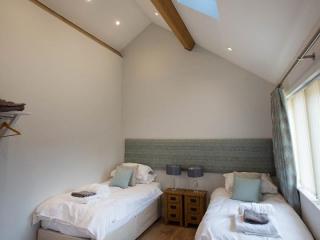
Fullers Hill Cottages
The six Fullers Hill Cottages enjoy a very peaceful, picturesque location in the Bedfordshire countryside and yet are only 25 minutes from the city of Cambridge. The barns provide an id...
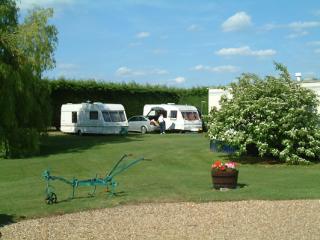
Highfield Farm Touring Park
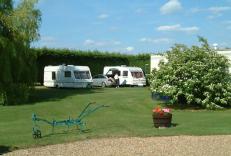
Run by a very efficient and friendly family, this popular park is located on a well-sheltered hilltop, with spacious pitches including a cosy backpackers' and cyclists' area, and separa...
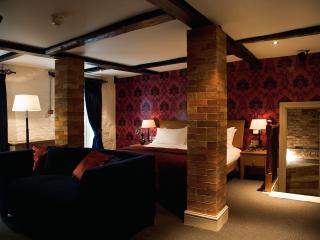
Hotel du Vin & Bistro Cambridge
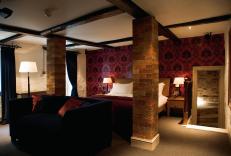
This beautiful building, which dates back in part to medieval times, has been transformed to enhance its many quirky architectural features. The bedrooms and suites, some with private t...
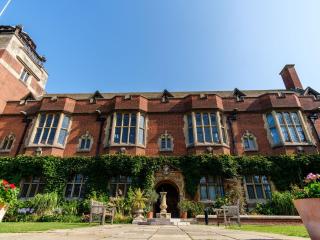
Cheshunt Cottage & Garden Cottage
Westminster College is perfectly located - only three minutes’ walk away from Cambridge city centre. The College has two self-contained and fully furnished cottages on-site - The Cheshu...
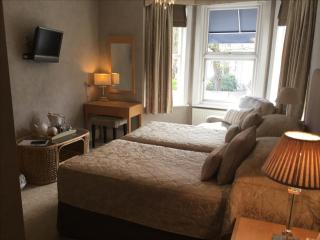
Benson House
Benson House is a popular guest house, well placed for the city centre and New Hall and Fitzwilliam colleges. The pleasant bedrooms vary in size and style and all are well equipped with...
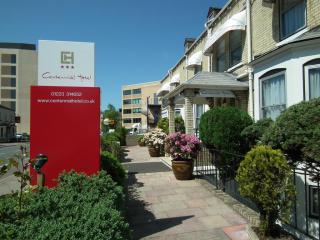
Centennial Hotel
Centennial Hotel is convenient for the railway station and town centre, and is just opposite the Cambridge University Botanic Garden. Well-presented public areas include a welcoming lou...
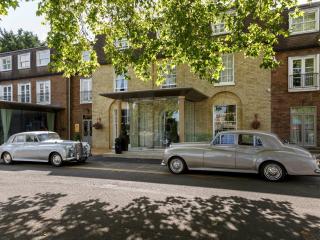
The Gonville Hotel
The Gonville is a well-established hotel situated on the inner ring road, a short walk across the green from the city centre. Air-conditioned public areas are cheerfully furnished, and ...
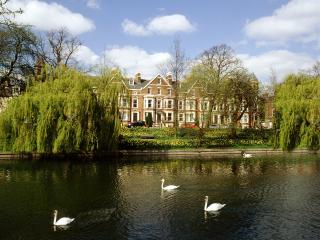
Arundel House Hotel
A popular and smart hotel, Arundel House overlooks the River Cam and enjoys views of open parkland. Its previous existence as a row of Victorian townhouses means the attractive bedrooms...
Places to eat nearby View all