"Following Romans and Victorians along Colchester's ancient walls."
Walk directions
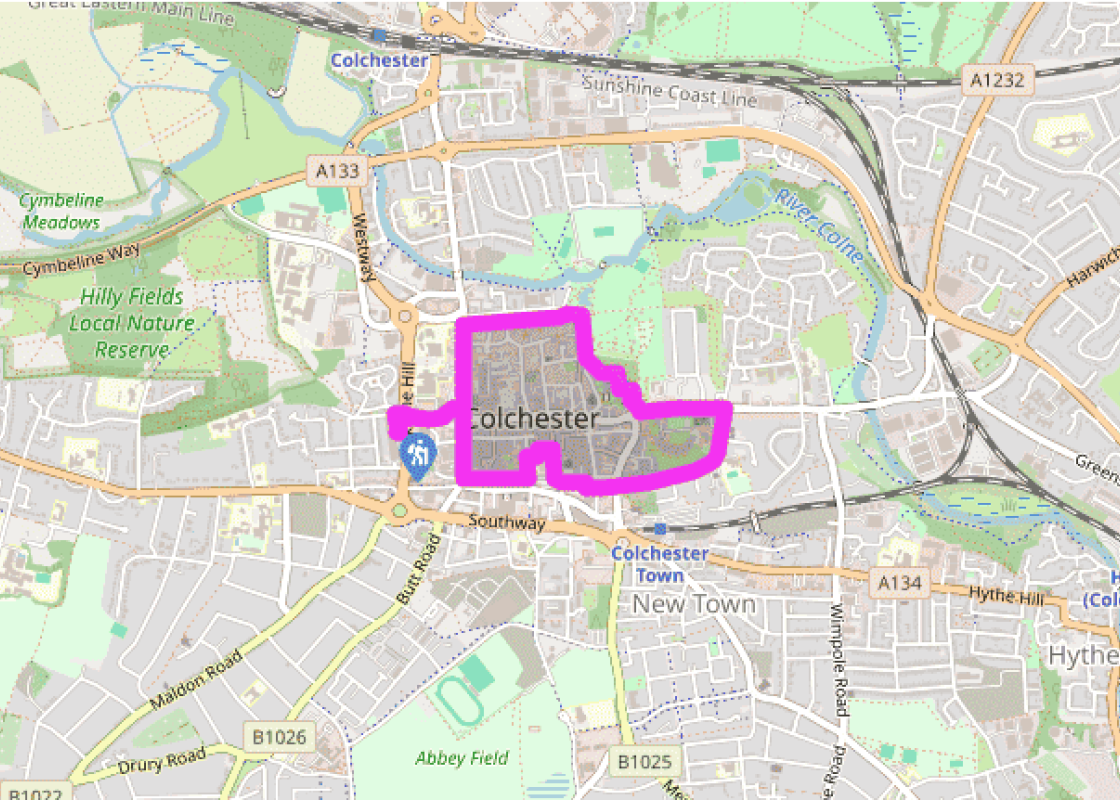
From St Mary's car park cross the footbridge over the A134, towards the town centre. Go through Balkerne Gate, one of the most impressive town gates in Roman Britain, built around AD 200. Pass to the left of the Mercury Theatre and the Victorian water tower, known locally as 'Jumbo'.
Turn right along North Hill, past the High Street on your left, into Head Street. After 200yds (183m) turn left into Sir Isaac's Walk, a pedestrian area of specialist shops. Turn left into Trinity Street with its Elizabethan timber-framed cottages, and stop at the former Tymperleys Clock Museum. This early 15th-century house, one of the oldest in the town, was the residence of William Gilberd, a scientist and Queen Elizabeth I's doctor. At the end of Trinity Street is the 1,000-year-old Holy Trinity Church, constructed from Roman bricks and with a triangular Saxon doorway.
Turn right here, skirting the church, and follow signs to Eld Lane passing Lion Walk and the United Reformed church. Keeping the church on your left, cross Eld Lane and walk under the arch to a lift that leads to the market (open Friday and Saturday) and the car park. Peer over the side and you will see that you are on the old city walls. Take the lift or walk down Vineyard Steps and continue along Vineyard Street, where you can pick up the old wall on your left. You are now outside the wall. Cross St Botolph's Street into Priory Street, where you'll see the remains of 12th-century St Botolph's Priory, a good example of early recycling by craftsmen who, due to the absence of suitable building material, used the remains of Roman buildings. Keeping the Roman wall on your left, follow it along Priory Street to East Hill.
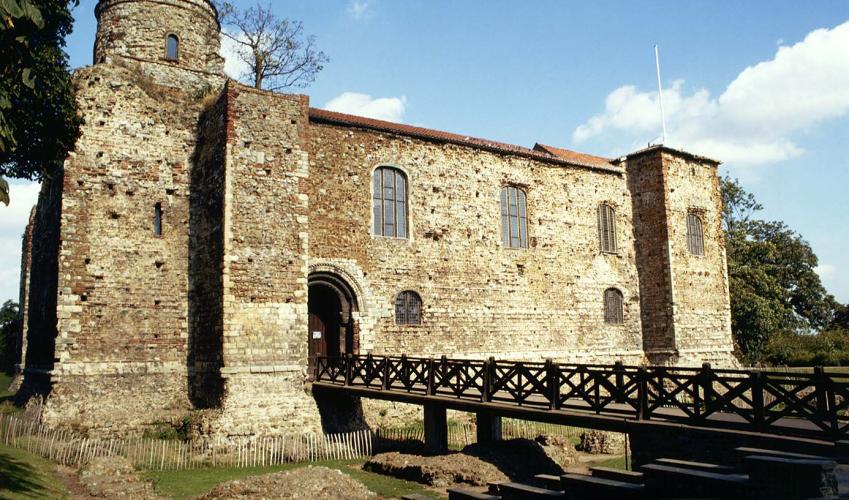
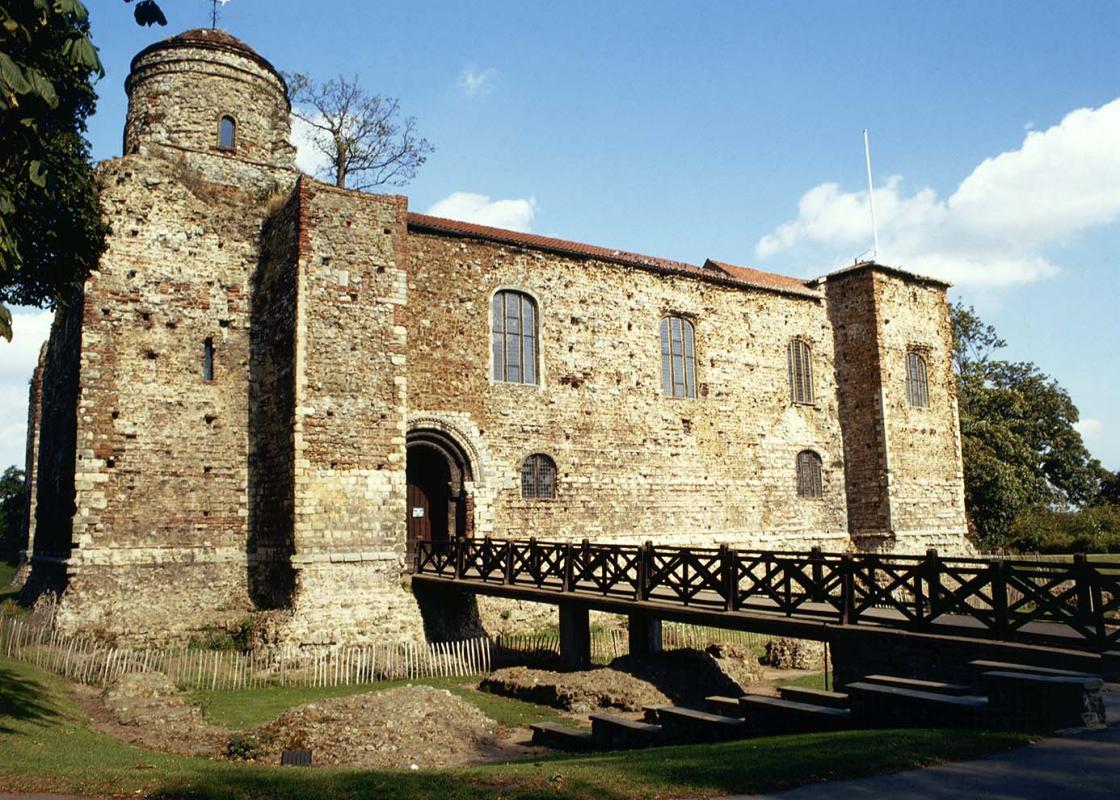
Turn left and walk to the top of the hill, passing the entrance to firstsite, the visual arts centre. Here on the right is the keep of Colchester Castle, surrounded by the lovely grounds of Castle Park. Walk through the park, keeping the castle on your left, and note the obelisk at the rear, which marks the site of execution in 1648 of Sir Charles Lucas and Sir George Lisle, who lay siege to the town during the Civil War. Just past the obelisk take the first exit on the right, go through the alleyway and turn right into Maidenburgh Street. Here, turn left to No. 74, where the remains of the Roman theatre are viewable through a glass panel. Continue walking downhill and turn left into Northgate Street, formerly known as Dutch Lane. In the 16th century Dutch Protestants fleeing persecution at home settled here and brought their weaving skills with them. You can see some fine examples of these timber-framed houses on the corner of West Stockwell Street.
At the end of Northgate Street, turn left into North Hill, passing a row of 18th-century houses. A little way along on the same side of the road, stop and admire St Peter's parish church with its Victorian clock. Wealthy Victorian merchants improved churches, built new ones and generally contributed to the town's prosperity with the construction of Castle Park, a public library and schools. At the church, cross the road to return to the car park.
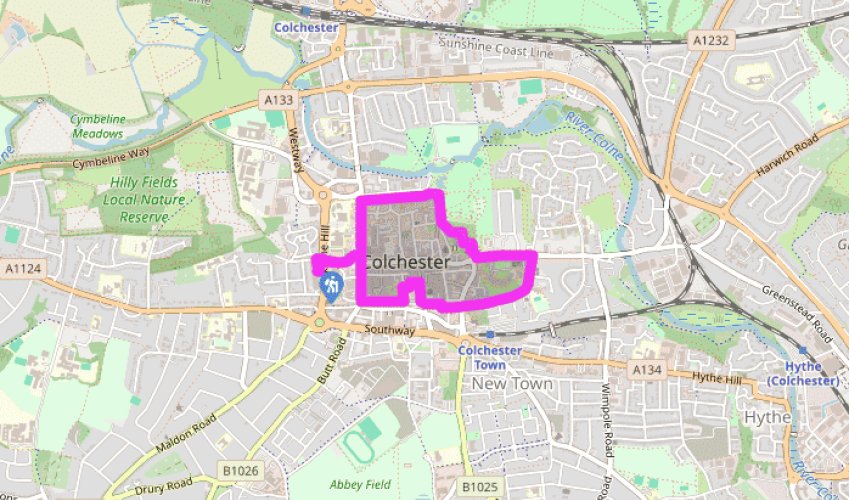
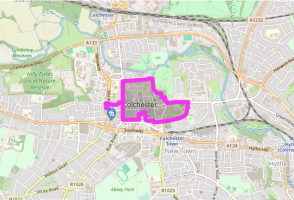
Imagine yourself back in AD 43 as a lonely Briton trudging across the southeast landscape – when you spot a huge Roman army marching towards you. They descend on your home town, which they call Camulodunum, meaning ‘fortress of the war god Camulos’, and before you know it, they make it the capital... of Roman Britain, endowing it with a theatre, temples and large houses with central heating and running water. Within a few years a fearsome queen called Boudicca turns up with her army and razes the lot to the ground before continuing to London and St Albans. The Romans rebuild the town within a thick defensive wall. Today Camulodunum is Colchester, a modern town on the A12, sited on the old Roman road which crossed what was to become Essex from the southwest to the northeast and continued to Harwich on the coast. There’s little left of those grand houses, and the Roman temple is buried beneath Britain’s oldest Norman castle in the heart of the town, but much of the Roman wall remains. On this walk you can trace the old wall, taking in snippets of Colchester’s colourful history along the way, and make your own mind up about whether the town planners have made a better job than their Roman predecessors. English Civil War The design of Colchester’s castle influenced the plans for the Tower of London, and inside there is a chance to discover what it must have been like to live in the town during the Civil War siege, which lasted for 11 weeks. The English Civil War comprised a series of conflicts between the Parliamentarians (Roundheads) and Royalists (Cavaliers). When this initially broke out in 1642, Colchester was in an area controlled by Parliament and escaped the fighting, but it was not so lucky in 1648. A Royalist army approached Colchester on June 10th and took refuge behinds its walls, waiting for reinforcements. General Fairfax led the Roundhead army, and the bloody battle that ensued meant that people were unable to leave the town. With food running out, they were left with no option than to eat dogs and cats. Many of the buildings were damaged by musket fire or destroyed.
Essex is full of pleasant surprises. It has the largest coastline of any county in England, with its fair share of castles, royal connections and scenic valleys.
"Following Romans and Victorians along Colchester's ancient walls."
Walk details
1hr 30min
Difficulty:
Easy
Gradient:
Gentle
Distance:
2.25 miles (3.6kms)
Ascent:
33ft (10m)
Walk directions
From St Mary's car park cross the footbridge over the A134, towards the town centre. Go through Balkerne Gate, one of the most impressive town gates in Roman Britain, built around AD 200. Pass to the left of the Mercury Theatre and the Victorian water tower, known locally as 'Jumbo'.
1 of 5
Turn right along North Hill, past the High Street on your left, into Head Street. After 200yds (183m) turn left into Sir Isaac's Walk, a pedestrian area of specialist shops. Turn left into Trinity Street with its Elizabethan timber-framed cottages, and stop at the former Tymperleys Clock Museum. This early 15th-century house, one of the oldest in the town, was the residence of William Gilberd, a scientist and Queen Elizabeth I's doctor. At the end of Trinity Street is the 1,000-year-old Holy Trinity Church, constructed from Roman bricks and with a triangular Saxon doorway.
2 of 5
Turn right here, skirting the church, and follow signs to Eld Lane passing Lion Walk and the United Reformed church. Keeping the church on your left, cross Eld Lane and walk under the arch to a lift that leads to the market (open Friday and Saturday) and the car park. Peer over the side and you will see that you are on the old city walls. Take the lift or walk down Vineyard Steps and continue along Vineyard Street, where you can pick up the old wall on your left. You are now outside the wall. Cross St Botolph's Street into Priory Street, where you'll see the remains of 12th-century St Botolph's Priory, a good example of early recycling by craftsmen who, due to the absence of suitable building material, used the remains of Roman buildings. Keeping the Roman wall on your left, follow it along Priory Street to East Hill.
3 of 5
Turn left and walk to the top of the hill, passing the entrance to firstsite, the visual arts centre. Here on the right is the keep of Colchester Castle, surrounded by the lovely grounds of Castle Park. Walk through the park, keeping the castle on your left, and note the obelisk at the rear, which marks the site of execution in 1648 of Sir Charles Lucas and Sir George Lisle, who lay siege to the town during the Civil War. Just past the obelisk take the first exit on the right, go through the alleyway and turn right into Maidenburgh Street. Here, turn left to No. 74, where the remains of the Roman theatre are viewable through a glass panel. Continue walking downhill and turn left into Northgate Street, formerly known as Dutch Lane. In the 16th century Dutch Protestants fleeing persecution at home settled here and brought their weaving skills with them. You can see some fine examples of these timber-framed houses on the corner of West Stockwell Street.
4 of 5
At the end of Northgate Street, turn left into North Hill, passing a row of 18th-century houses. A little way along on the same side of the road, stop and admire St Peter's parish church with its Victorian clock. Wealthy Victorian merchants improved churches, built new ones and generally contributed to the town's prosperity with the construction of Castle Park, a public library and schools. At the church, cross the road to return to the car park.
Imagine yourself back in AD 43 as a lonely Briton trudging across the southeast landscape – when you spot a huge Roman army marching towards you. They descend on your home town, which they call Camulodunum, meaning ‘fortress of the war god Camulos’, and before you know it, they make it the capital... of Roman Britain, endowing it with a theatre, temples and large houses with central heating and running water. Within a few years a fearsome queen called Boudicca turns up with her army and razes the lot to the ground before continuing to London and St Albans. The Romans rebuild the town within a thick defensive wall. Today Camulodunum is Colchester, a modern town on the A12, sited on the old Roman road which crossed what was to become Essex from the southwest to the northeast and continued to Harwich on the coast. There’s little left of those grand houses, and the Roman temple is buried beneath Britain’s oldest Norman castle in the heart of the town, but much of the Roman wall remains. On this walk you can trace the old wall, taking in snippets of Colchester’s colourful history along the way, and make your own mind up about whether the town planners have made a better job than their Roman predecessors. English Civil War The design of Colchester’s castle influenced the plans for the Tower of London, and inside there is a chance to discover what it must have been like to live in the town during the Civil War siege, which lasted for 11 weeks. The English Civil War comprised a series of conflicts between the Parliamentarians (Roundheads) and Royalists (Cavaliers). When this initially broke out in 1642, Colchester was in an area controlled by Parliament and escaped the fighting, but it was not so lucky in 1648. A Royalist army approached Colchester on June 10th and took refuge behinds its walls, waiting for reinforcements. General Fairfax led the Roundhead army, and the bloody battle that ensued meant that people were unable to leave the town. With food running out, they were left with no option than to eat dogs and cats. Many of the buildings were damaged by musket fire or destroyed.
Essex is full of pleasant surprises. It has the largest coastline of any county in England, with its fair share of castles, royal connections and scenic valleys.