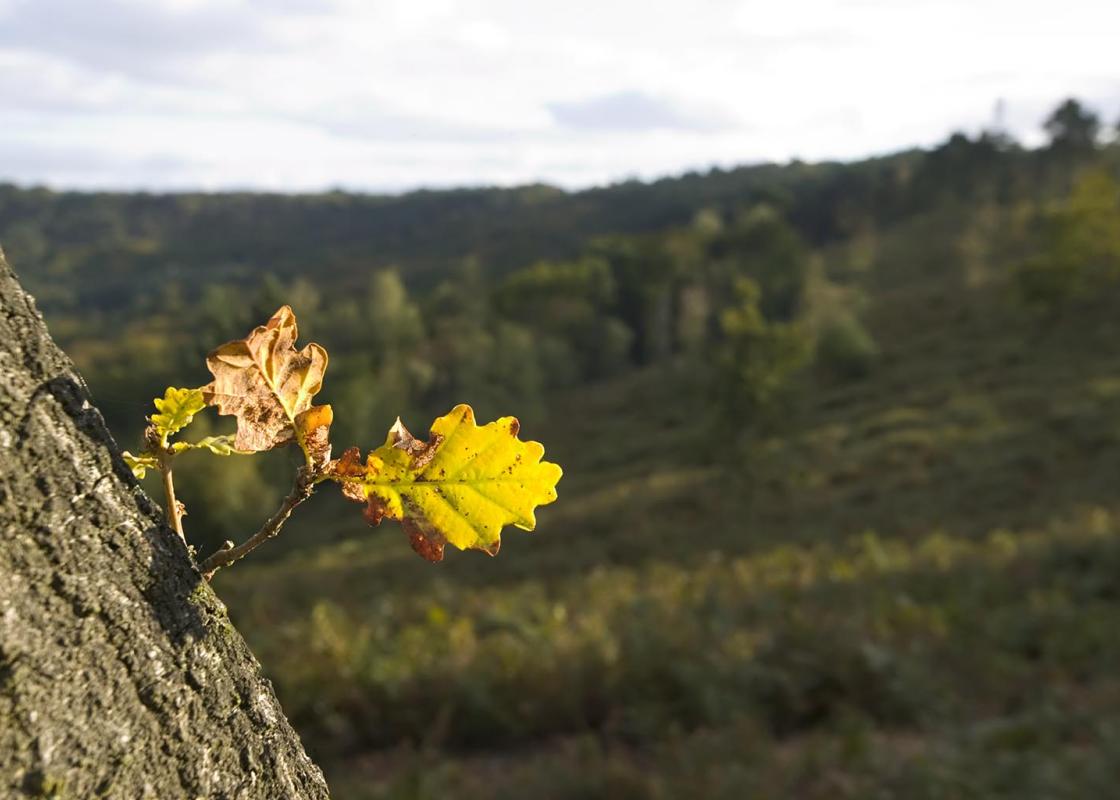
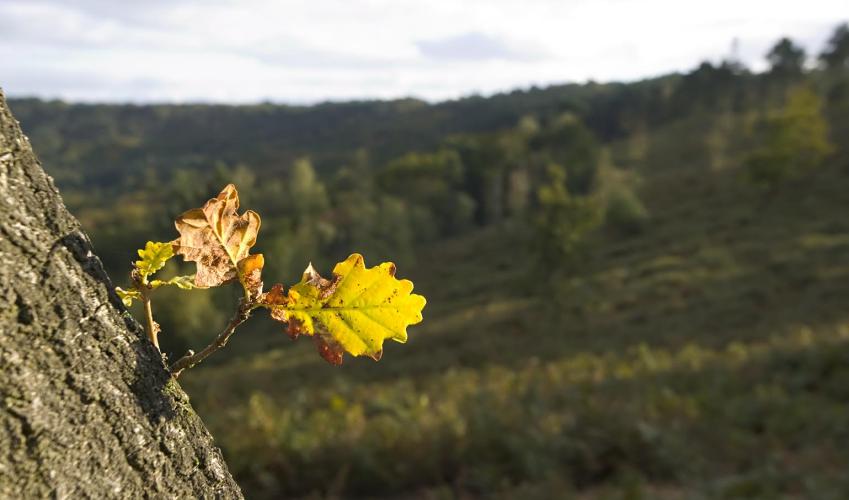
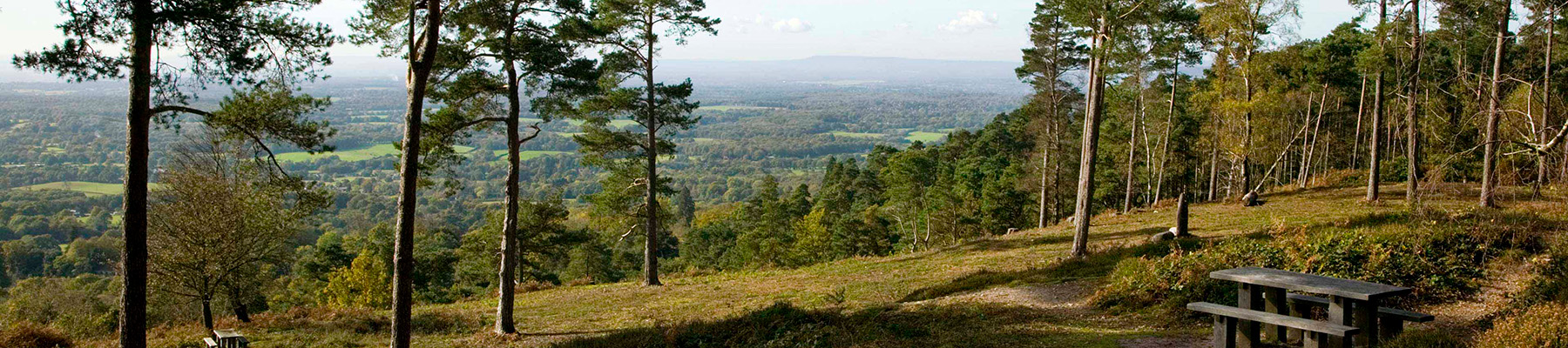
"Fine views across the valley of Marden Park and from the North Downs Way."
Walk directions
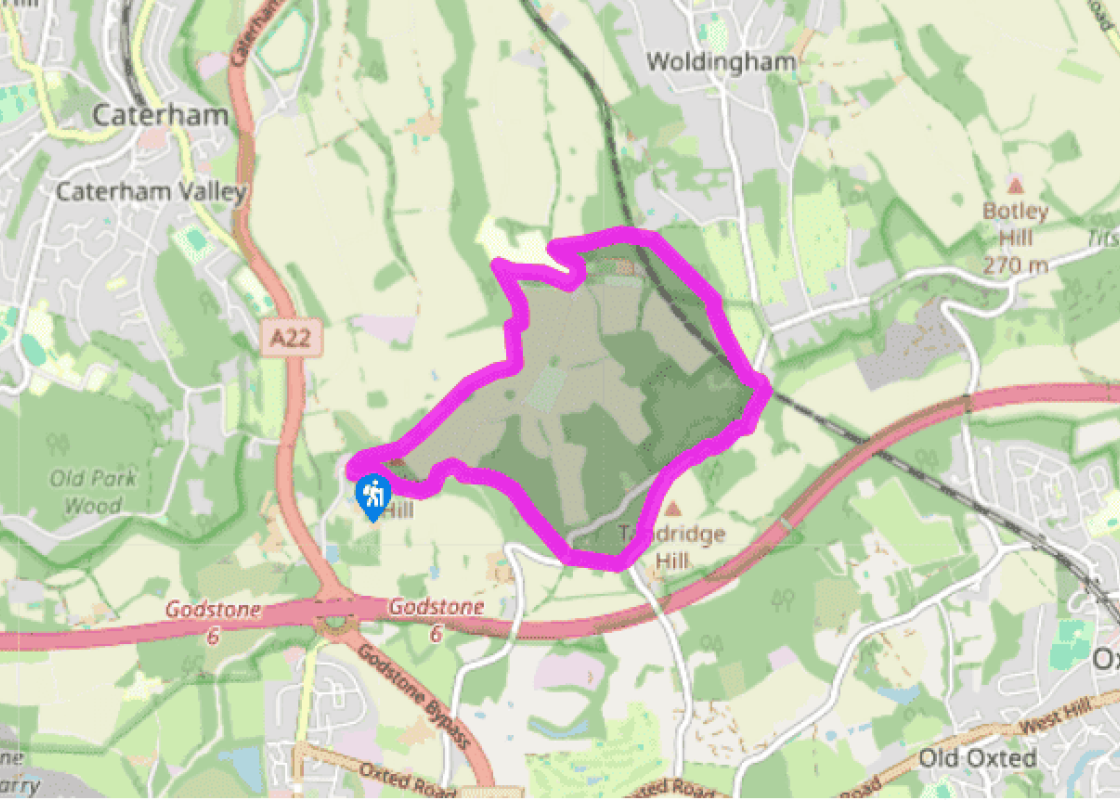
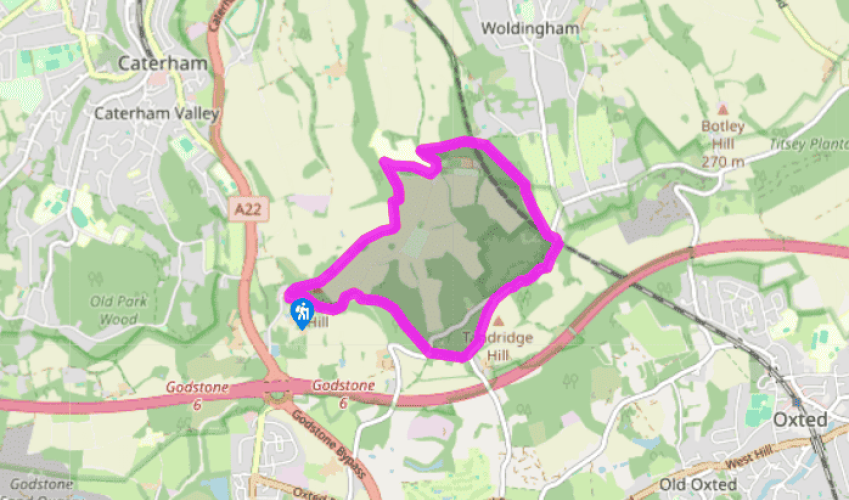
From the car park, walk past the wooden gate marked ‘Woodland Trust’ and take the path straight ahead signed ‘Woldingham Countryside Walk’ (WCW) on a small marker post. Walk gently downhill and keep ahead passing steps up to your right and down on your left. At the next junction, near a black barn, bear left to follow the sign for Woldingham Station. At the next fingerpost continue ahead, towards South Lodge. At the T-junction opposite a gate and several large green metal containers, turn left, signed to South Lodge, and carry on as the path meets a tarmac drive at the school.
Turn right and then right again, passing Marden House on your right and then tennis courts and all weather pitches on the left. The drive starts to bend to the right and, in front of the façade of the old building, turn sharp left at a 3 of your walk). It dates from the 19th century, and involved the quarrying of firestone and hearthstone. Towards the end of that century it became a mushroom farm, but during World War II it was converted into a secure bonded store and sealed with heavy metal doors. There are still tracks of a railway line inside, but it is now too dangerous to enter. fingerpost, back up a hill towards a waymarker. Continue on the well-defined path, slowly climbing up the hillside with a barbed wire fence on the left, and at the top edge of the wood bear right. At the next waymarker, turn left over a stile, and at the far end of the wood the path bears right and ascends between fields. Carry straight on at the next waymarker – on your left the field sweeps down the hillside to the drive leading to South Lodge. Bear left around a thicket and head towards the wood, entering it through an obvious opening. Go into the wood where, after 13yds (12m), another waymarker indicates a path joining from the right. Carry on ahead here and, in 25yds (23m), the path veers to the left and re-enters the field. Continue across this field towards a wood, where the path descends via wooden steps.
At the bottom, turn left along the North Downs Way (NDW), passing Winders Hill Cottages and a metal barrier. The path rises gradually with woodland on the left. Cross a chalky track and, on reaching South Lodge on the right, bear right, then sharp left uphill, following the NDW. Pass a seat and continue to follow NDW markers to reach a road and take the few steps down to it.
Cross the road by Hanging Wood Forest Farm, and continue along the NDW. As the path descends towards another road, turn left through a kissing gate signed NDW and take the path parallel with the road. Go left up steps and continue alongside the road. Where the path joins the road near a road junction, proceed to the junction and turn right along the road for 85yds (78m), then turn right on the NDW. At a T-junction with a footpath, turn right for 35yds (32m), then left. In 25yds (23m), reach a seat, a notice board and wonderful views. Ignoring a path to the right, continue ahead and then, as the NDW turns to the right at a fingerpost, go left up a flight of steps to the road. Cross the road to return to the car park.
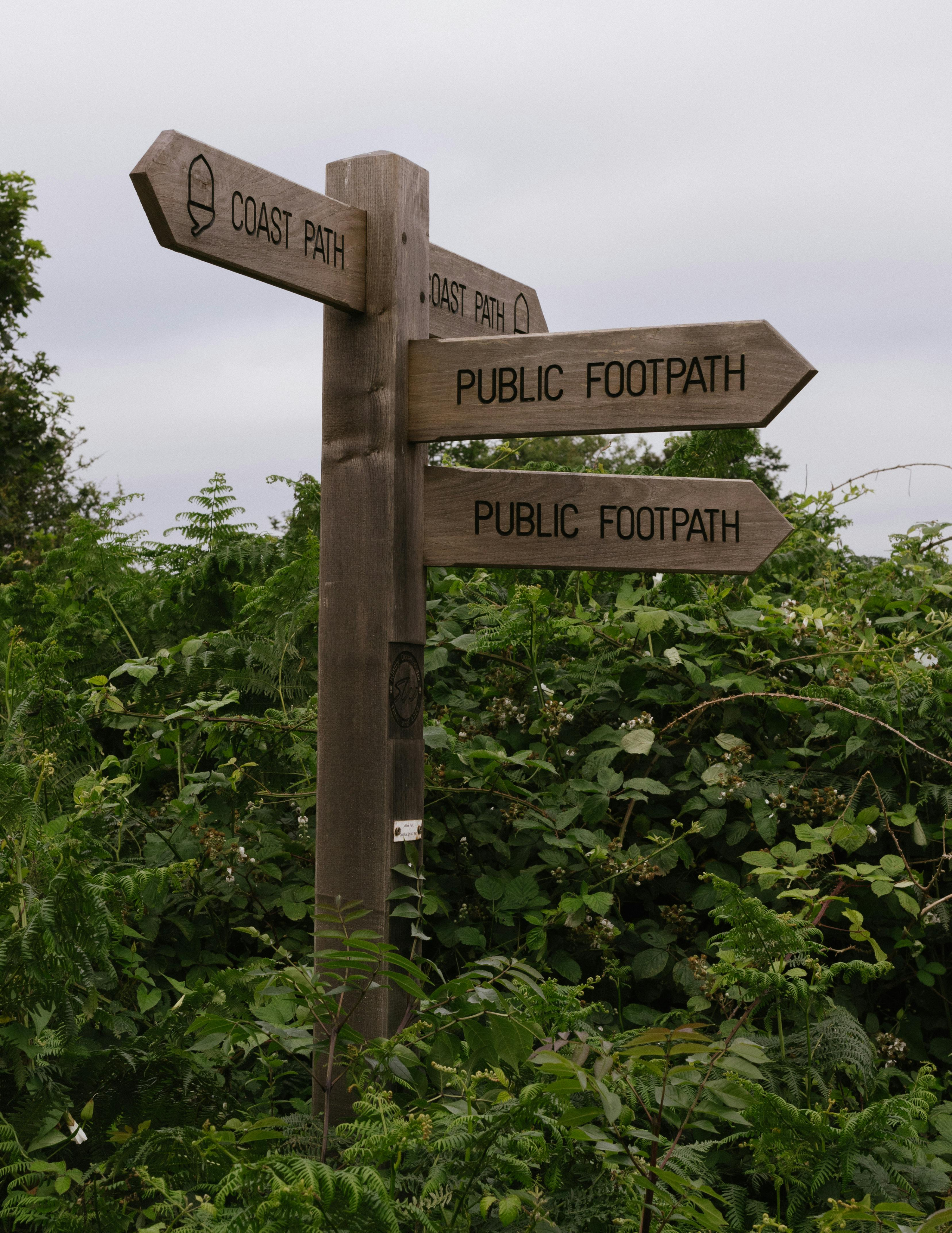
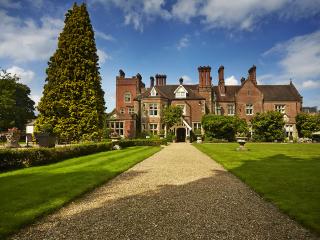
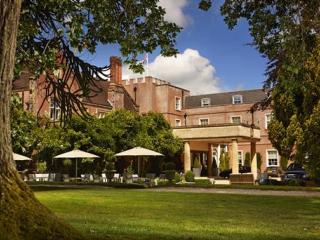
Woldingham, a quiet village that lies just to the north of this walk, was a remote agricultural hamlet until the coming of the railway. There is an early record of a settlement in the Domesday Book, and William the Conqueror gave the parish to one of his knights. The old church, St Agatha’s, dates... from around 1270, but the present church was built in 1933. A lavish house The character of the parkland to the south of Woldingham, Marden Park, was transformed in 1671 when it was acquired by a wealthy moneylender from London, Sir Robert Clayton. He built a lavish house and grounds in the park, which were said to be ‘large and well-walled… with innumerable plantations of trees, especially walnuts’. Over the years the house attracted many well-known guests, including Lord Macauley and William Wilberforce. The French emperor, Louis Napoleon, spent most of his exile here. Tragically, this luxurious house burned down in 1879, but the old walled garden, the belfry and the courtyard with its fountain have remained. The house was rebuilt almost straight away in a Victorian style. During World War II, Canadian troops were quartered there, and by 1945 the house was in a state of disrepair. The Society of the Sacred Heart purchased the house, and it is now Woldingham School. Ancient woodland The surrounding countryside includes Marden Park Woods, which have been designated as a Site of Special Scientific Interest. The ancient woodland has a great variety of tree species, which produce wonderful colours in autumn. They are home to roe deer, tawny owls and the rare Roman snail. Several types of orchid, striped-wing grasshoppers and around 25 kinds of butterfly can all be found on the chalk grasslands. The woods are owned by the Woodland Trust and this is their largest landholding in Surrey. Great Church Wood was owned for a time by the great conductor Sir Adrian Boult (1889–1983). There is a mine underneath Marden Park (which is around Point 3 of your walk). It dates from the 19th century, and involved the quarrying of firestone and hearthstone. Towards the end of that century it became a mushroom farm, but during World War II it was converted into a secure bonded store and sealed with heavy metal doors. There are still tracks of a railway line inside, but it is now too dangerous to enter.
Surrey is one of England’s most wooded counties, with over a quarter of the landscape designated as an official AONB and plenty of history evident in the countryside. You’ll find sandy tracks, cottage gardens and welcoming village inns, and on the fringe of Greater London you can picnic in Chaldon’s hay meadows, explore the downs at Epsom, or drift idly beside the River Thames.
"Fine views across the valley of Marden Park and from the North Downs Way."
Walk details
2hrs 15min
Difficulty:
Medium
Gradient:
Moderate
Distance:
4.2 miles (6.8kms)
Ascent:
761ft (232m)
Walk directions
From the car park, walk past the wooden gate marked ‘Woodland Trust’ and take the path straight ahead signed ‘Woldingham Countryside Walk’ (WCW) on a small marker post. Walk gently downhill and keep ahead passing steps up to your right and down on your left. At the next junction, near a black barn, bear left to follow the sign for Woldingham Station. At the next fingerpost continue ahead, towards South Lodge. At the T-junction opposite a gate and several large green metal containers, turn left, signed to South Lodge, and carry on as the path meets a tarmac drive at the school.
1 of 4
Turn right and then right again, passing Marden House on your right and then tennis courts and all weather pitches on the left. The drive starts to bend to the right and, in front of the façade of the old building, turn sharp left at a 3 of your walk). It dates from the 19th century, and involved the quarrying of firestone and hearthstone. Towards the end of that century it became a mushroom farm, but during World War II it was converted into a secure bonded store and sealed with heavy metal doors. There are still tracks of a railway line inside, but it is now too dangerous to enter. fingerpost, back up a hill towards a waymarker. Continue on the well-defined path, slowly climbing up the hillside with a barbed wire fence on the left, and at the top edge of the wood bear right. At the next waymarker, turn left over a stile, and at the far end of the wood the path bears right and ascends between fields. Carry straight on at the next waymarker – on your left the field sweeps down the hillside to the drive leading to South Lodge. Bear left around a thicket and head towards the wood, entering it through an obvious opening. Go into the wood where, after 13yds (12m), another waymarker indicates a path joining from the right. Carry on ahead here and, in 25yds (23m), the path veers to the left and re-enters the field. Continue across this field towards a wood, where the path descends via wooden steps.
2 of 4
At the bottom, turn left along the North Downs Way (NDW), passing Winders Hill Cottages and a metal barrier. The path rises gradually with woodland on the left. Cross a chalky track and, on reaching South Lodge on the right, bear right, then sharp left uphill, following the NDW. Pass a seat and continue to follow NDW markers to reach a road and take the few steps down to it.
3 of 4
Cross the road by Hanging Wood Forest Farm, and continue along the NDW. As the path descends towards another road, turn left through a kissing gate signed NDW and take the path parallel with the road. Go left up steps and continue alongside the road. Where the path joins the road near a road junction, proceed to the junction and turn right along the road for 85yds (78m), then turn right on the NDW. At a T-junction with a footpath, turn right for 35yds (32m), then left. In 25yds (23m), reach a seat, a notice board and wonderful views. Ignoring a path to the right, continue ahead and then, as the NDW turns to the right at a fingerpost, go left up a flight of steps to the road. Cross the road to return to the car park.
Woldingham, a quiet village that lies just to the north of this walk, was a remote agricultural hamlet until the coming of the railway. There is an early record of a settlement in the Domesday Book, and William the Conqueror gave the parish to one of his knights. The old church, St Agatha’s, dates... from around 1270, but the present church was built in 1933. A lavish house The character of the parkland to the south of Woldingham, Marden Park, was transformed in 1671 when it was acquired by a wealthy moneylender from London, Sir Robert Clayton. He built a lavish house and grounds in the park, which were said to be ‘large and well-walled… with innumerable plantations of trees, especially walnuts’. Over the years the house attracted many well-known guests, including Lord Macauley and William Wilberforce. The French emperor, Louis Napoleon, spent most of his exile here. Tragically, this luxurious house burned down in 1879, but the old walled garden, the belfry and the courtyard with its fountain have remained. The house was rebuilt almost straight away in a Victorian style. During World War II, Canadian troops were quartered there, and by 1945 the house was in a state of disrepair. The Society of the Sacred Heart purchased the house, and it is now Woldingham School. Ancient woodland The surrounding countryside includes Marden Park Woods, which have been designated as a Site of Special Scientific Interest. The ancient woodland has a great variety of tree species, which produce wonderful colours in autumn. They are home to roe deer, tawny owls and the rare Roman snail. Several types of orchid, striped-wing grasshoppers and around 25 kinds of butterfly can all be found on the chalk grasslands. The woods are owned by the Woodland Trust and this is their largest landholding in Surrey. Great Church Wood was owned for a time by the great conductor Sir Adrian Boult (1889–1983). There is a mine underneath Marden Park (which is around Point 3 of your walk). It dates from the 19th century, and involved the quarrying of firestone and hearthstone. Towards the end of that century it became a mushroom farm, but during World War II it was converted into a secure bonded store and sealed with heavy metal doors. There are still tracks of a railway line inside, but it is now too dangerous to enter.
Surrey is one of England’s most wooded counties, with over a quarter of the landscape designated as an official AONB and plenty of history evident in the countryside. You’ll find sandy tracks, cottage gardens and welcoming village inns, and on the fringe of Greater London you can picnic in Chaldon’s hay meadows, explore the downs at Epsom, or drift idly beside the River Thames.