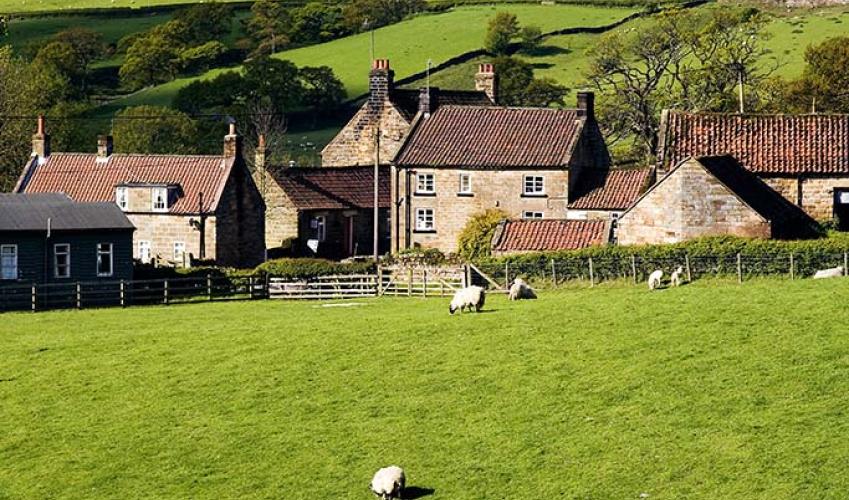
Around Reeth in the heart of Swaledale
Walk directions
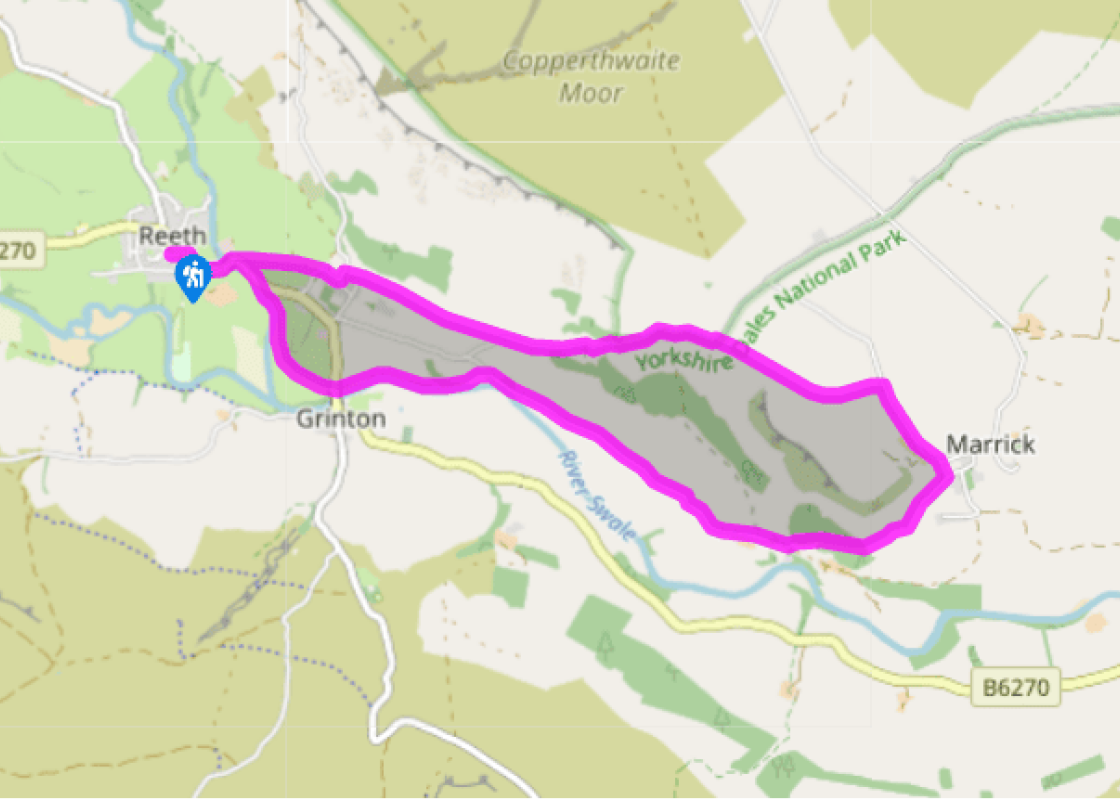
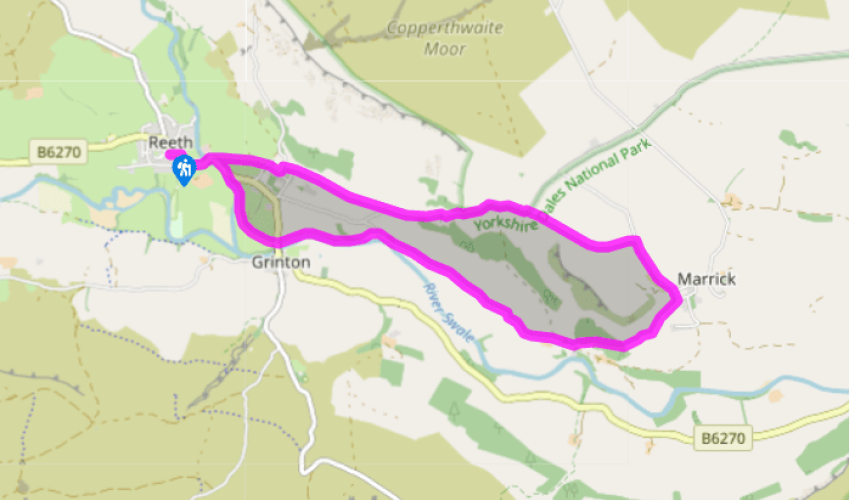
From the Green, walk downhill in the direction of Leyburn to Reeth Bridge. Over the bridge, continue along the road as it swings right. About 100yds (91m) along, turn right at a footpath sign to Grinton.
Follow the riverside path to a signpost, then continue on a well-marked path across fields to ascend steps onto Grinton Bridge. Turn left for a few paces, cross the road and take a track beside the bridge.
Follow the riverside path for about 0.5 miles (800m) to a metalled lane. Turn right and follow the lane to Marrick Priory. Walk past the buildings, over a cattle grid, and bear left through a gate signed ‘Marrick’.
Walk up the grassy track, then follow the paved path through woodland. Continue through fields, with a wall on the right, into a metalled lane. Opposite Harlands House turn left, then left again at a triangular junction.
Follow the road for 0.25 miles (400m), and turn left over a stile at a footpath sign. Follow the wall and cross a waymarked stile. Continue along the wall, then keep on in the same direction, ascending slightly to meet a road.
Turn left and follow the road for 0.75 miles (1.2km). On a left bend near an obvious track to a farm, cross a stile on the right, signed ‘Fremington’. Go straight ahead to a stile, then continue along the well-marked path through fields, until a final gate leads onto a walled path behind houses. Go straight ahead to a lane.
Turn left then first right. As the lane bends left, go ahead to a stile by a gate. Keep by the wall on the left, and follow the path through more stiles back to Reeth Bridge. Cross the bridge and follow the road back to the Green.
Additional information
Terrain
- Field and riverside paths, lanes and woodland, 14 stiles
Landscape
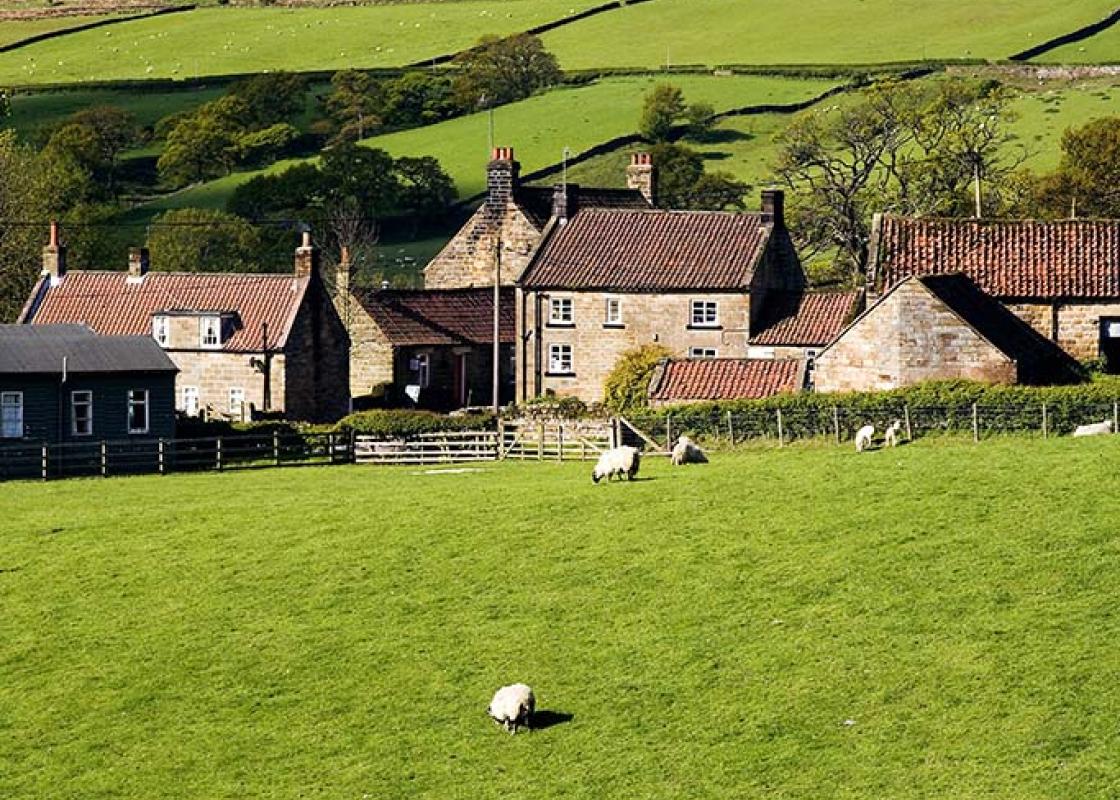
- Junction of Swaledale and Arkengarthdale, with fields and surrounding moorland
Dog friendliness
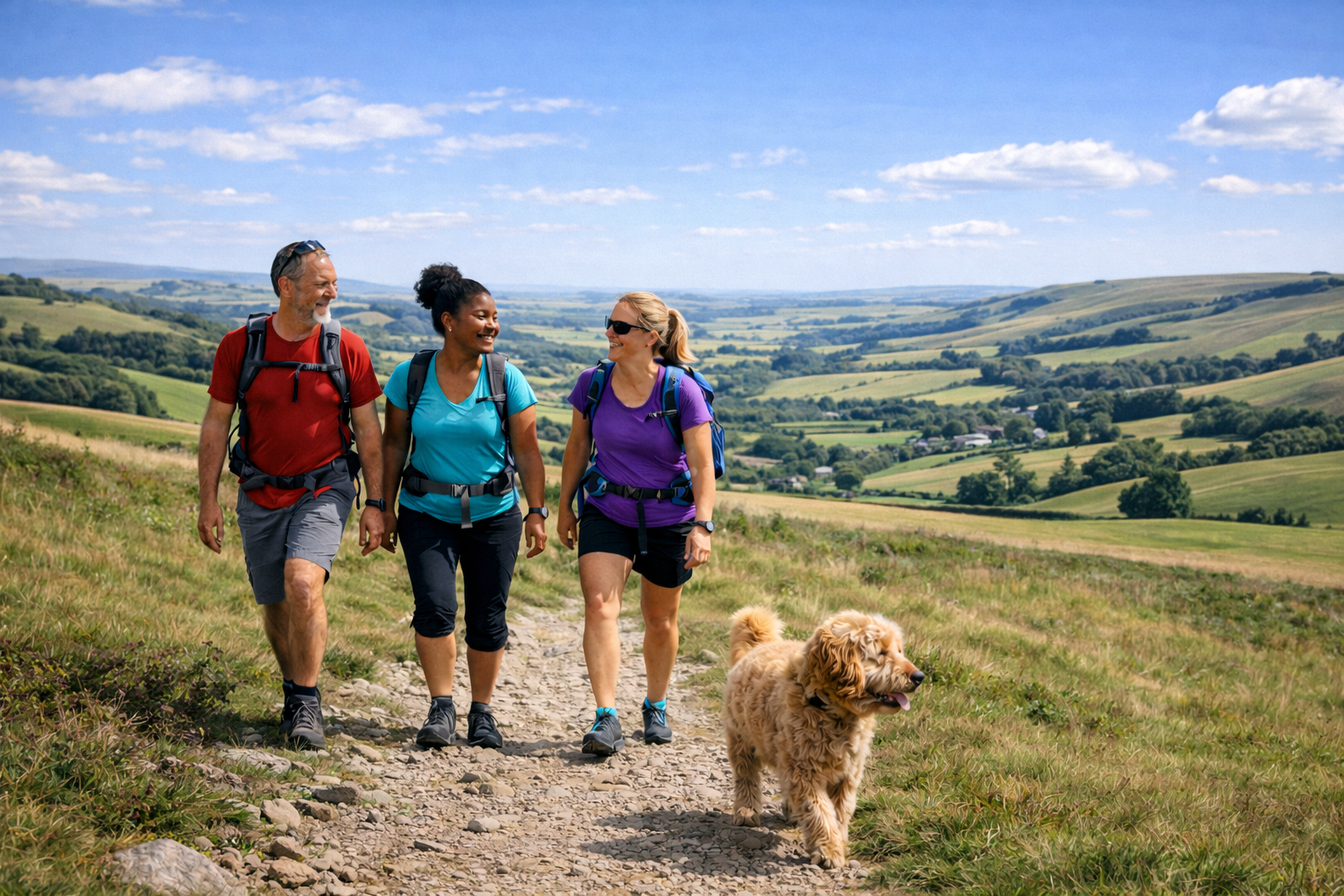
- Dogs should be on leads for majority of walk
Parking
- In Reeth, by the Green
Toilets en route
- In Reeth, opposite the Buck Hotel and in Grinton
About the walk
Reeth has always had a strategic role in the Yorkshire Dales. Set above the junction of Swaledale and Arkengarthdale on Mount Calva, it controlled the important route westwards from Richmond. Sheep were for a long time the basis of Reeth’s prosperity – it has been a market town since 1695 – and... there is the important Reeth Show at the end of August. The wool was used in Reeth’s knitting industry – both the men and women would click away with their needles making stockings and other garments. Reeth also used to be a centre for the lead mining industry, which extended up Arkengarthdale and over Marrick Moor. Reeth Bridge, reached via the Leyburn road from the Green, has suffered over the years from the effects of the swollen River Swale. The present bridge dates from the early 18th century, replacing one washed away in 1701, itself built after its predecessor succumbed in 1547. The path beside the river leads to Grinton Bridge. Nearby is Grinton Church, once the centre of a huge parish that took in the whole of Swaledale, making very long journeys necessary for marriages and funerals. Curiously, it began life as a mission church for the Augustinian canons of faraway Bridlington Priory on the east coast. The approach to Marrick Priory along the lane suggests that you are about to reach one of the most important churches in the Dales. In a way, that is true. Marrick in the Middle Ages was home to a group of Benedictine nuns. It was founded by Roger de Aske, whose descendent, Robert, was a leader of the Pilgrimage of Grace, the uprising against King Henry VIII’s closure of the monasteries. Hilda Prescott’s novel The Man on a Donkey (1952), about Robert Aske and the pilgrimage, is partly set at Marrick. Today the nuns’ buildings are partly demolished or absorbed into farm buildings. The church was reduced in size in 1811, and Marrick Priory is now an outdoor education and residential centre. After Marrick Priory the path climbs steeply uphill on rough stone steps called the Nun’s Causey (a corruption of ‘causeway’). Now used as part of the Coast to Coast Walk, from St Bee’s Head in Cumbria to Robin Hood’s Bay on the east coast, it is said to be built by the nuns from the priory. The original 365 steps have been broken up and removed over the centuries, but the path still retains a suitably medieval feel.
Read more
Been on this walk?
Send us photos or a comment about this route. Or recommend a route of your own.
Walking in Safety
Read our tips to look after yourself and the environment when following this walk.
Get an AA guide
Explore our range of ‘50 Walks in’ guides - they’re the ideal companion for a ramble.
Been on this walk?
Send us photos or a comment about this route. Or recommend a route of your own.
Walking in Safety
Read our tips to look after yourself and the environment when following this walk.
Get an AA guide
Explore our range of ‘50 Walks in’ guides - they’re the ideal companion for a ramble.
About the area
North Yorkshire, with its two National Parks and two designated Areas of Outstanding Natural Beauty, is England’s largest county and one of the most rural. This is prime walking country, from the heather-clad heights of the North York Moors to the limestone country that is so typical of the Yorkshire Dales – a place of contrasts and discoveries, of history and legend.
Nearby places to stay
View all (8)
Inn
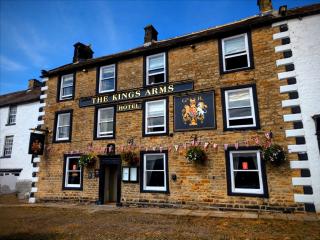
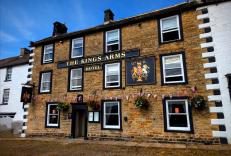
The Kings Arms Hotel
★★★
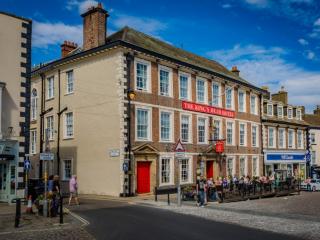
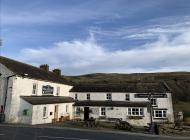
"Right in the heart of the charming village of Reeth, on the market square...."
Restaurant with Rooms
The Burgoyne
★★★★★
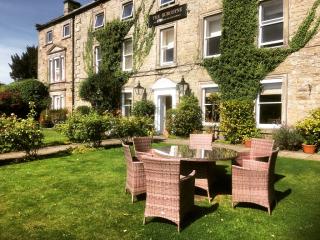
"Delightful 18th-century building in a stunning Yorkshire Dales setting...."
- Rooms 11
- Free TV
- DVD Player
- Direct Dial
Self-Catering
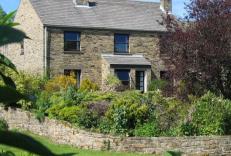
Wraycroft Cottages
★★★★
"Family-run cottages with private river access and walks and cycle tracks on the doorstep...."
- Total units: 3
- Private garden
- Lawn area
- Garden furniture
Nearby places to stay
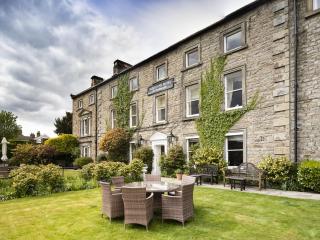
The Kings Arms Hotel
The King’s Arms is a charming Grade II listed inn located in the heart of Reeth. The property retains many period features, including sash windows, a beautiful stone fireplace and a his...
★★★ Rating
The Burgoyne
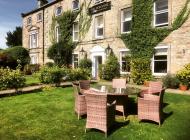
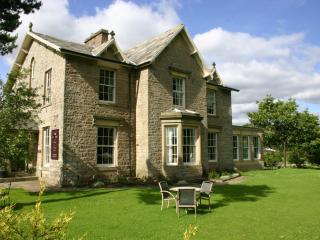
Set at the top of the village green with delightful views over the Swaledale Valley, The Burgoyne is a recently refurbished and comfortable 18th-century building, that has been welcomin...
★★★★★ Rating
Wraycroft Cottages
Wraycroft Cottages is a family business established in 1965. The three linked cottages are in two acres of garden with private river access and stunning views. A peaceful location, but ...
★★★★ Rating
Ashcroft Cottage
Awaiting description...
★★★★ Rating
Beechcroft Cottage
Awaiting description...
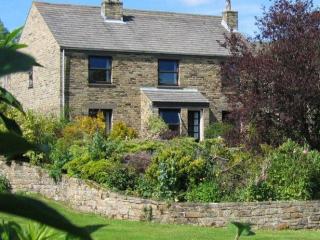
★★★★ Rating
Cedarcroft Cottage
Awaiting description...
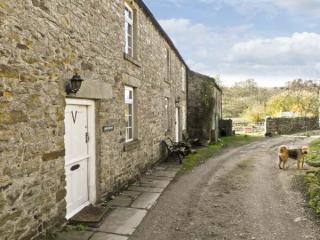
★★★★ Rating
Arklehurst Cottage
In the tiny Yorkshire Dales village of Langthwaite, in Arkengarthdale, Arklehurst is a traditional stone-built 18th-century cottage with comfortable accommodation for up to four people....
★★★ Rating
Arklehurst
In the tiny Yorkshire Dales village of Langthwaite, in Arkengarthdale, Arklehurst is a traditional stone-built 18th-century cottage with comfortable accommodation for up to four people....
★★★ Rating
Places to eat nearby View all