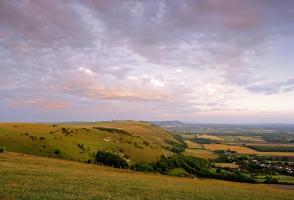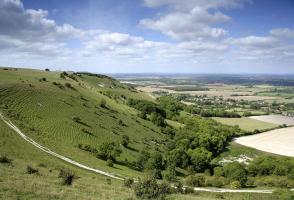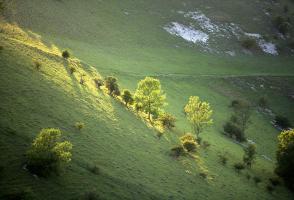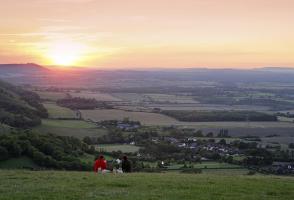
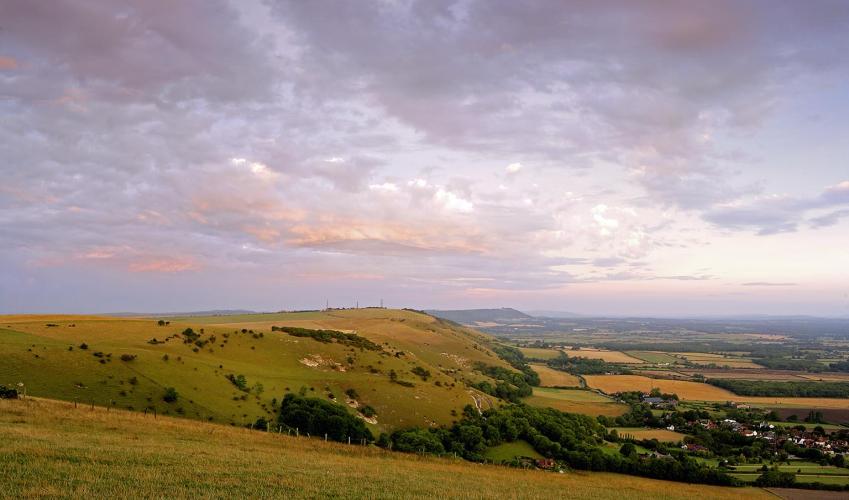
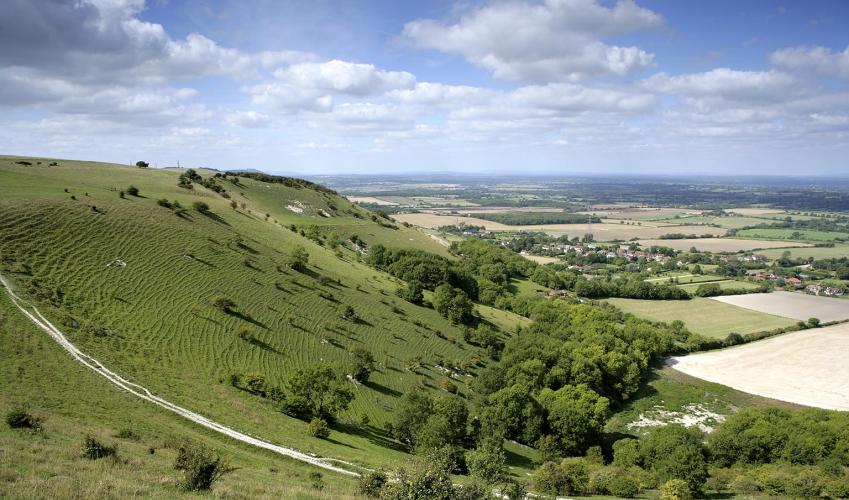
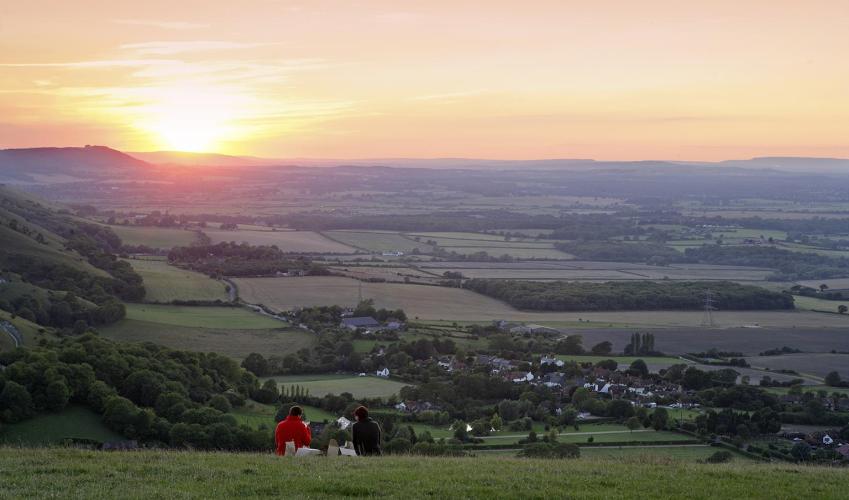
Grand views from Devil's Dyke
Recommended by

Our view
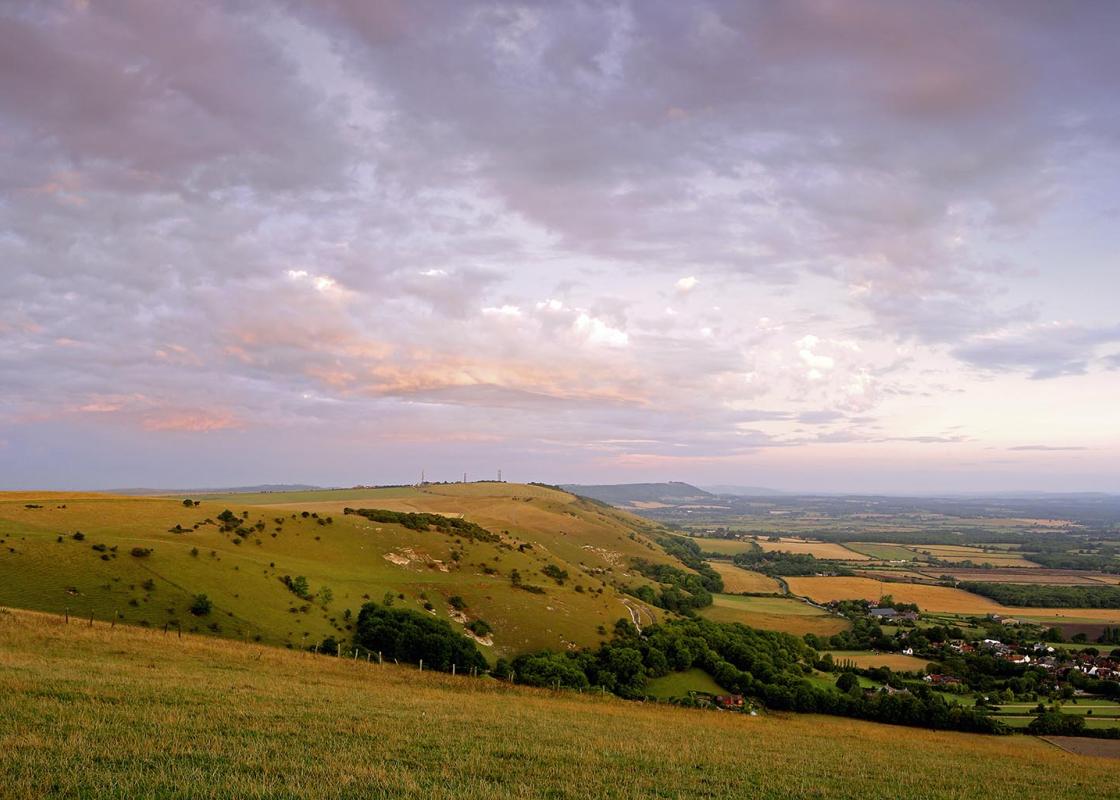
"A fine walk with glimpses over the most famous of all the dry chalk valleys."
Walk directions
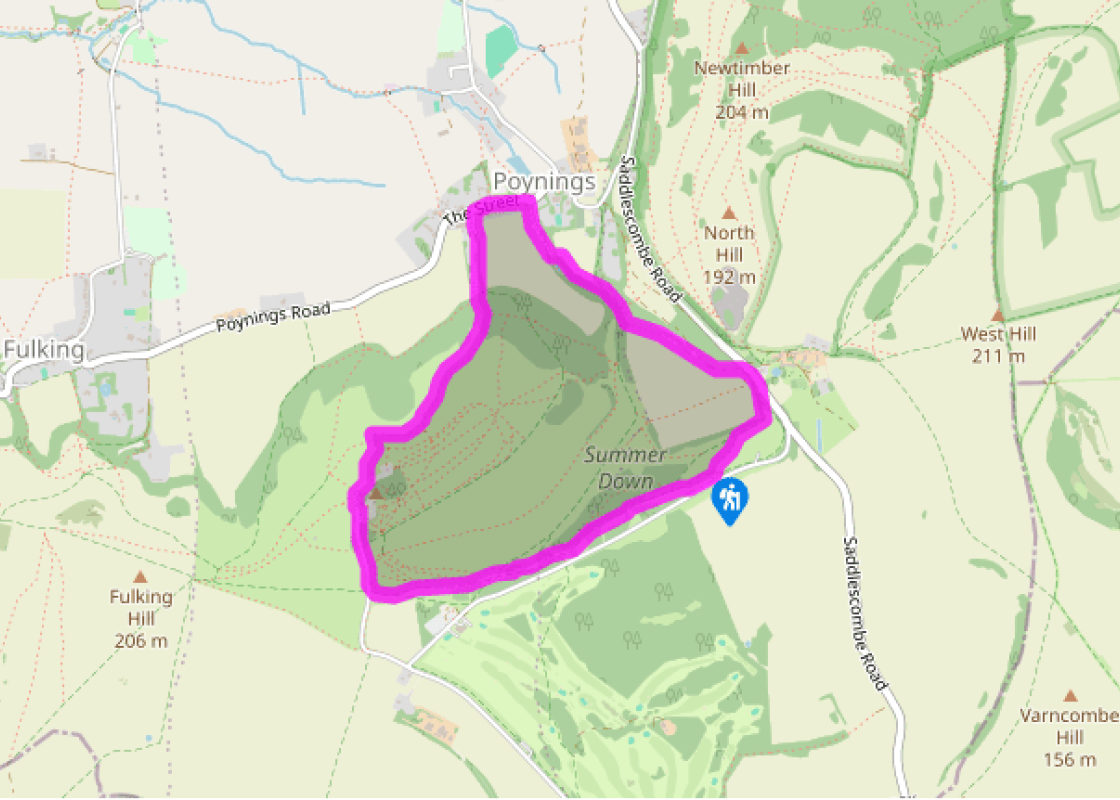
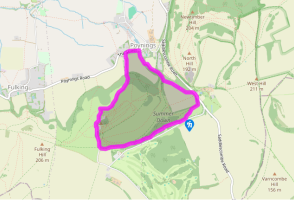
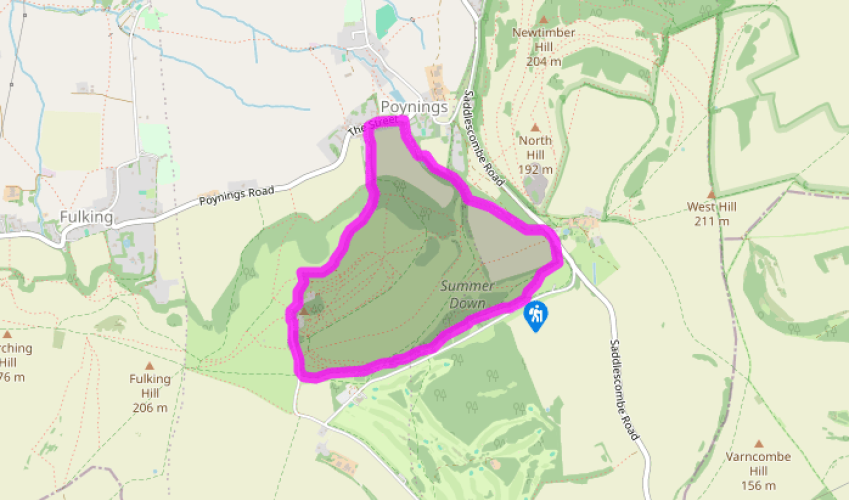
With the road behind you, take the kissing gate on the right side of the car park, go down across the grass for a few paces, then turn right on a path which you follow, soon passing a railing round a covered grass-topped reservoir. Soon the path curves left and drops down to the South Downs Way, which leads to a road. Part company with the South Downs Way at this point, as it crosses over to join the private road to Saddlescombe Farm, and follow the verge for about 75yds (68m). Bear left at the footpath sign and
drop down the bank to a stile.
Follow the line of the tarmac lane as it curves right to reach a waymark. Leave the lane and walk ahead alongside power lines, keeping the line of trees and bushes on your right. Eventually veer right into the vegetation and cross a stile. Drop down into the woods and turn right at a junction with a bridleway. Past a pond, reach a path junction at the edge of the wood and fork left between fields and a wooded dell; go around a lake to a signposted stile. Turn right towards Poynings.
View all directions
Additional information
Terrain
- Field and woodland paths, several stiles
Landscape
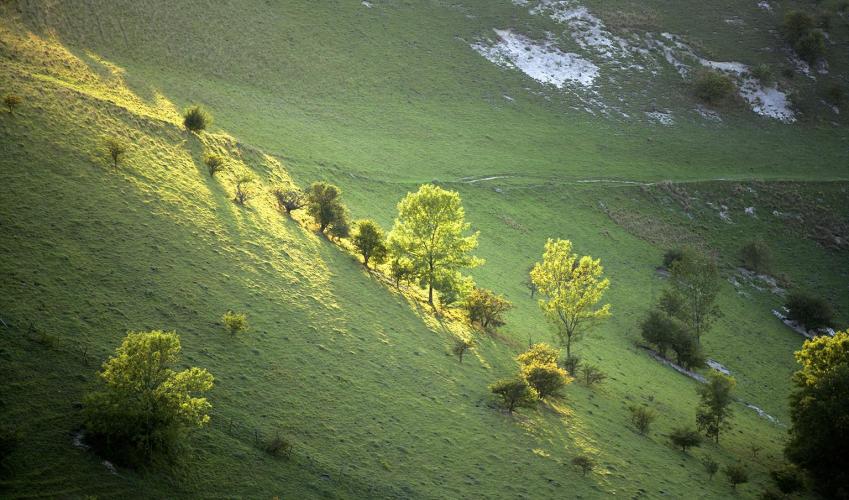
- Chalk grassland, steep escarpment and woodland
Dog friendliness
- Mostly off lead. On lead on approach to Poynings
Parking
- Devil's Dyke Summer Down free car park
Toilets en route
- By Devil's Dyke pub
About the walk
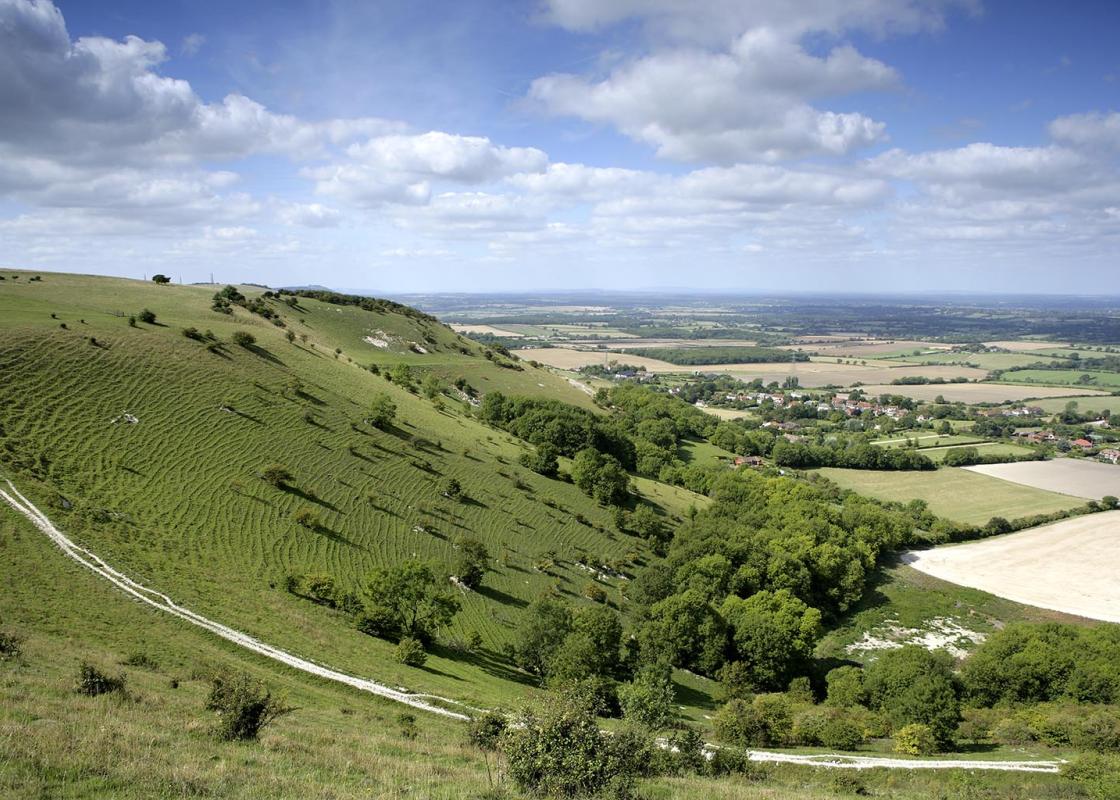
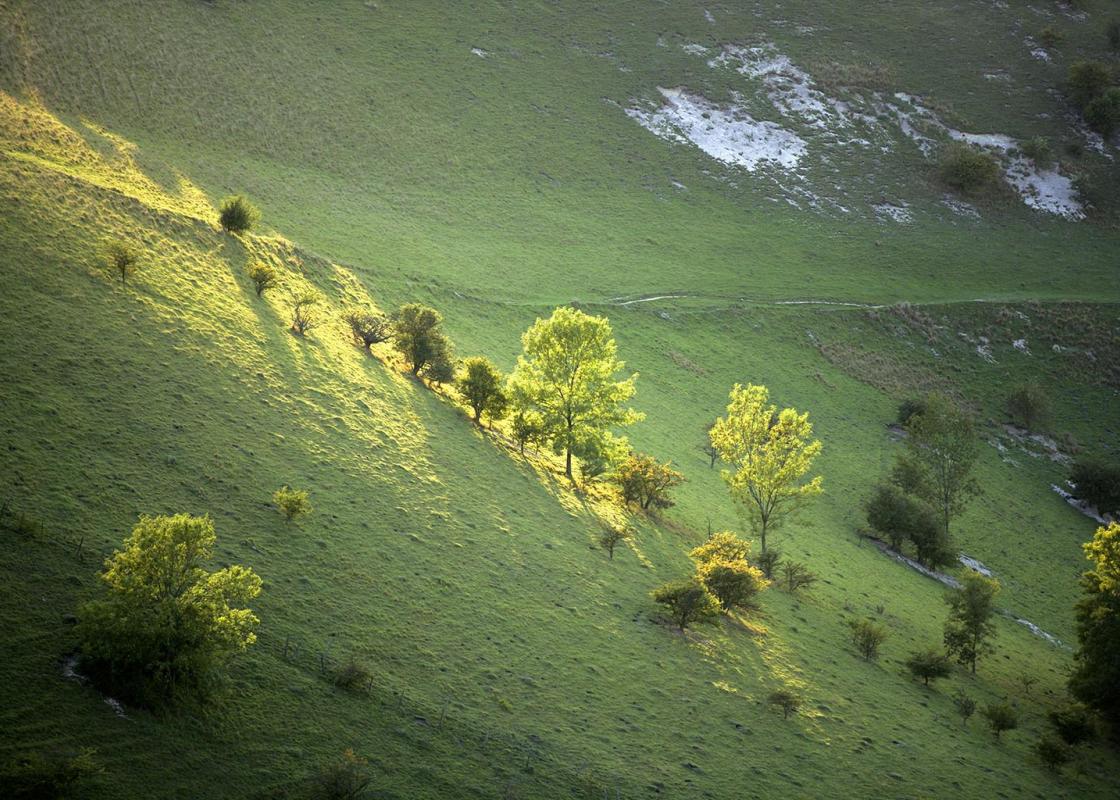
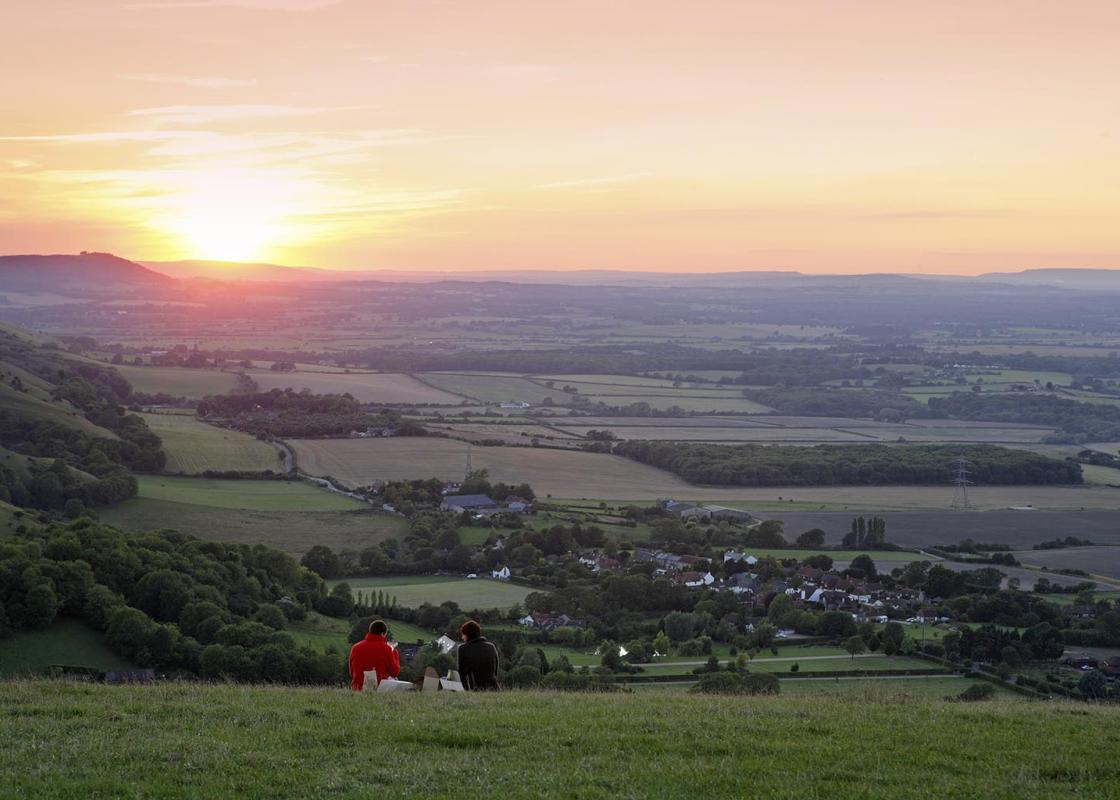
Sussex is rich in legend and folklore, and the Devil and his fiendish works crop up all over the county. The local landmark of Devil’s Dyke is a prime example, perfectly blending the natural beauty of the South Downs with the mystery and originality of ancient mythology. Few other fables in this...
Read more

Been on this walk?
Send us photos or a comment about this route. Or recommend a route of your own.

Walking in Safety
Read our tips to look after yourself and the environment when following this walk.
Get an AA guide
Explore our range of ‘50 Walks in’ guides - they’re the ideal companion for a ramble.
Been on this walk?
Send us photos or a comment about this route. Or recommend a route of your own.
Walking in Safety
Read our tips to look after yourself and the environment when following this walk.
Get an AA guide
Explore our range of ‘50 Walks in’ guides - they’re the ideal companion for a ramble.
About the area
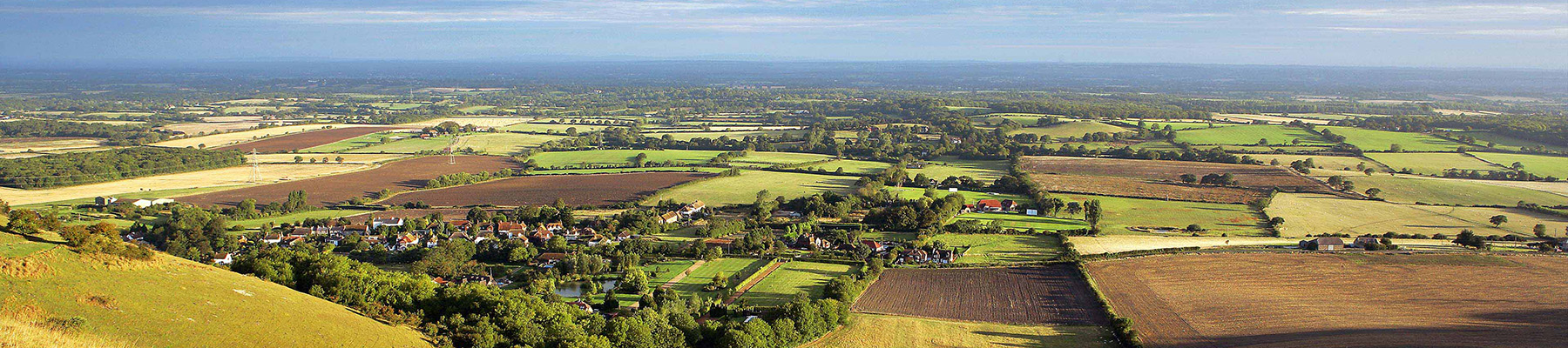
Divided from East Sussex back in 1888, West Sussex has a variety of landscapes and coastal scenery, but it is the spacious and open South Downs with which the county is most closely associated. There are plenty of walking routes in the South Downs National Park, cycling routes by the sea or visitors can explore the pretty town of Arundel with its historic castle and buildings.
Nearby places to stay
View all (8)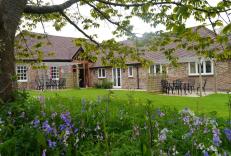
Self-Catering
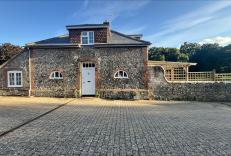
Newtimber Holiday Cottages - Moatside 1&2
- Total units: 2
- Lawn area
- Garden furniture
- Dish washer
Self-Catering
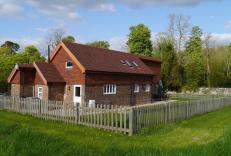
Newtimber Holiday Cottages - Orchard
- Total units: 1
- Private garden
- Lawn area
- Garden furniture
Nearby places to stay
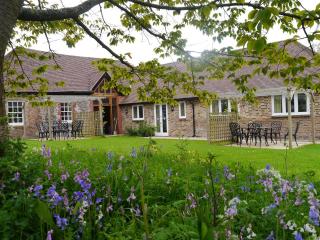
Newtimber Holiday Cottages - Moatside 1&2
Located in the grounds of Newtimber Place, a beautiful 17th-century moated house within the South Downs National Park, the Moatside cottages have ample parking and bedrooms on the groun...
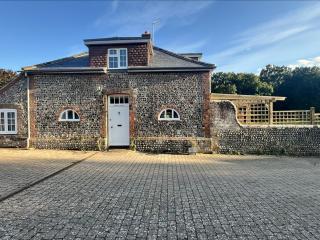
Stables Cottage
Stables Cottage is located on the grounds of Newtimber Place, a beautiful 17th-century moated house within the South Downs National Park. The cottage has space for 2 cars and has an EV ...
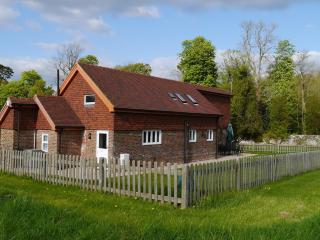
Newtimber Holiday Cottages - Orchard
Located in the grounds of Newtimber Place, a beautiful 17th-century moated house within the South Downs National Park, Newtimber Holiday Cottages have ample parking and bedrooms on the ...
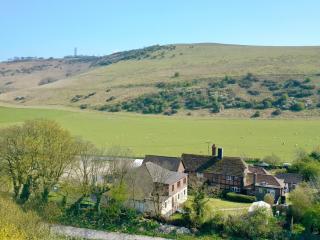
Tottington Manor
Situated on the edge of the South Downs National park, with panoramic views of the hills, Tottington Manor Hotel is an idyllic place for a weekend break, short walking holiday, wedding ...
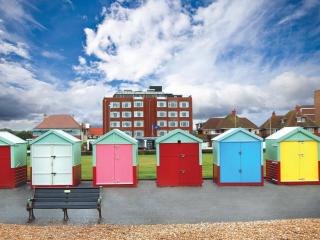
Best Western Princes Marine
The Best Western Princes Marine hotel enjoys a seafront location and offers spacious, comfortable bedrooms equipped with a good range of facilities including free WiFi. Ten rooms are av...
Bull, Ditchling
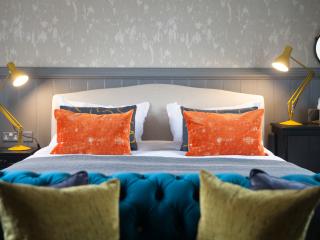
Dating back to 1563, The Bull is one of the oldest buildings in this famously pretty Sussex village. First used as an overnight resting place for travelling monks, the inn has also serv...
Beach Hotel
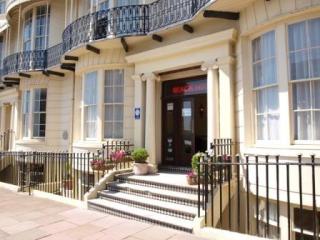
The Beach hotel is set in Brighton’s elegant Regency Square, close to the seafront. It’s right by the i360, and just a short walk from Brighton Palace Pier and the town centre. Built in...
Brighton Harbour Hotel & Spa
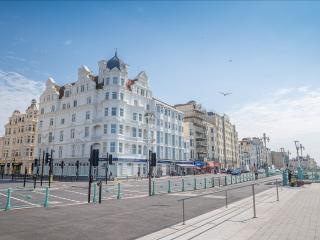
Located on the seafront, right in the heart of town, Brighton Harbour Hotel has been completely refurbished, offering guests modern and stylish accommodation. Rooms are smartly contempo...
Places to eat nearby View all